
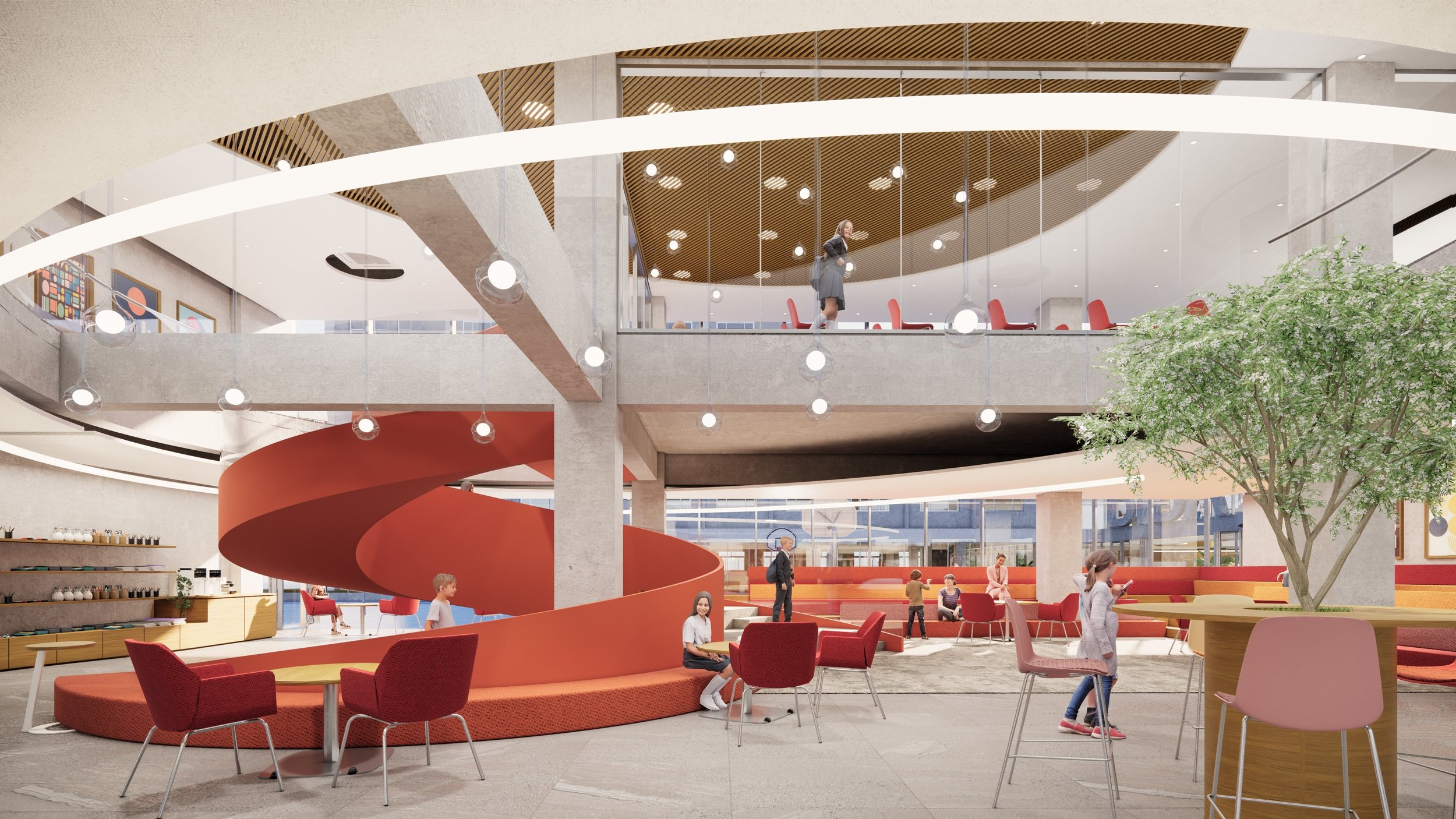
BIBA ELEMENTARY SCHOOL RENOVATION
BIBA ELEMENTARY SCHOOL RENOVATION
The concept of Gravity Orchard envisions the school as a microcosmic universe—an ecosystem of gravity composed of learning, exploration, and belonging. Each child is imagined as an independent celestial body orbiting a central “star,” the school itself, guided along a unique path of growth. The spatial logic is grounded in the balance between centrifugal and centripetal forces—between exploration and return, openness and cohesion.
LOCATION Beijing, China
AREA 3840 m²
STATUS Completed
CLIENT Beijing International Bilingual Academy
YEAR 2025
PROGRAMS Educational, Interior Renovation, Lobby, Cafeterial, Library, Early Years Center
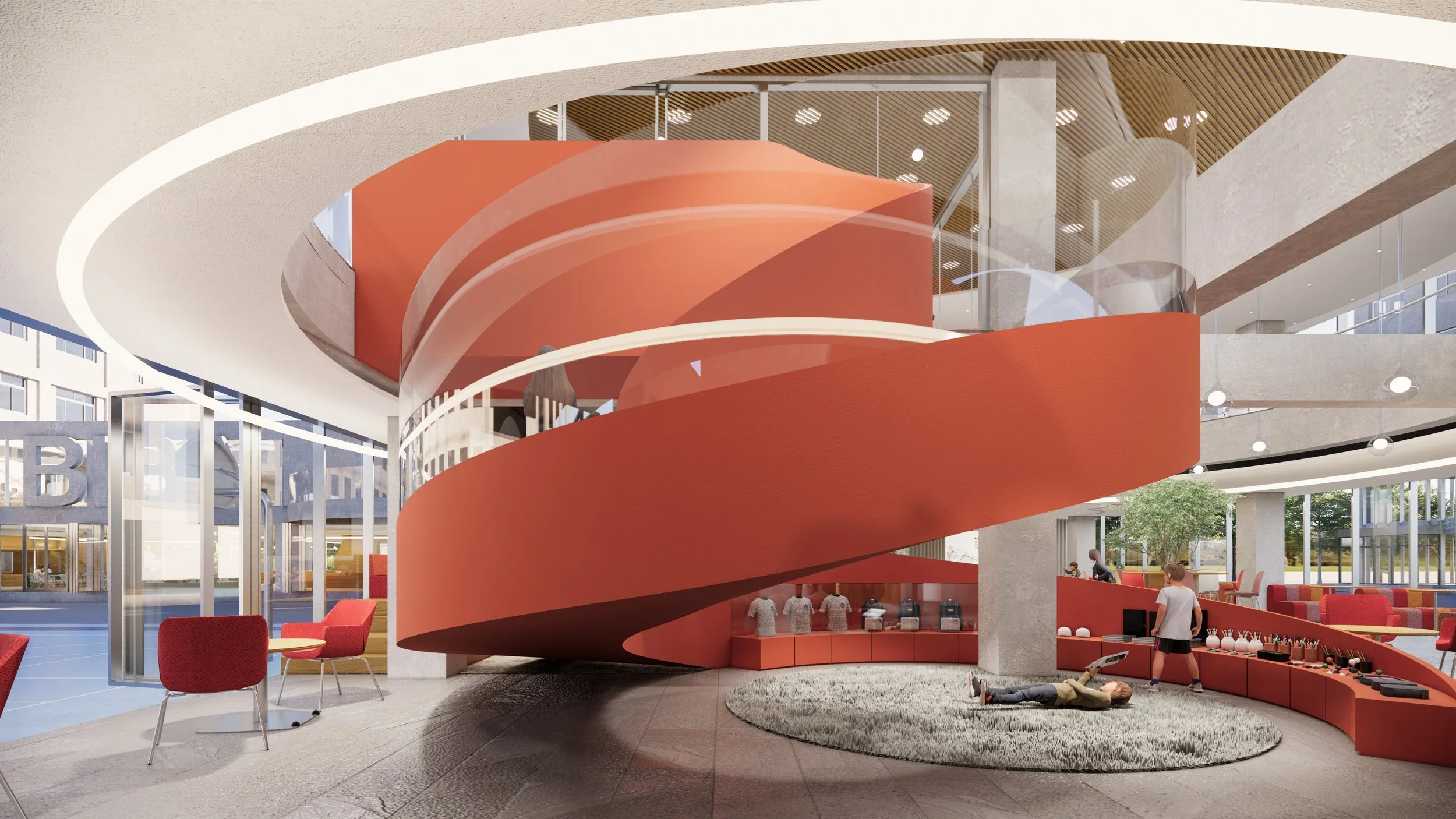
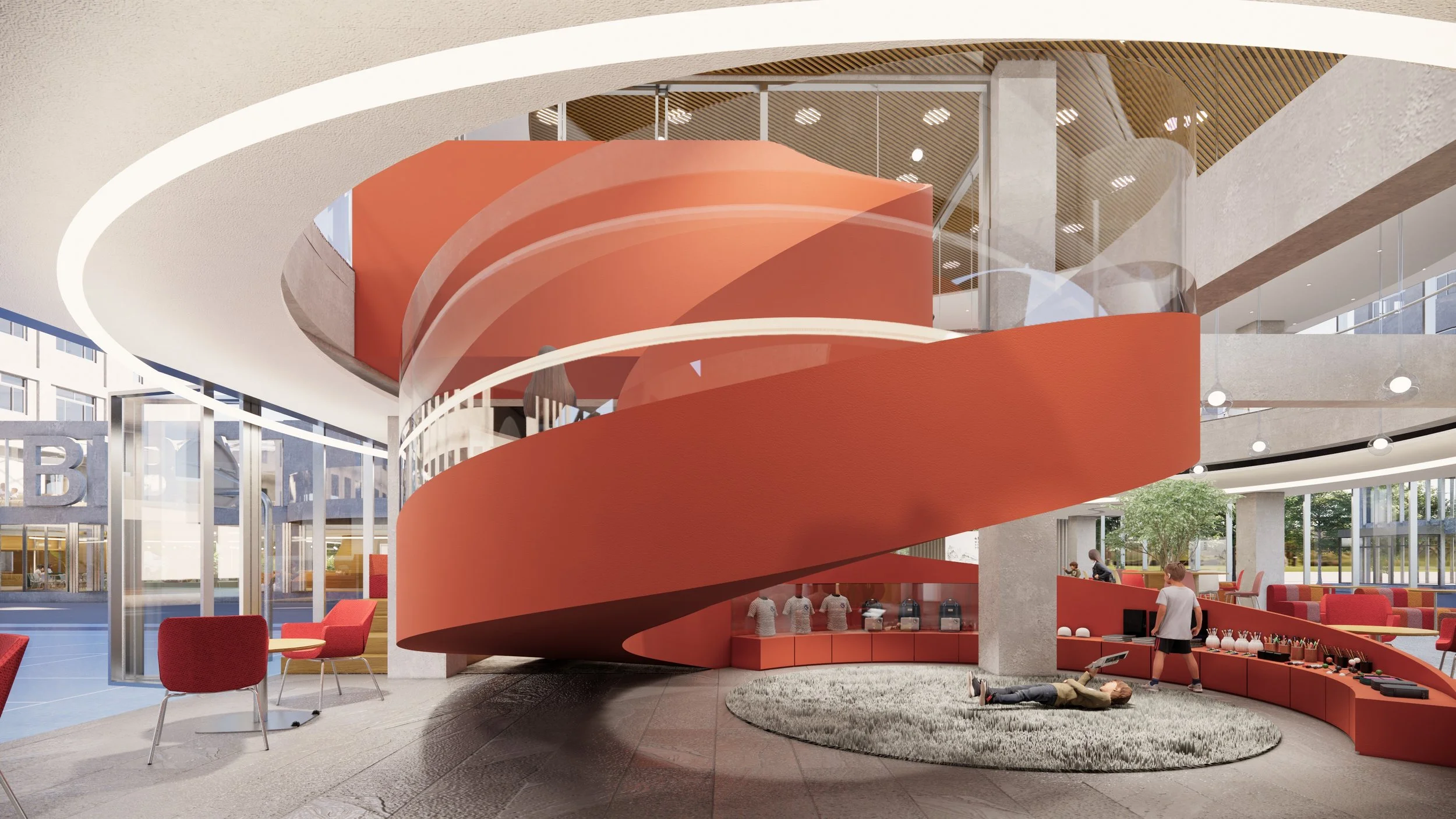
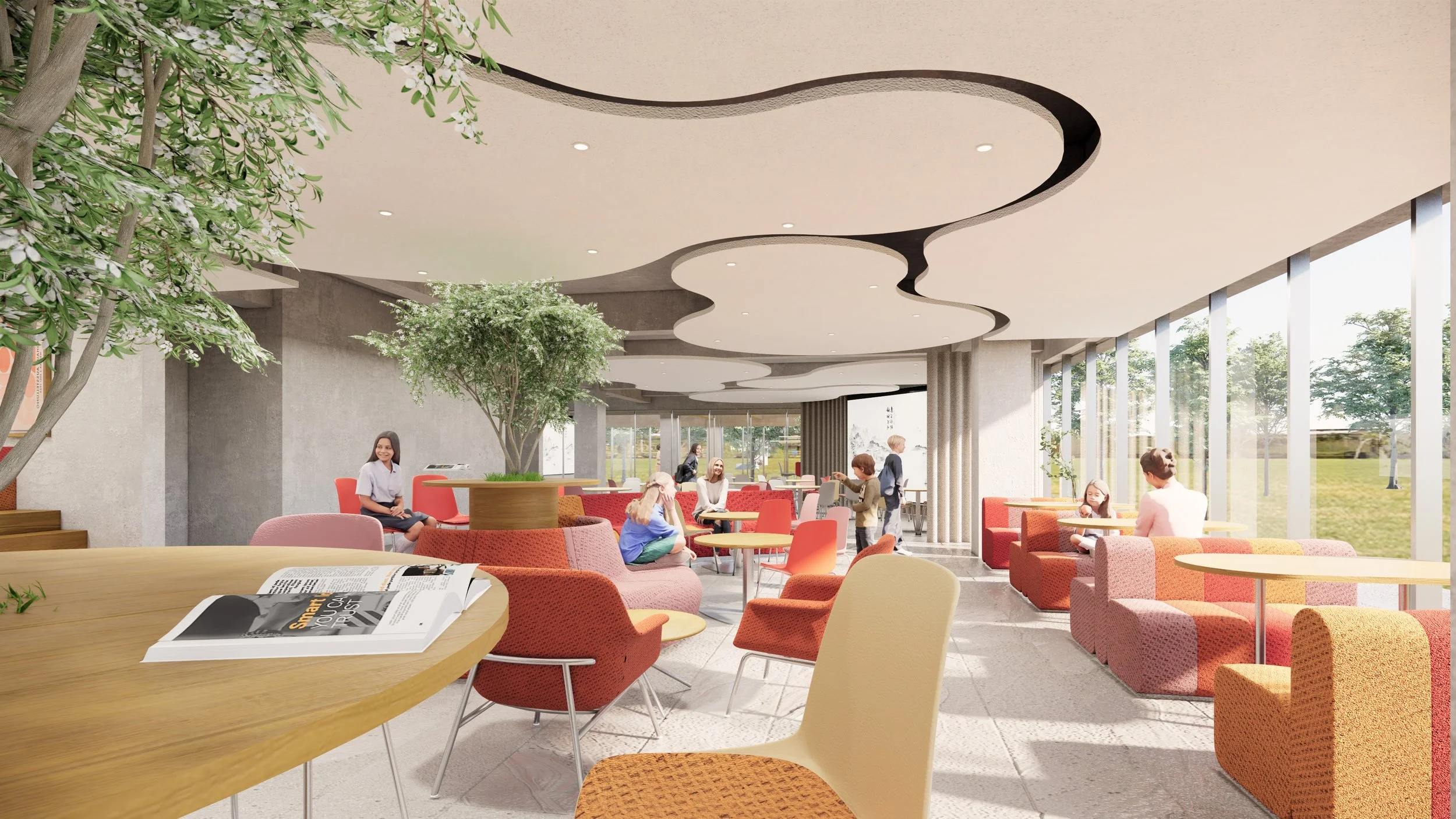
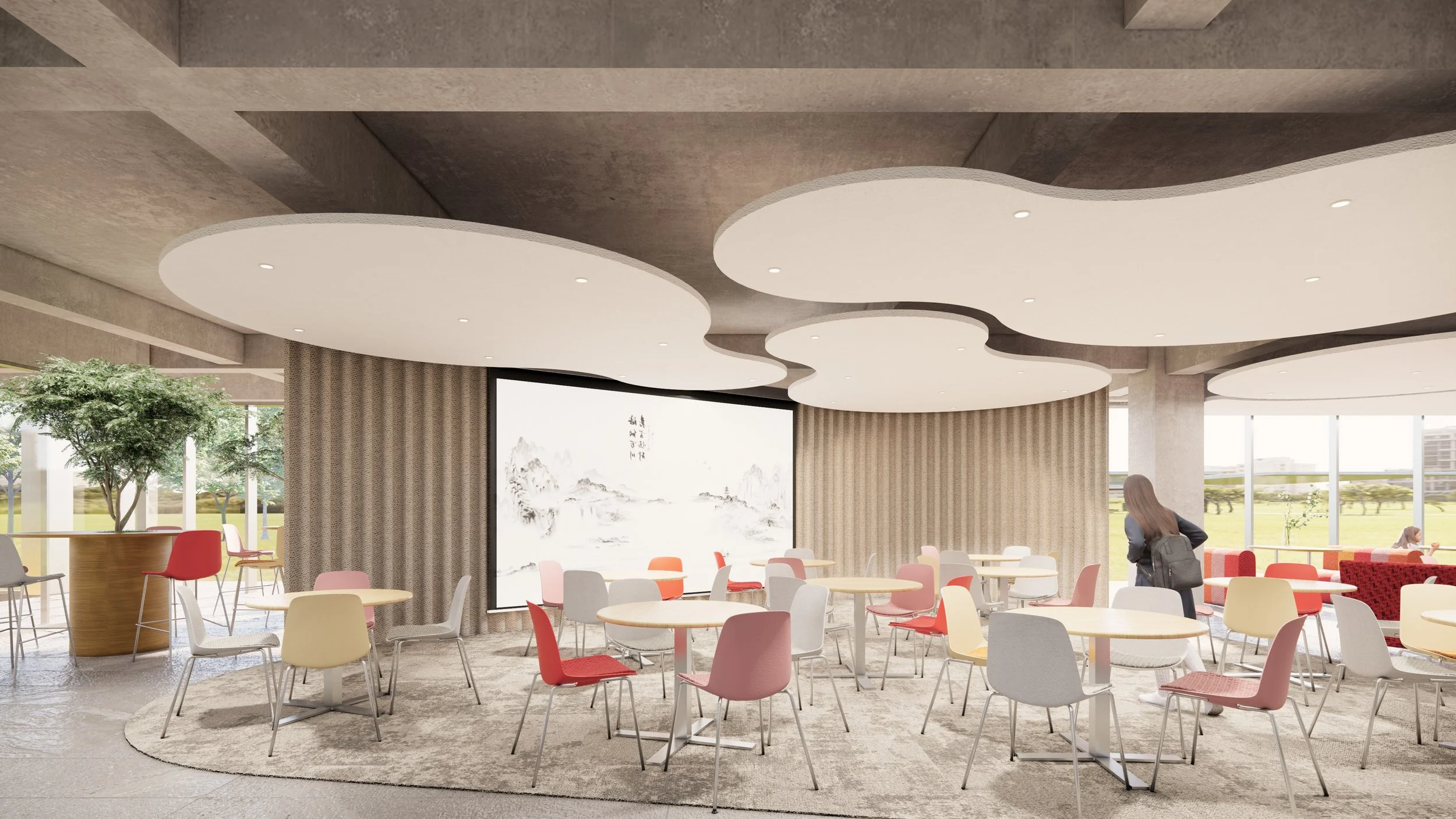
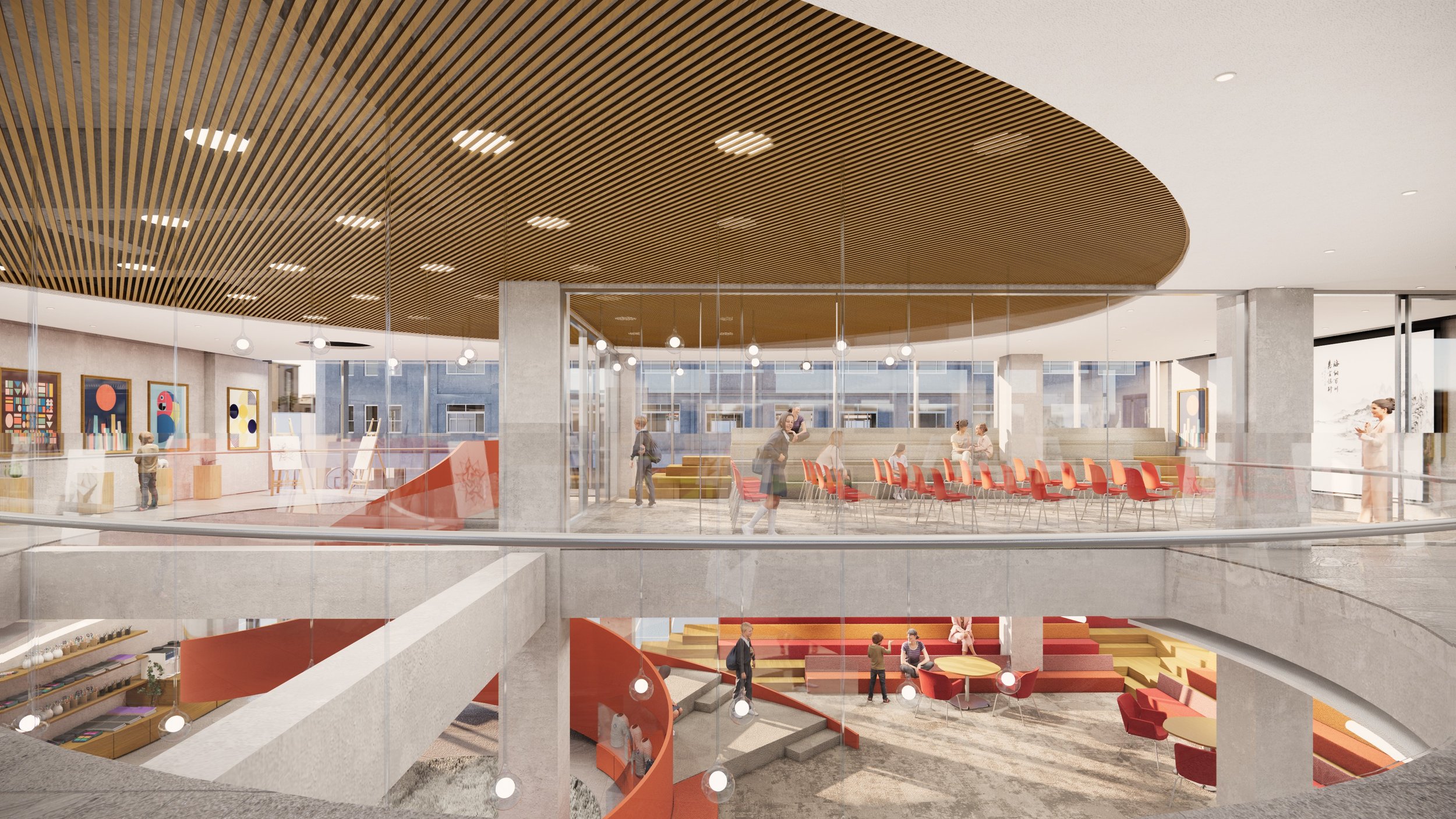
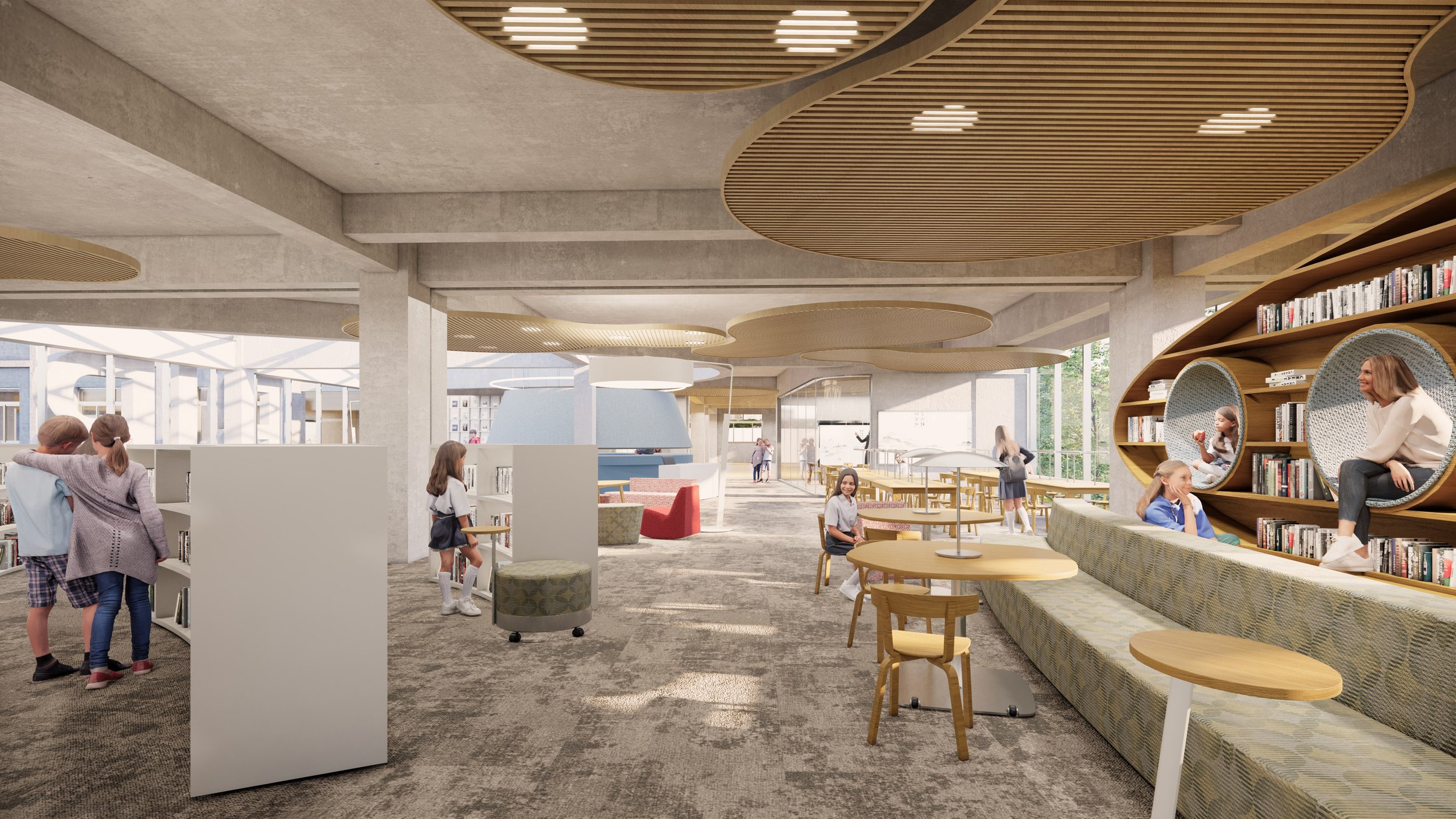
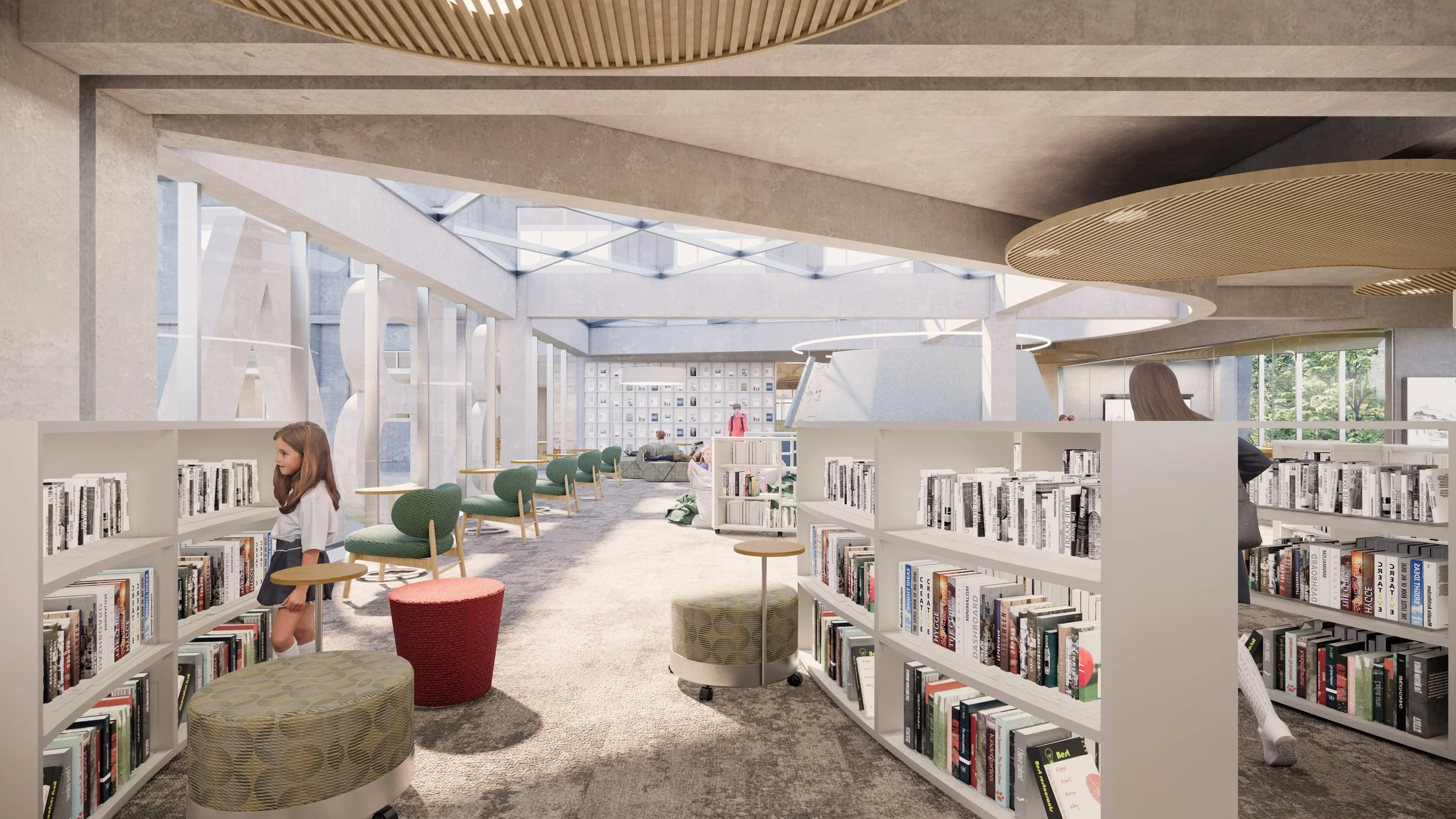
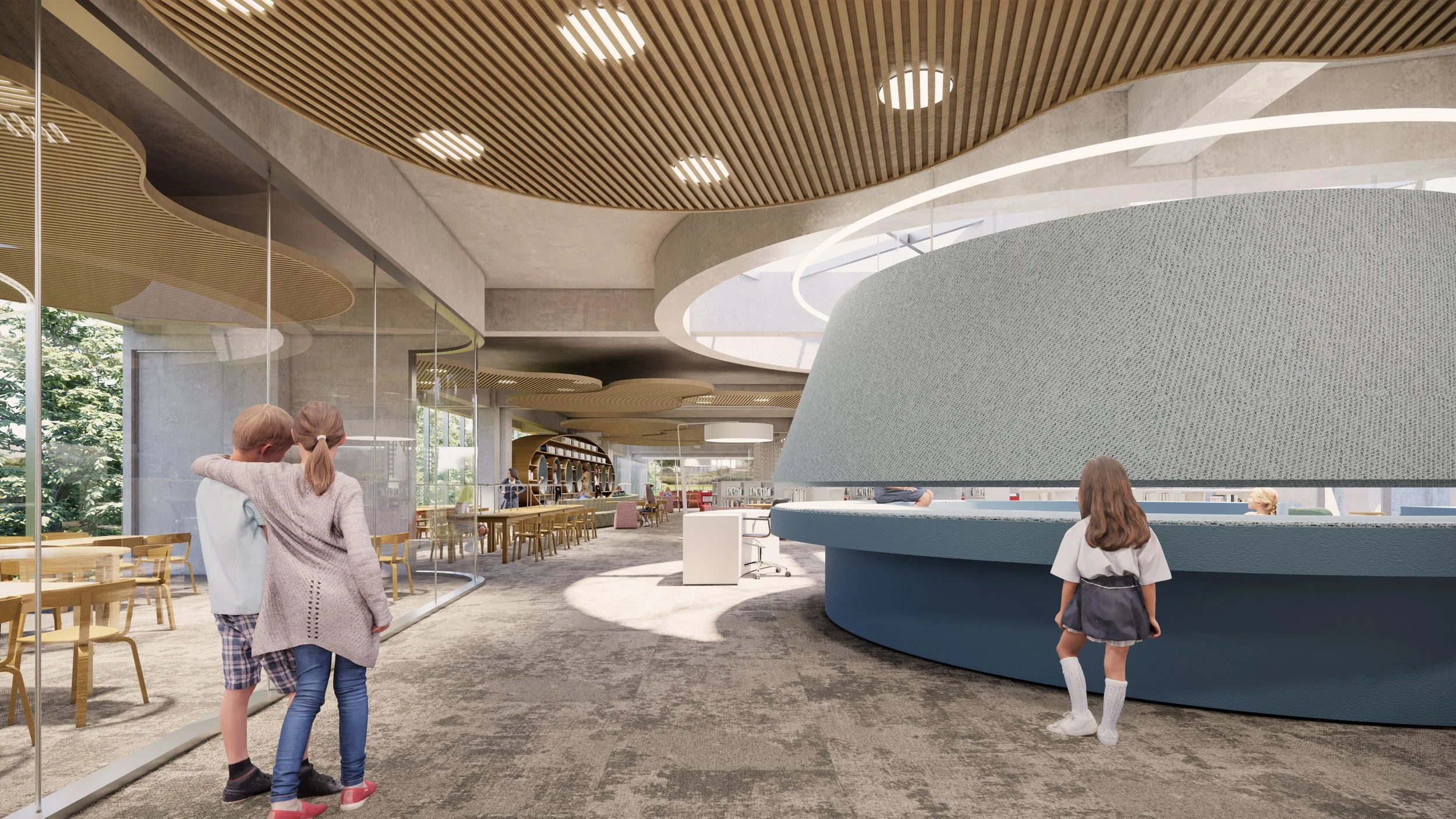
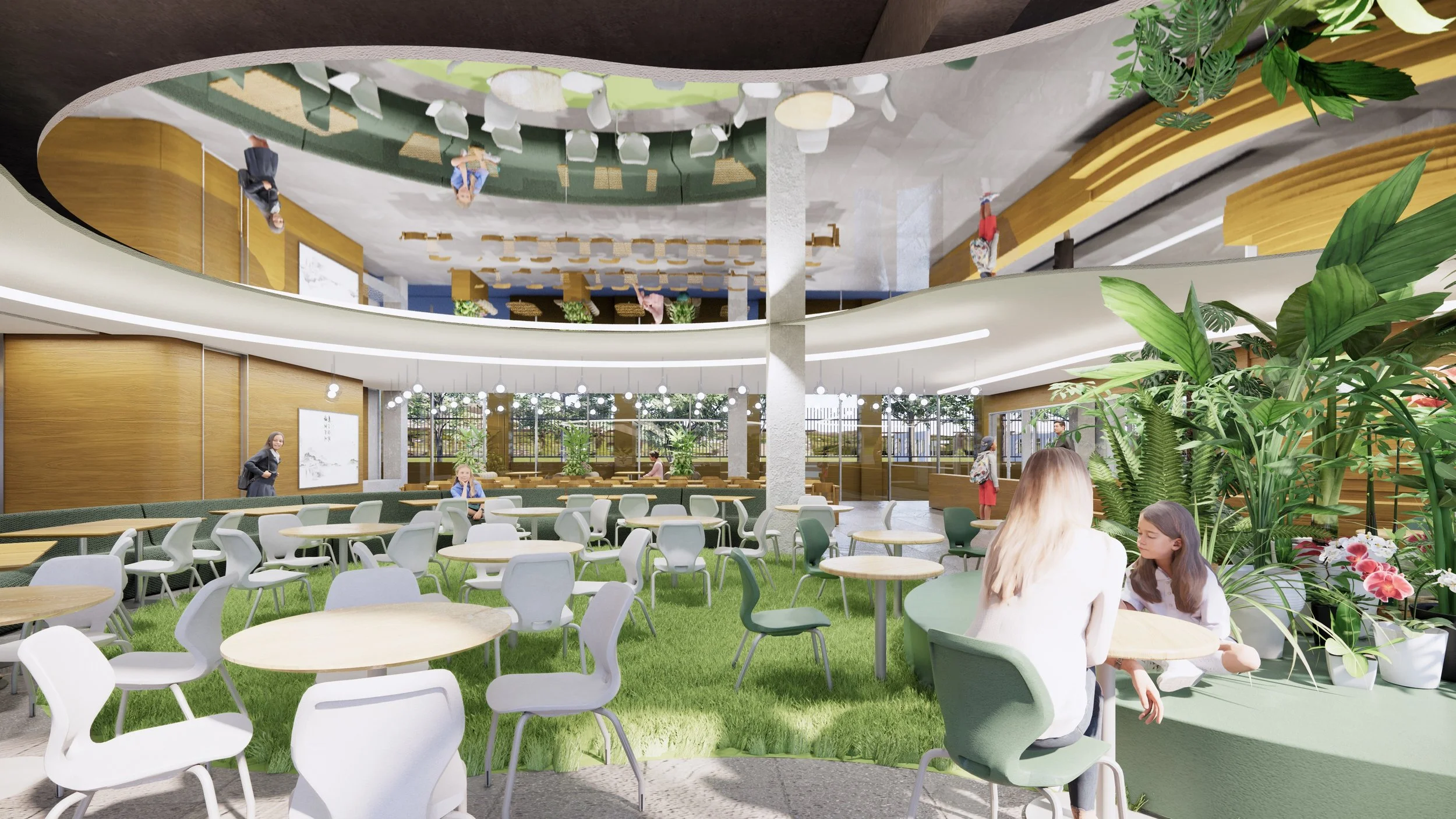
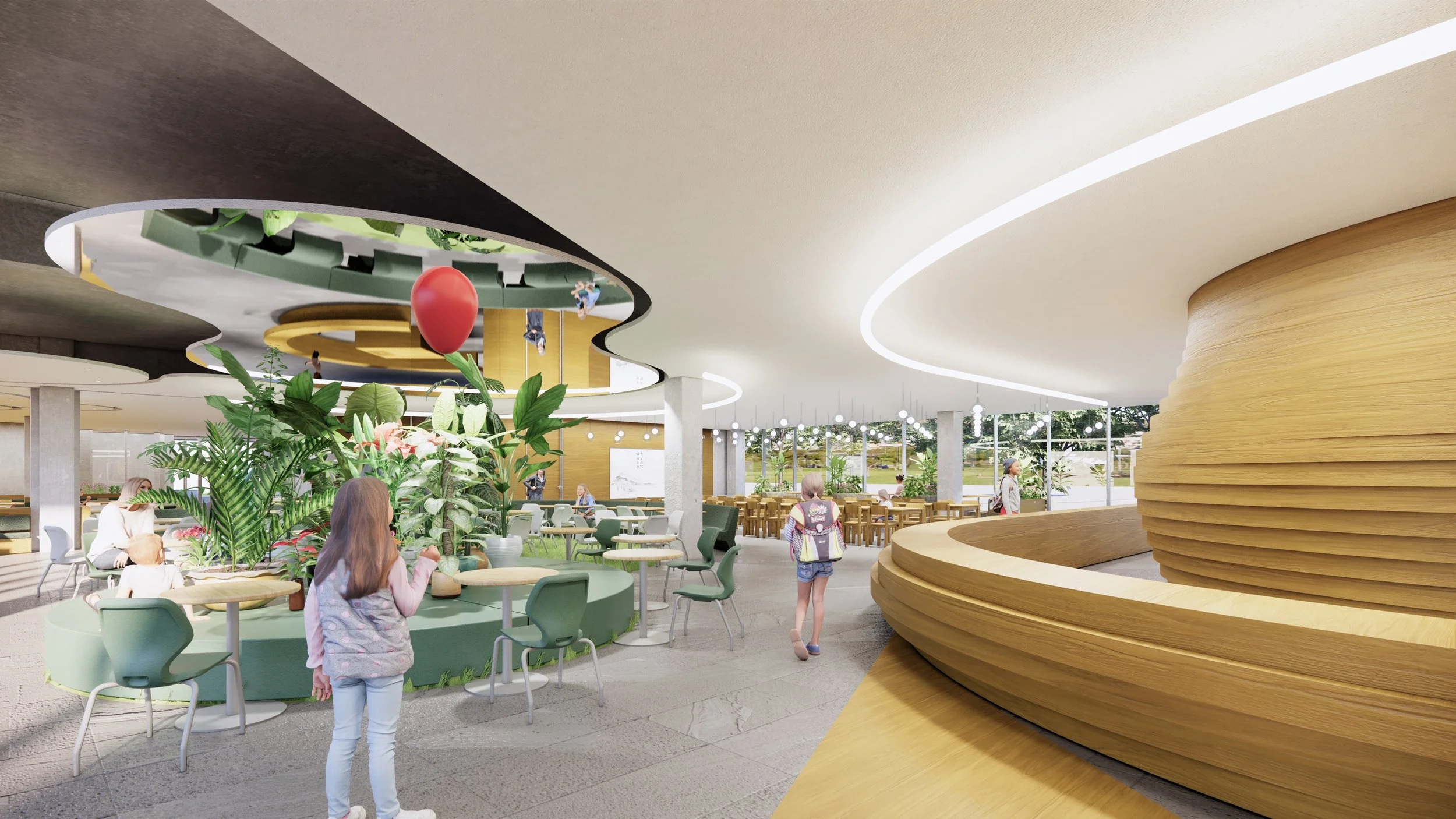
The centrifugal force represents outward energy and the impulse to explore. Open layouts and flexible interfaces encourage movement and interaction. The entrance, defined by a spiraling staircase, symbolizes ascending energy—a launch point for discovery. Adjacent café and open forum spaces serve as multifunctional social nodes that foster informal communication and community exchange. Reconfigurable furniture and adaptable layouts in the multipurpose and reading areas extend learning beyond the classroom, turning it into an ongoing spatial experience. Curved geometries and fluid circulation reinforce this sense of motion, allowing children to learn naturally through walking, gathering, and play. The architecture thus becomes a generator of learning behavior.
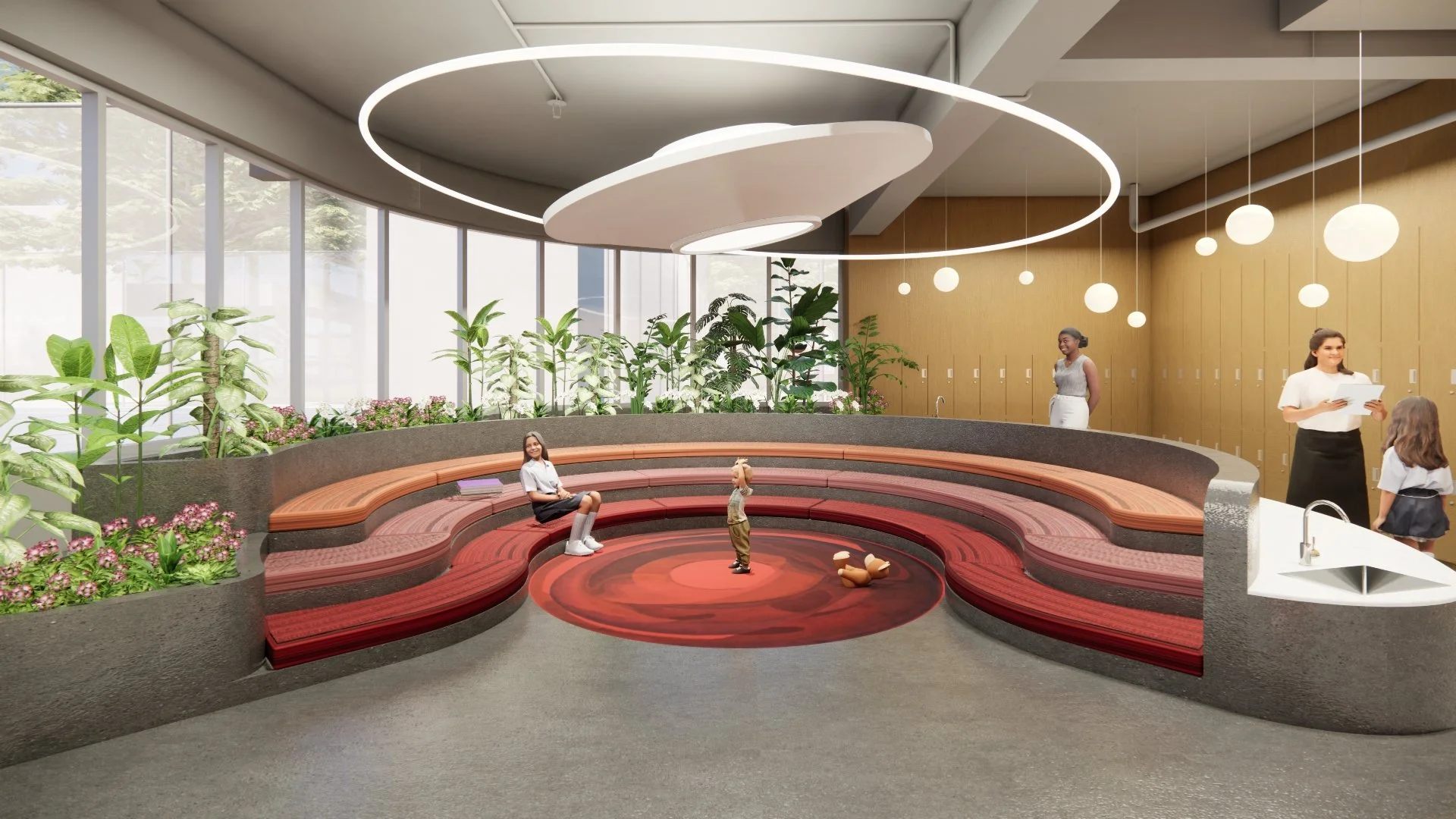
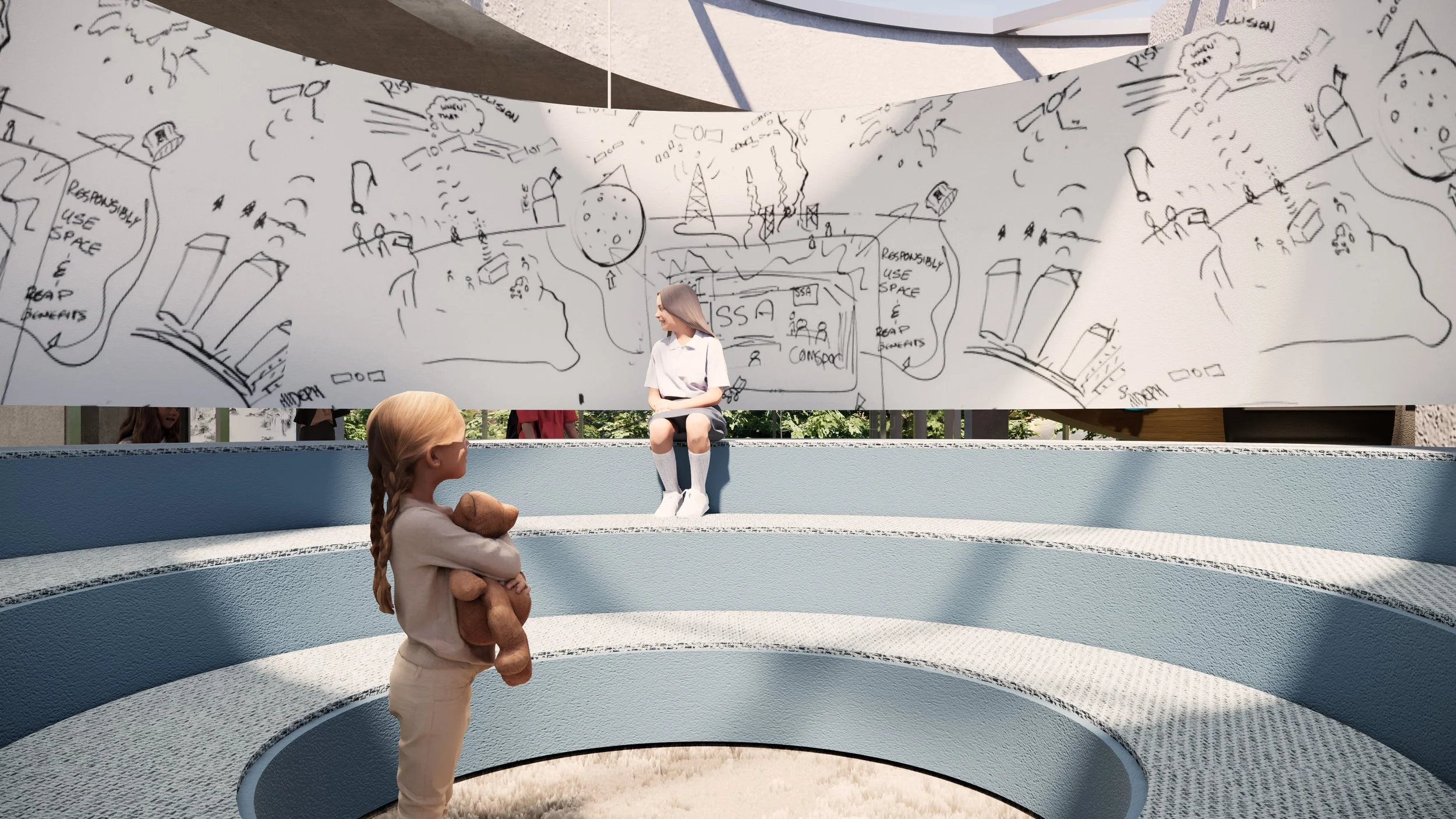
The centripetal force embodies the sense of cohesion and belonging that anchors exploration. Soft materials and natural elements establish warmth and equilibrium throughout the interior. Timber ceilings, greenery, water features, and ample daylight create a comforting gravitational field—a spatial condition of return. Behind the entrance, the lounge and reading zone function as a “mental orchard,” where gentle tones and circular seating support collaboration and social interaction. Teacher lounges and meeting rooms provide sheltered environments for focus and community support. The circular sunken discussion area—the “Meteor Observatory”—integrates a 360° whiteboard system and skylight to shape a collective learning arena, turning discussion into a shared ritual.
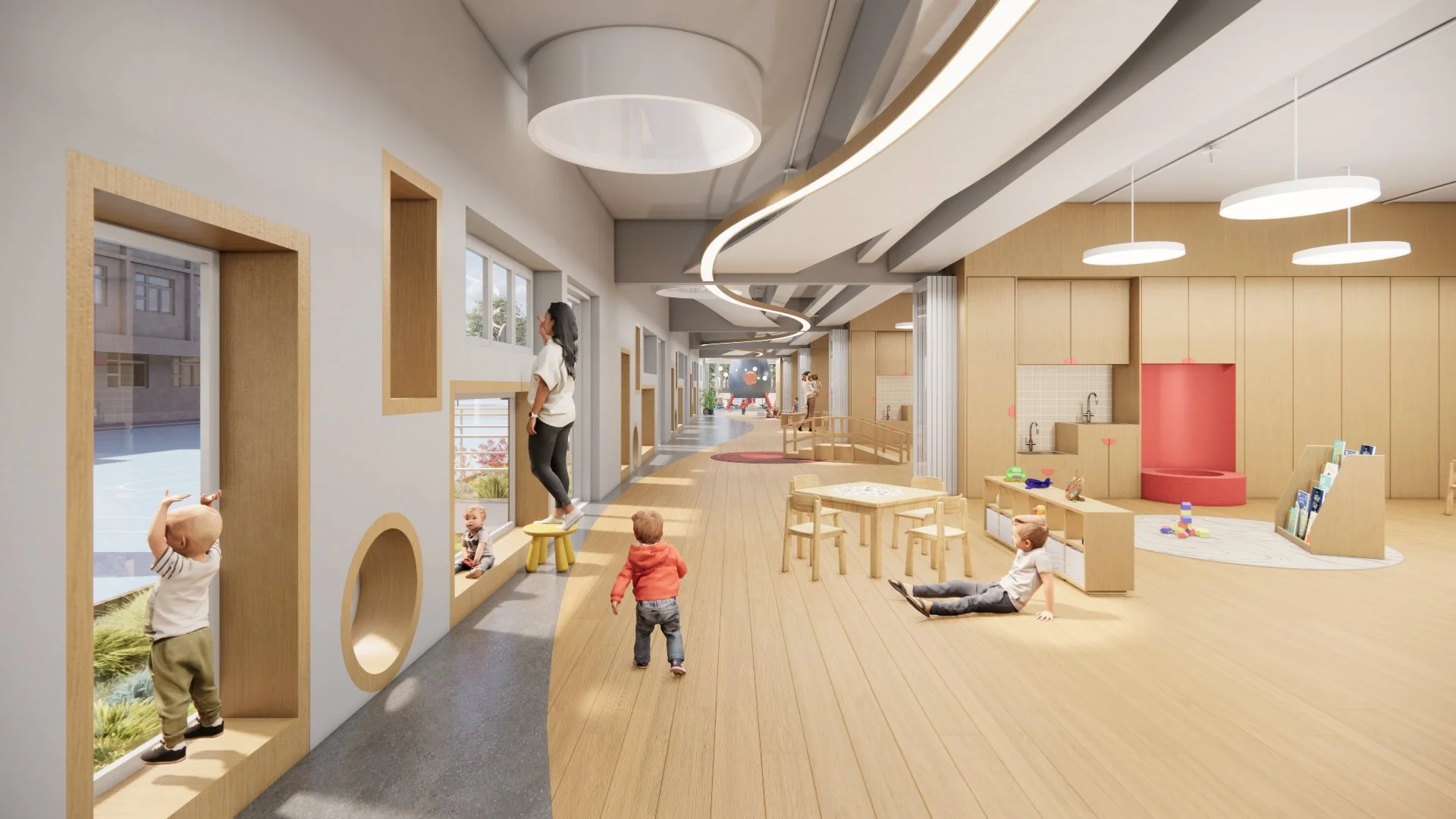
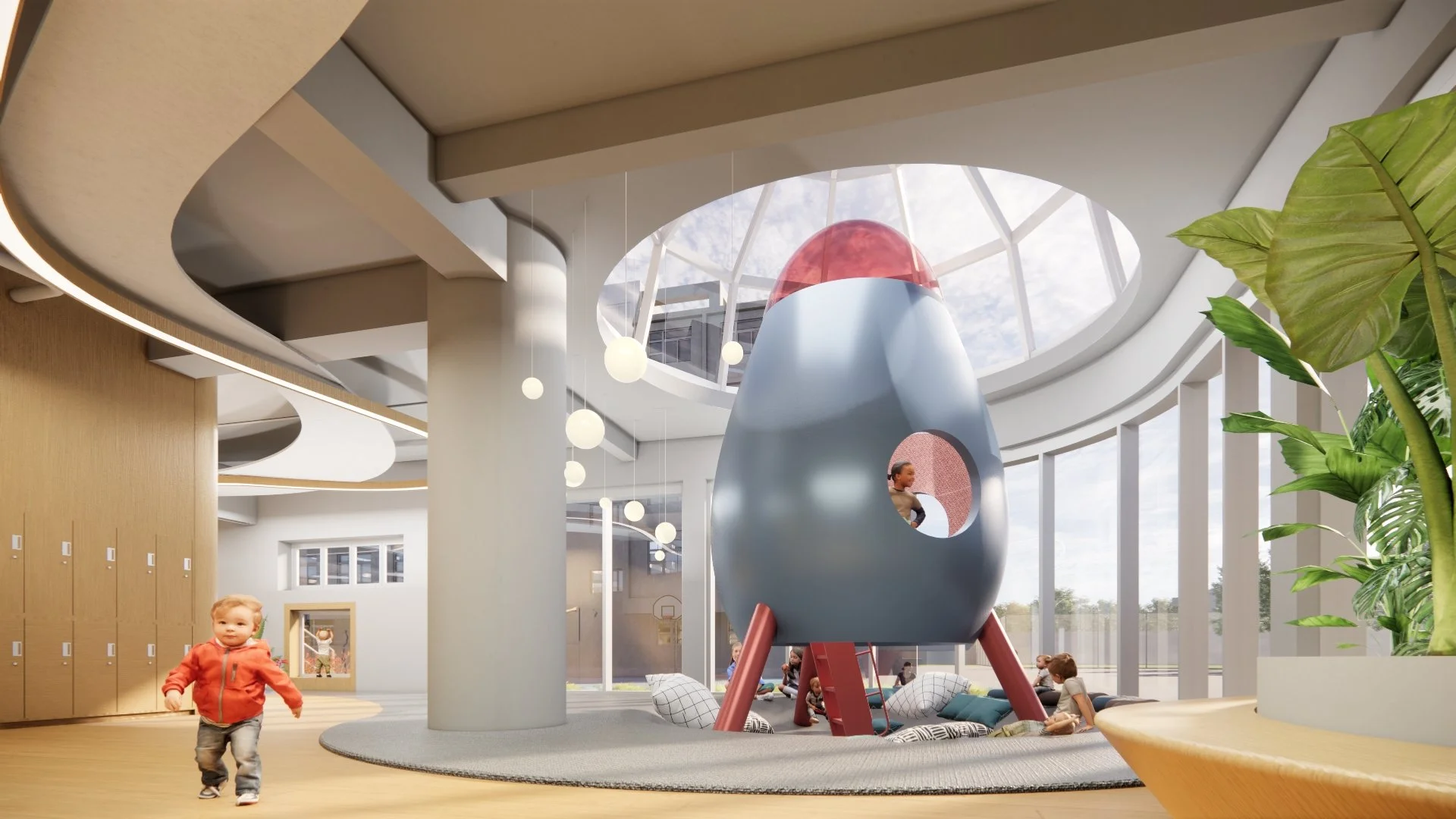
The dialogue between centrifugal and centripetal forces extends into reading and play areas. Suspended wooden reading pods trace planetary orbits, where children can curl up to read or converse. Below them, social platforms and quiet corridors reconnect the interior with the outside world. Window-side reading spaces, greenhouses, and kitchen areas introduce nature into the learning environment—light, plants, and the scent of food become tangible educational resources, where sensory and intellectual growth coexist. For younger children, rocket-shaped pods and crater-like play zones embody the rhythm of “exploration and return,” translating spatial movement into metaphors of psychological growth.
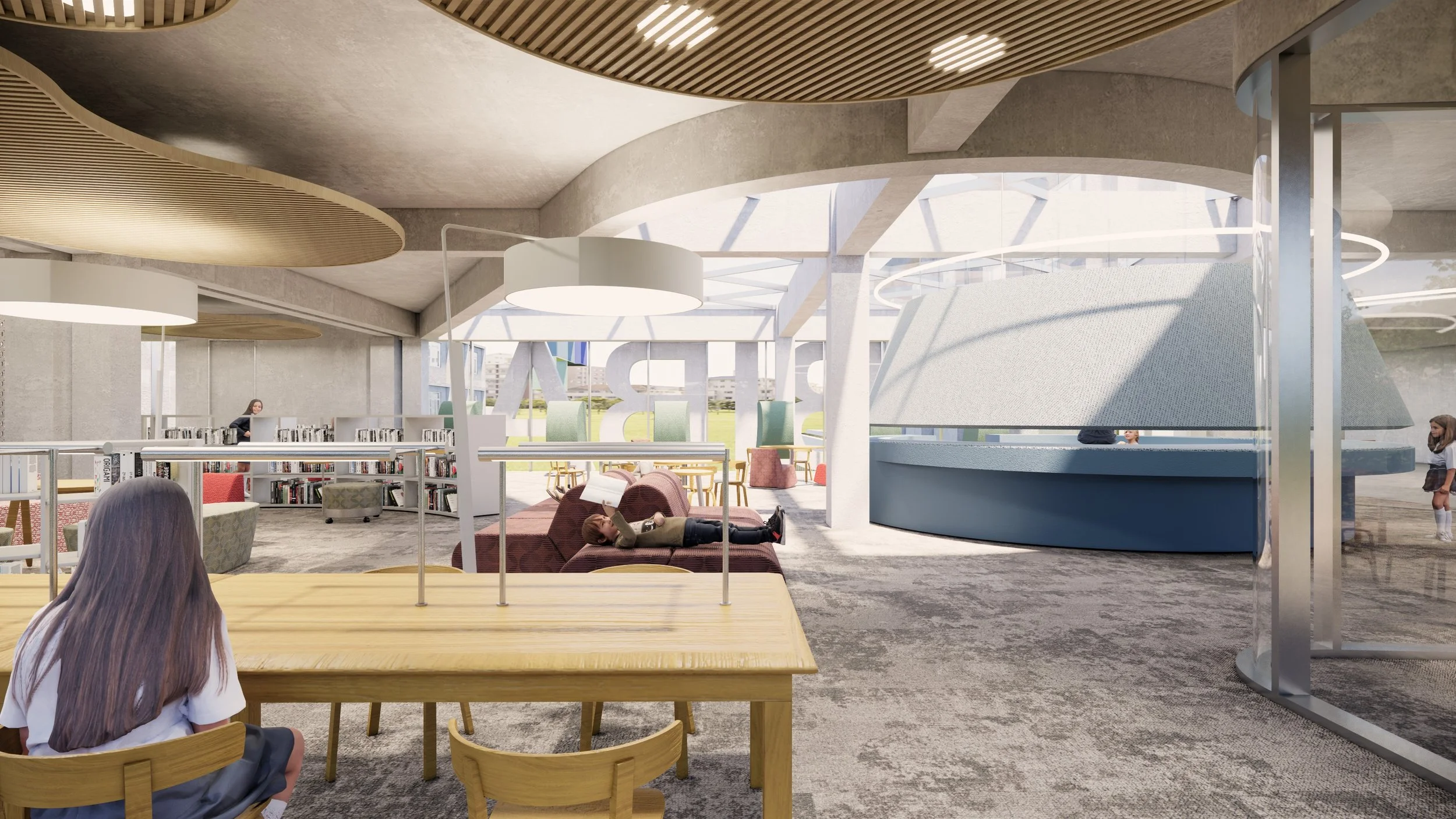
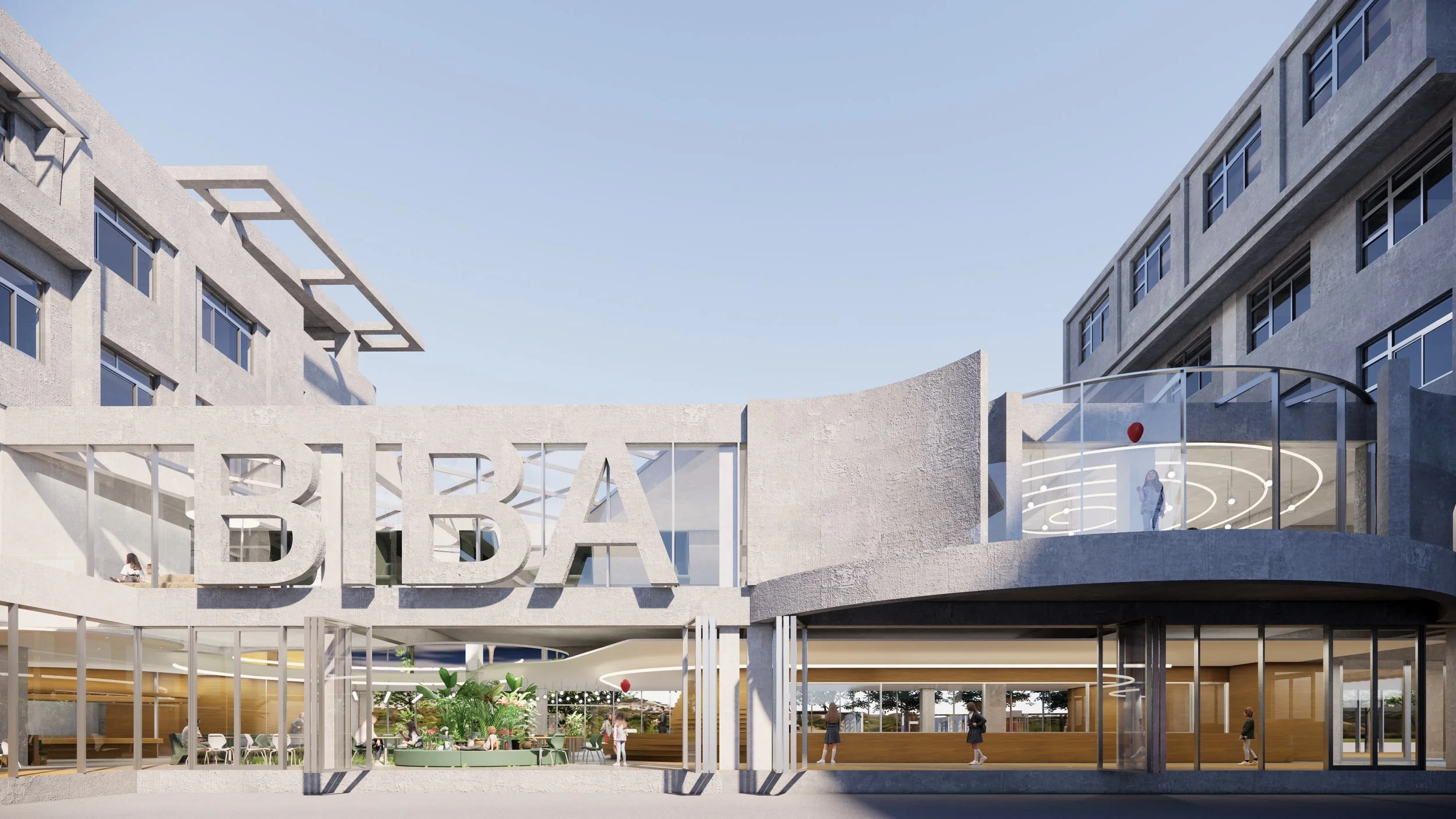
Ultimately, the design establishes an educational spatial structure founded on balance rather than hierarchy. Centrifugal force encourages exploration and innovation; centripetal force provides safety and belonging. The tension between the two sustains the continuity of learning. The school thus becomes a living ecosystem—where knowledge, body, and emotion interact, attract, and regenerate. Education is reinterpreted as a gravitational process: expanding through connection, and forming order and meaning within a shared field of gravity.
CHIEF DESIGNER
Xiaoyi Ma
DESIGN TEAM
Jing Zhu, Jiajia Wang, Pengfei Chen, Yun Hong, Shi Fu, Yan Xia, Weihui Yan