

BIBA ELEMENTARY SCHOOL RENOVATION
BEIJING KEYSTONE STEM CENTER
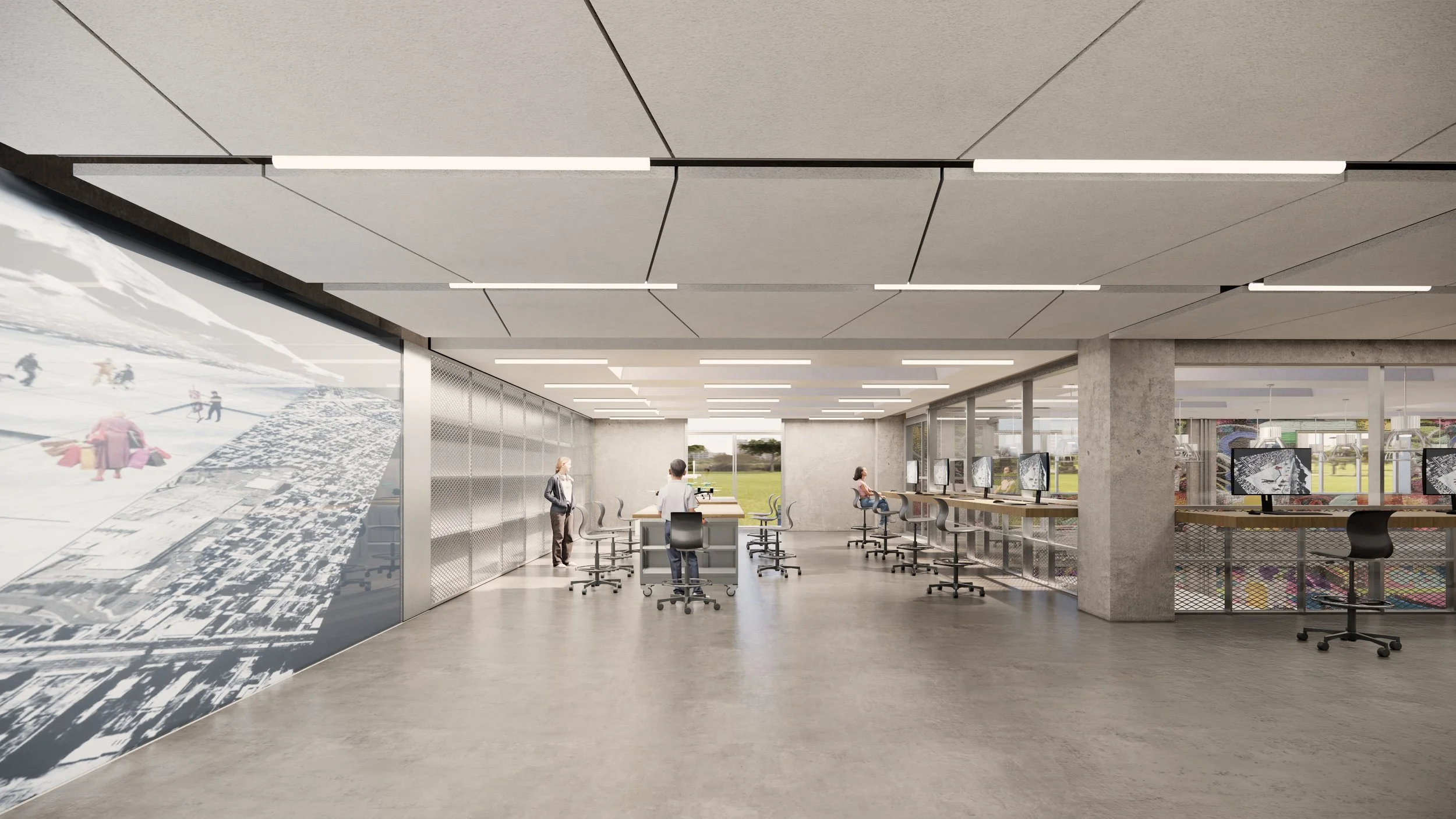
The project transforms an existing facility at Beijing Keystone Academy into a state-of-the-art S.T.E.M. Innovation Center, supporting interdisciplinary learning in science, technology, engineering, and mathematics. The center is designed to accommodate both additive and subtractive fabrication processes, integrating a full range of advanced technologies within an efficient and pedagogically driven spatial system. The renovation spans two levels organized around a central atrium, establishing strong visual and spatial connections between different learning zones.
LOCATION Beijing, China
AREA 1035 m²
STATUS Completed
CLIENT Beijing Keystone Academy
YEAR 2025
PROGRAMS Educational, Interior Renovation
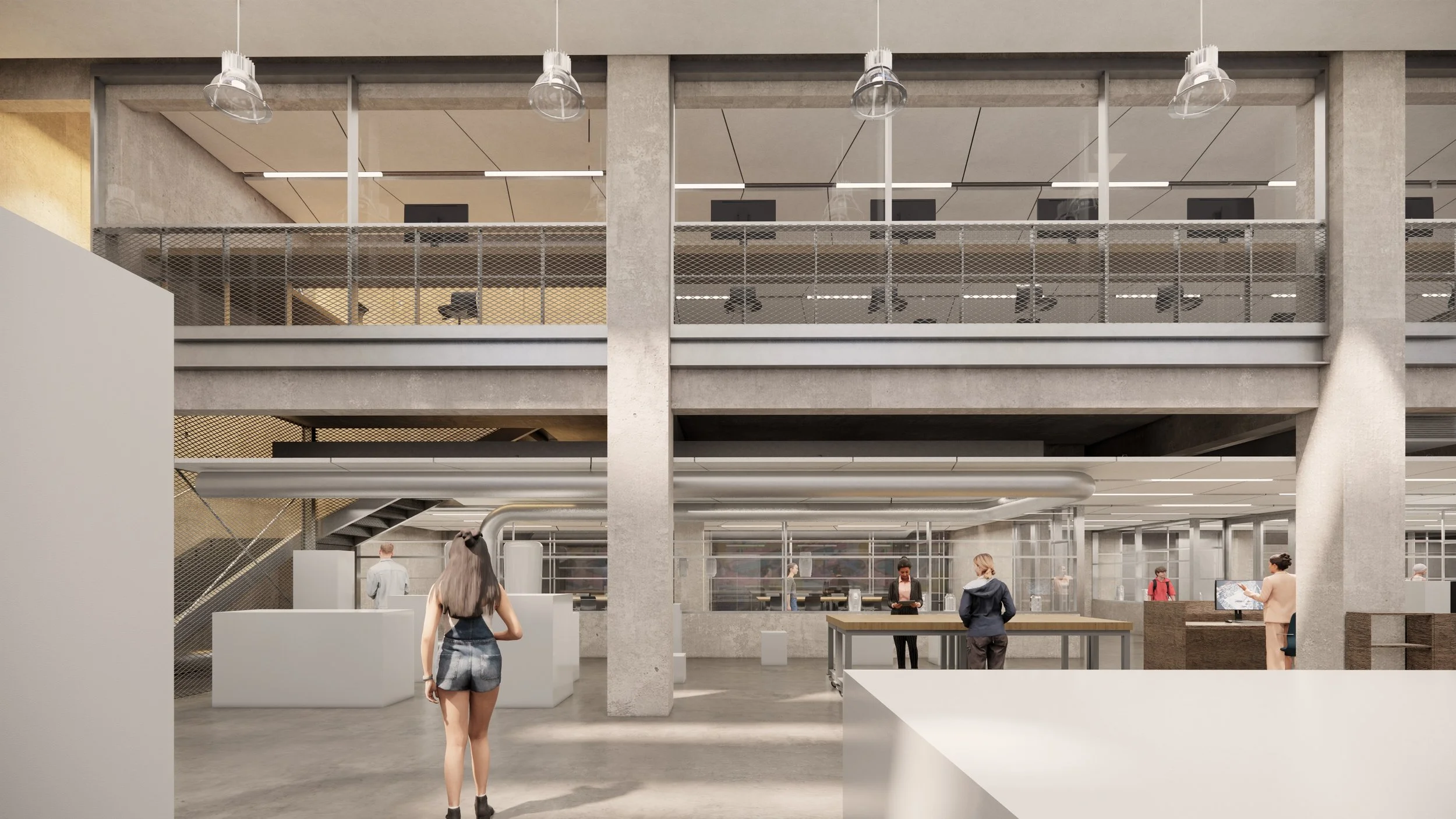
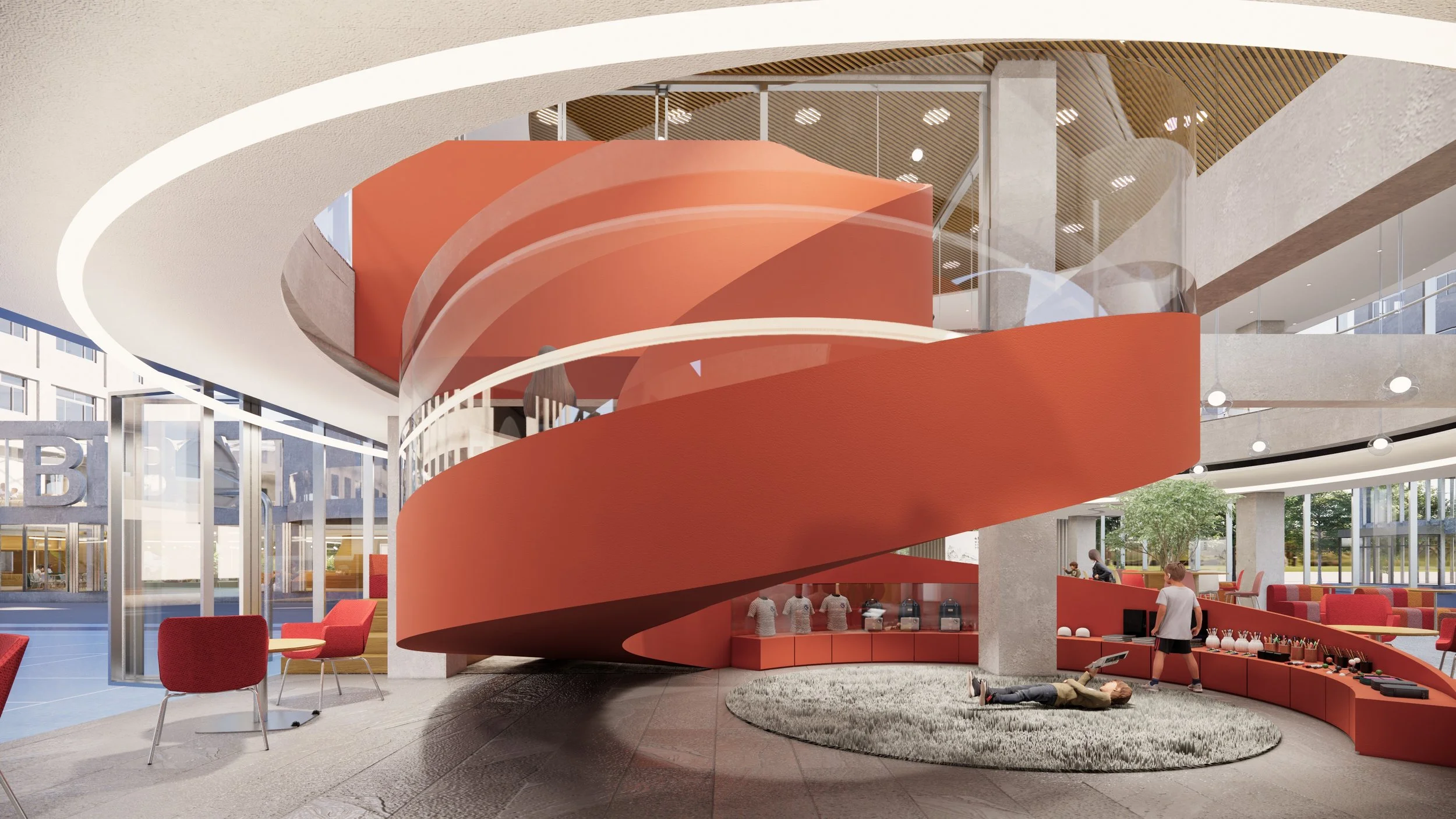
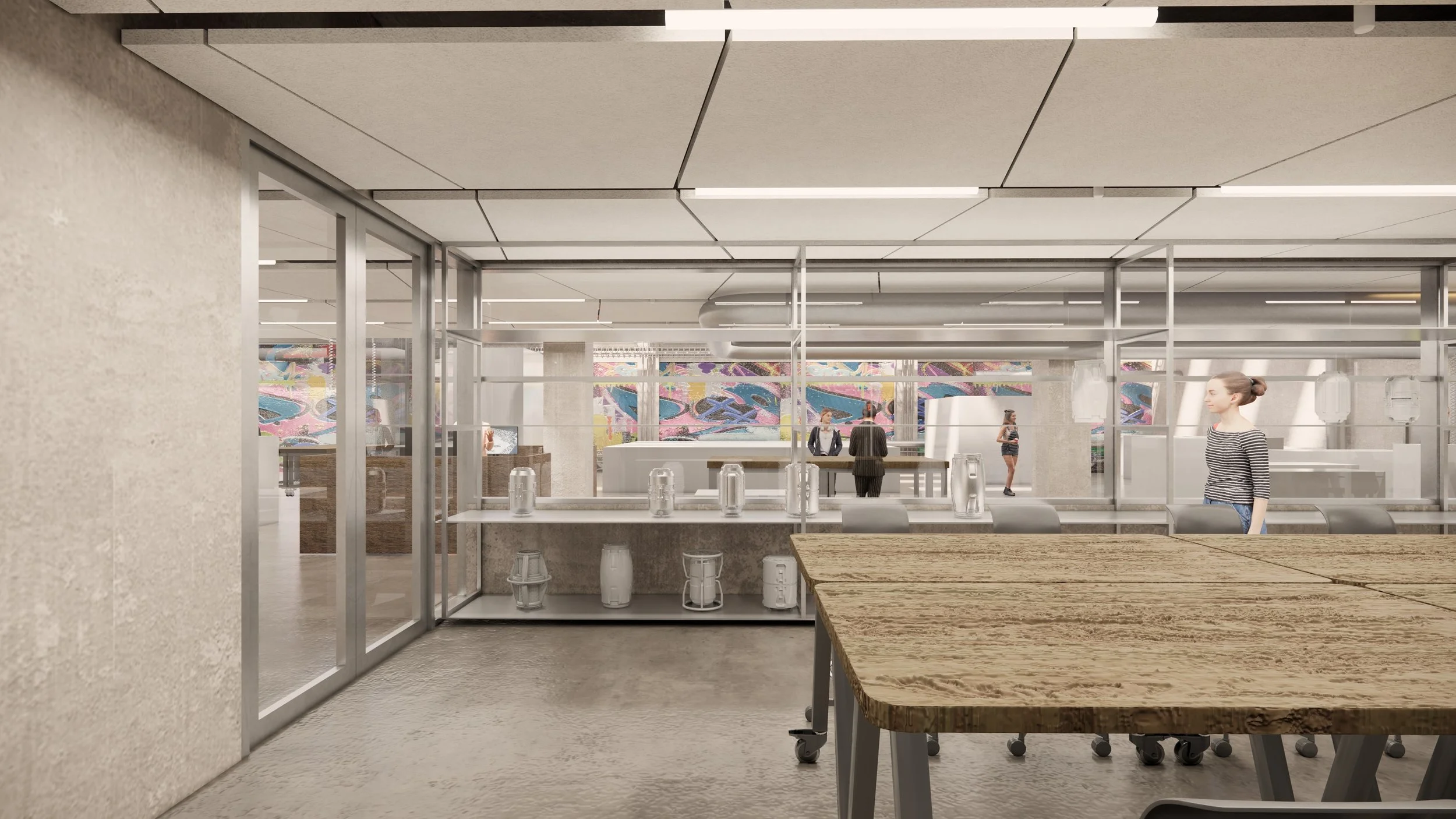
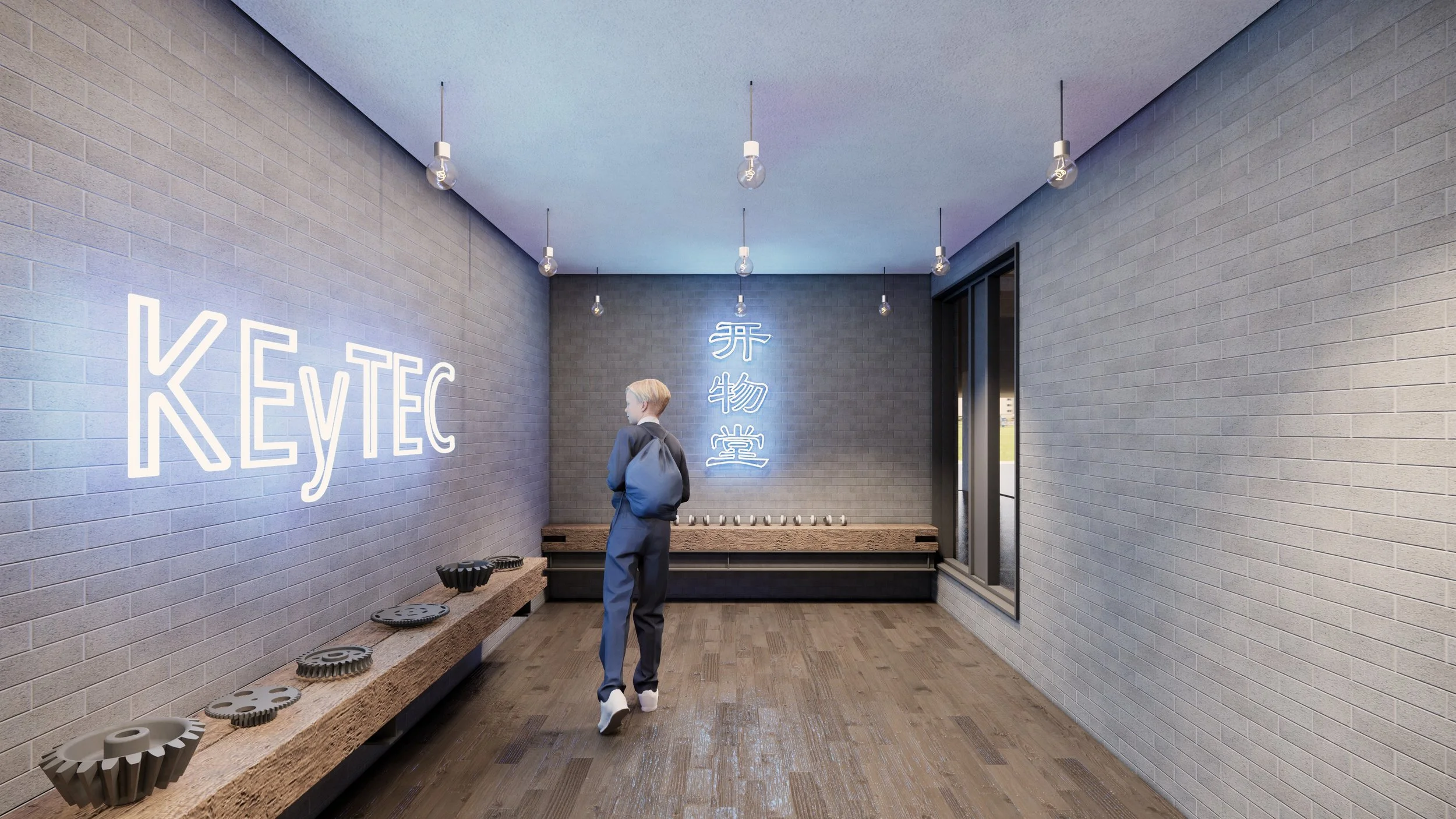
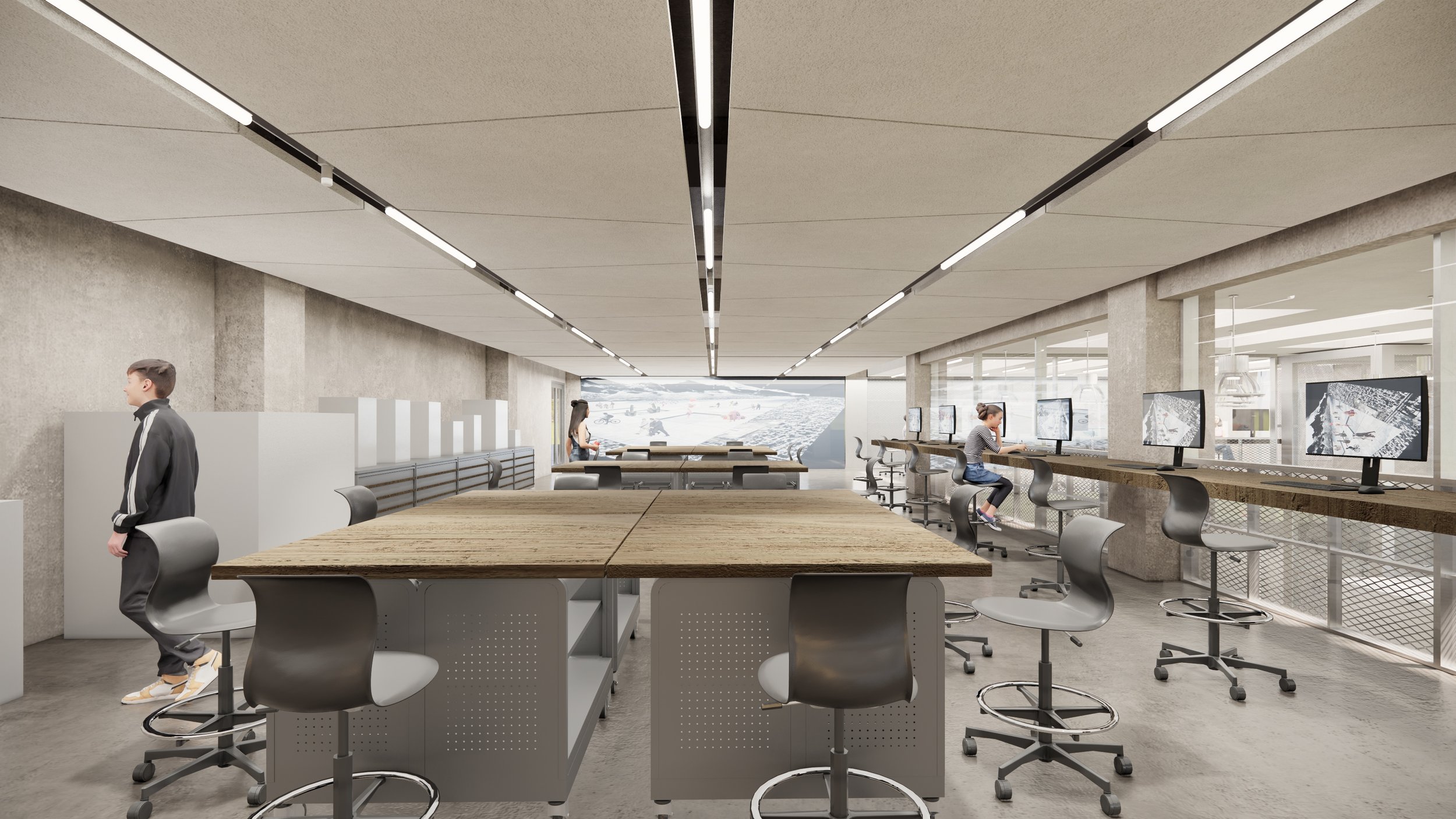
The upper floor accommodate the Printing & Prototyping Lab, VR Lab, Robotics Lab, and a Main Exhibition Lobby. These are “clean” workspaces emphasizing precision and digital fabrication. The lobby utilizes reclaimed gray bricks from the existing building as wall material, reflecting the school’s sustainability principles and commitment to resource reuse. The circulation ring surrounding the atrium allows transparent views through double-glazed partitions—designed both for acoustic isolation and visual connectivity—offering users a sense of engagement with the activities below. From the upper floor, students can visually overlook the subtractive manufacturing area, gaining insight into the complete workflow of S.T.E.M. production. To enhance flexibility, the ceiling integrates movable power rails with retractable outlets, enabling dynamic equipment layouts. The center also employs modular, mobile furniture specifically designed for S.T.E.M. environments, supporting diverse teaching modes from demonstrations to collaborative experimentation.
The lower floor—located partially below grade—is dedicated to subtractive processes such as woodworking, metalworking, and CNC machining. The open workshop is illuminated by a continuous linear skylight over the atrium, bringing natural light deep into the workspace. This level houses large-scale machinery and includes a high-performance ventilation and dust collection system, along with clearly defined safety routes to ensure operational efficiency and comfort. Two enclosed classrooms serve as assembly areas: one for clean mechanical assembly, and another designed for painting and other dust-prone activities, with dedicated exhaust and filtration systems.
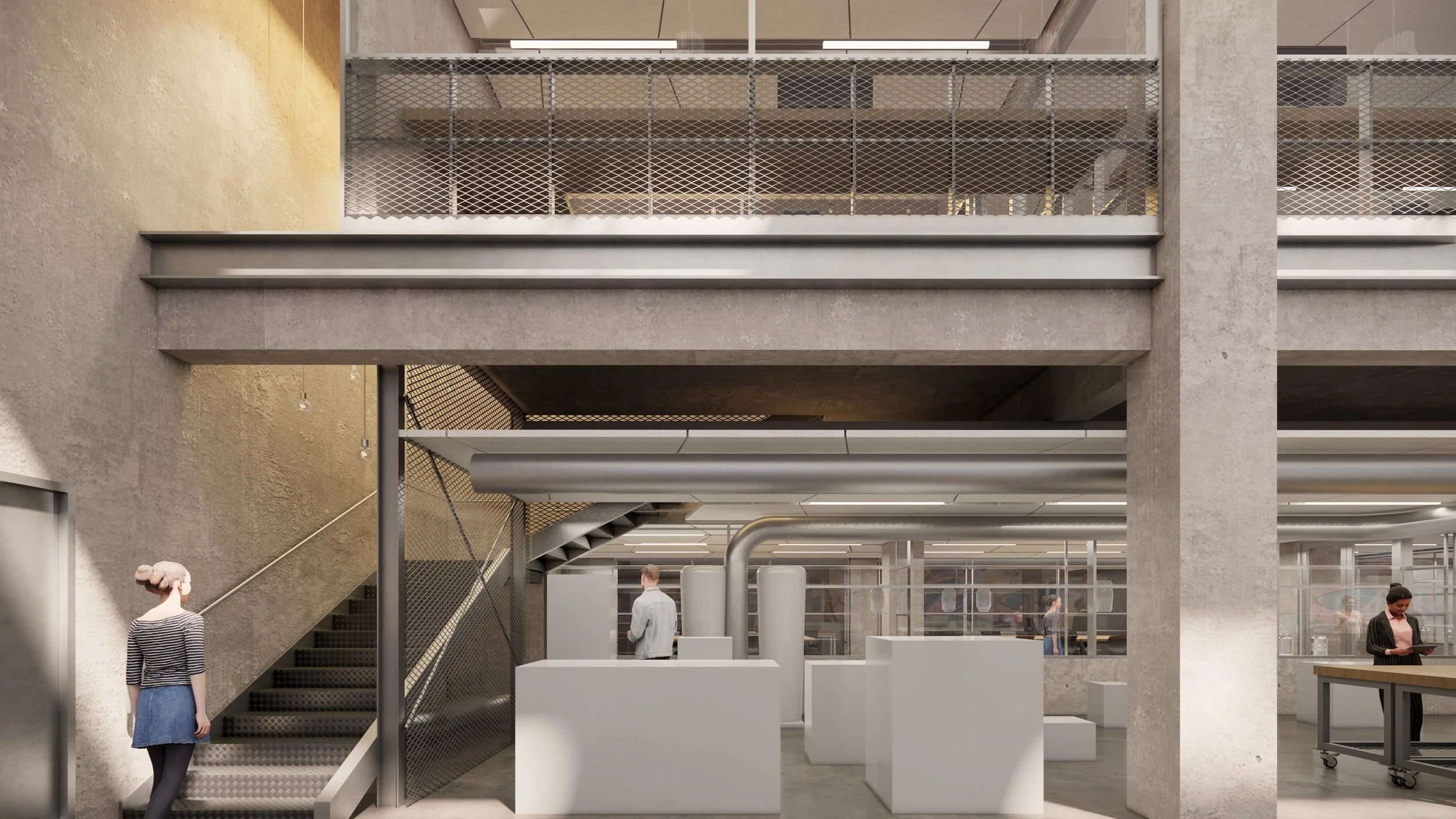
Given the limited construction period, the structural intervention strategy prioritizes minimal alteration to the existing framework. The original stair on the west side was retained to connect the two levels, ensuring clear vertical circulation. The east stair was removed to create a new structural slab, forming an expanded area for the Robotics Lab. This approach balances efficiency with functionality, allowing the new S.T.E.M. Center to achieve high spatial performance within the constraints of adaptive reuse.
The design embodies the integration of technology, flexibility, and sustainability. Through the strategic organization of additive and subtractive zones, transparent visual connections, and adaptive infrastructure, the new S.T.E.M. Center serves as both a pedagogical platform and a symbol of Keystone Academy’s forward-looking educational vision.
CHIEF DESIGNER
Xiaoyi Ma
DESIGN TEAM
Pengfei Chen, Jing Zhu, Jiajia Wang, Weihui Yan