
BIBA ELEMENTARY SCHOOL RENOVATION
TANGSHAN HIGH-TECH DISTRICT
INNOVATION HIGH SCHOOL
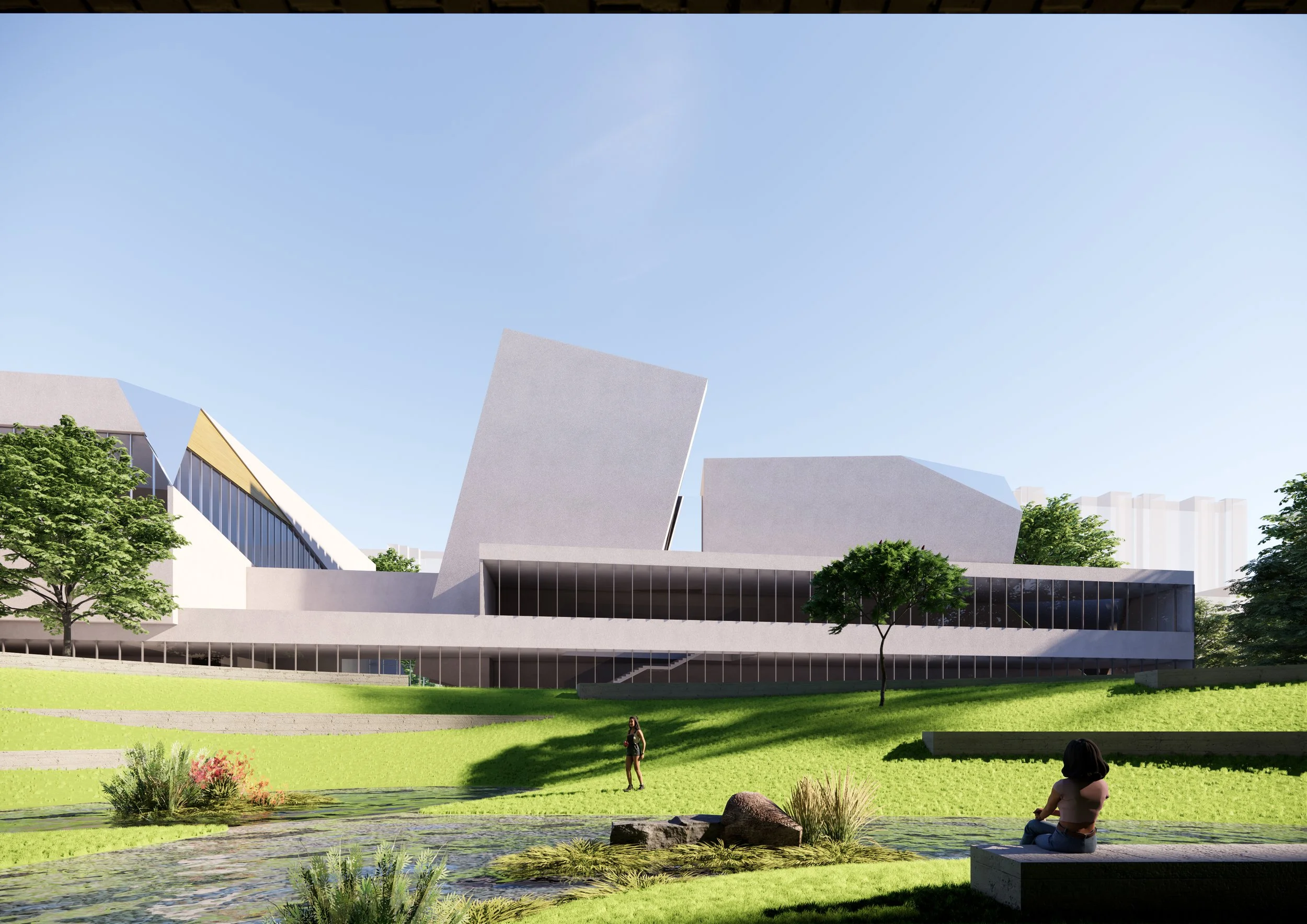
Tangshan High-Tech District Innovation High School is conceived as an integrated learning landscape in which architecture, topography, and ecology collectively shape pedagogy. The design treats the site’s existing 4-meter west-to-east level change as an organizing asset. Rather than removing the differential through extensive earthworks, the proposal transforms it into a sunken courtyard that serves as the campus’s ecological and social nucleus, connecting teaching blocks, dormitories, and public facilities.
LOCATION Tangshan, China
AREA 42377 m²
STATUS Proposal
CLIENT Administrative Committee of Tangshan Hi-tech Industrial Development Zone
YEAR 2024
PROGRAMS Educational, Architecture, Landscape Design
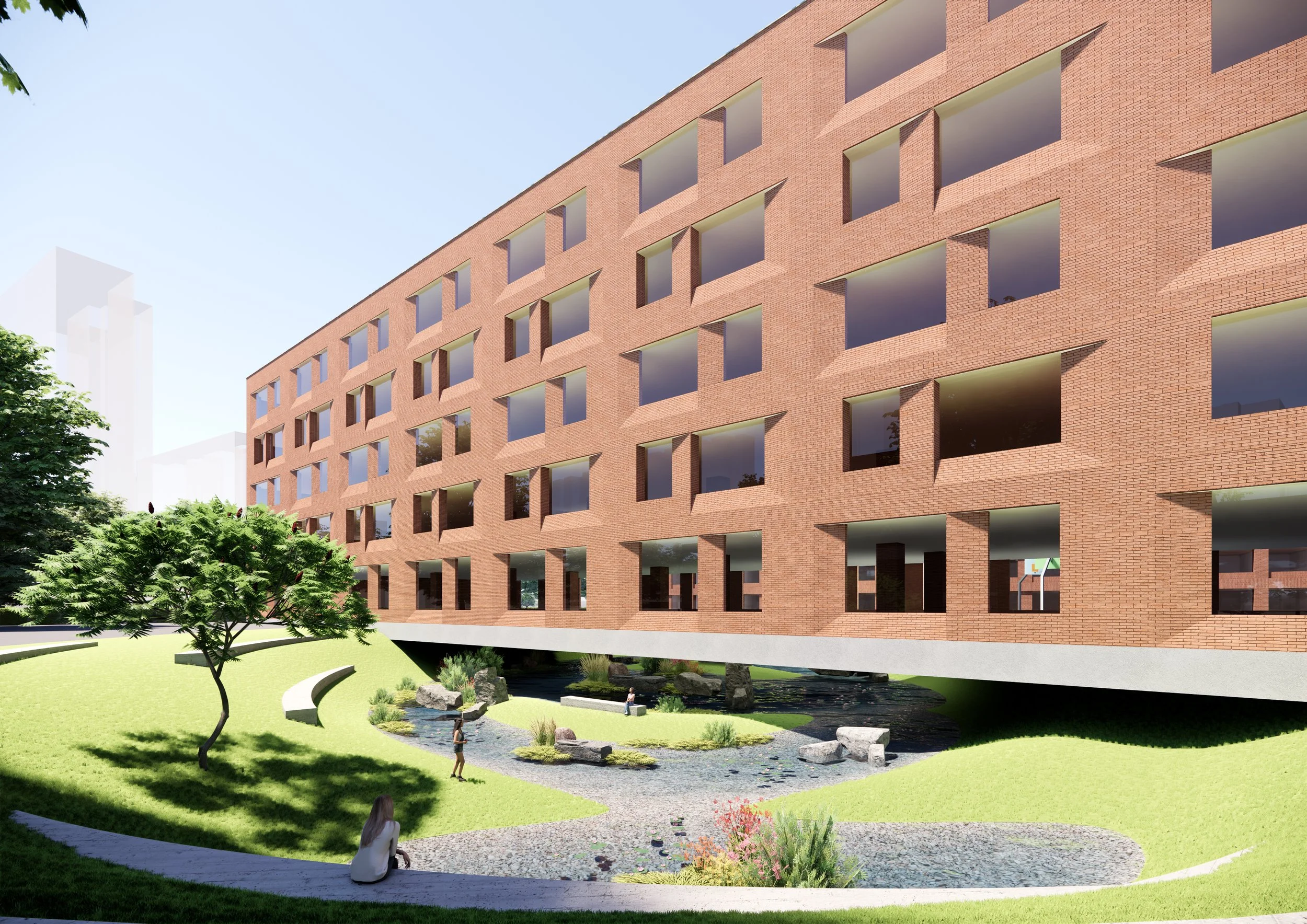
The southern edge of the sunken courtyard is articulated as an engineered wetland calibrated for seasonal performance. In the rainy season the wetland operates as a retention basin and reflective landscape, attenuating runoff and enhancing microclimate; in the dry season the planted terraces become accessible learning platforms with diverse textures and microhabitats. The wetland is programmed as a living laboratory for environmental science, hydrology, and ecology; its sequence of wet and dry conditions provides direct, repeatable observation opportunities for curriculum integration.
Framing the wetland, a street basketball court and stepped terraces form a flexible activity arena. These terraces mediate level change, provide informal spectator seating, and create sheltered microclimates that extend outdoor use across seasons. The courtyard ensemble supports daily physical activity, spontaneous performance, and informal assemblies, embedding sport and social interaction into the campus’s daily routines.
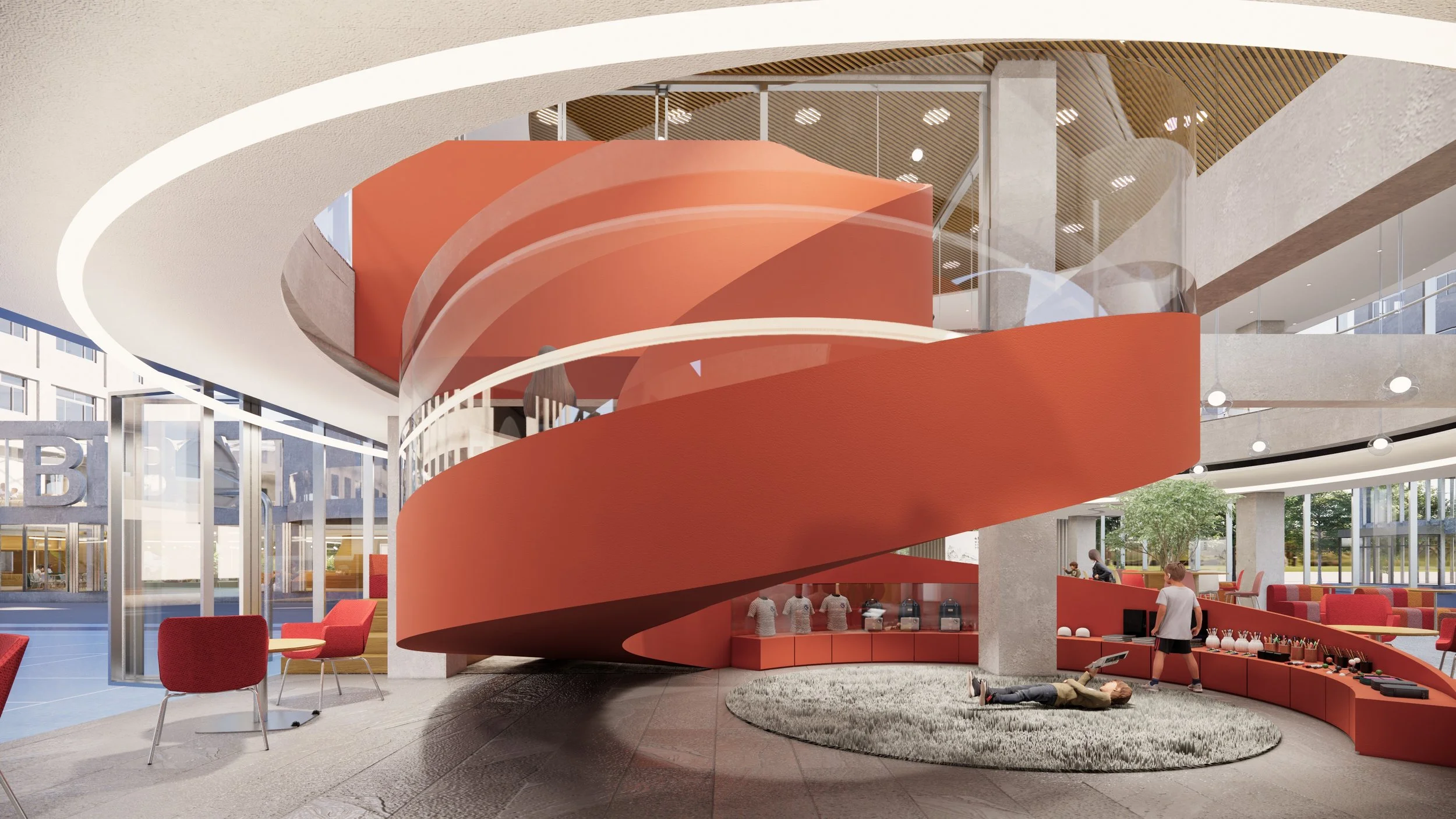
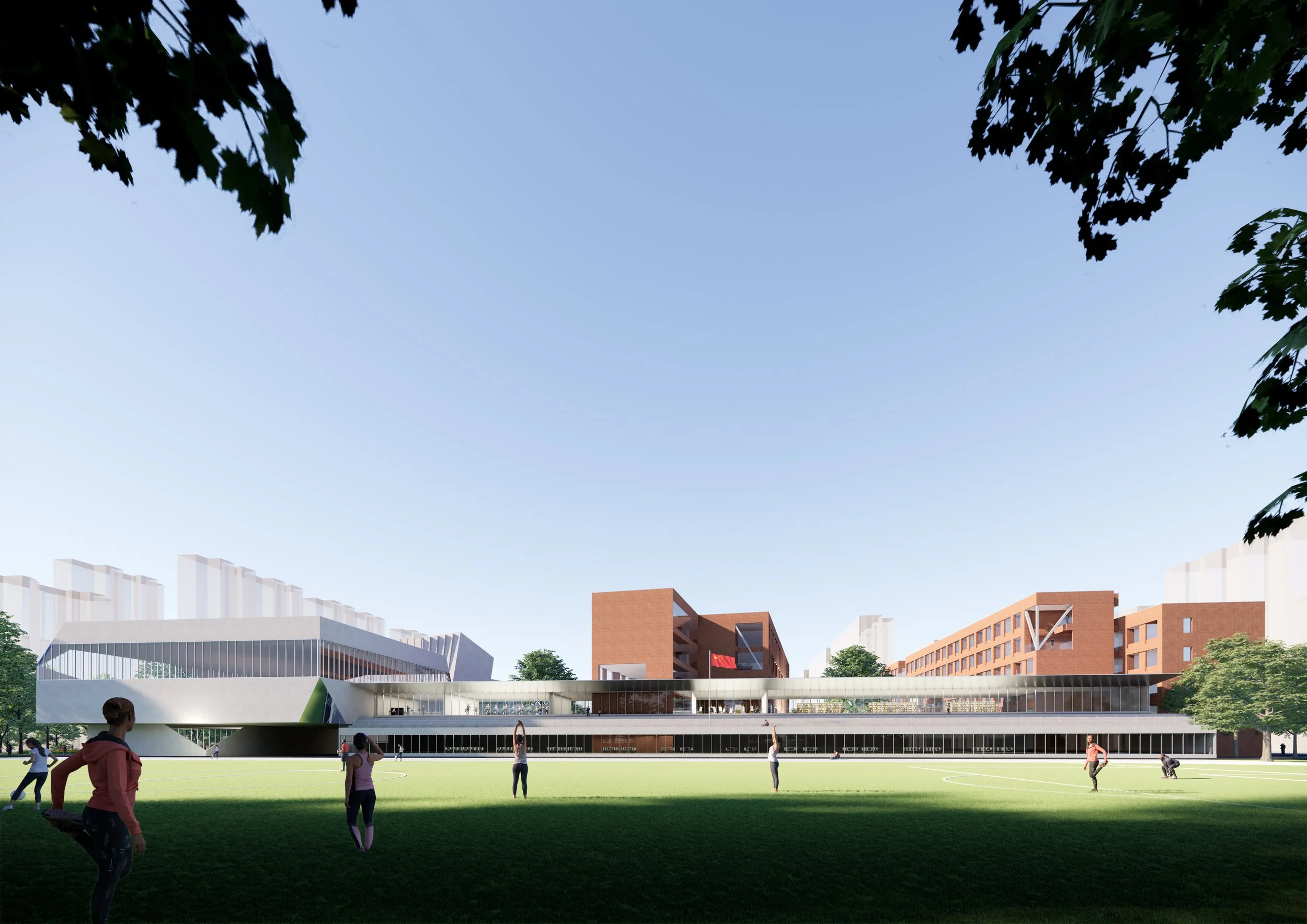
The Student Center functions as the campus spine, integrating an 800-seat dining hall, a library, art studios, galleries, and STEAM classrooms. Sited between dormitory and sports/assembly facilities, the center facilitates interdisciplinary exchange and public programming. Its near-100-metre rooftop terrace overlooks the principal field and operates as an elevated platform for assemblies, exhibitions, and parent engagement, strengthening campus connectivity and visibility.
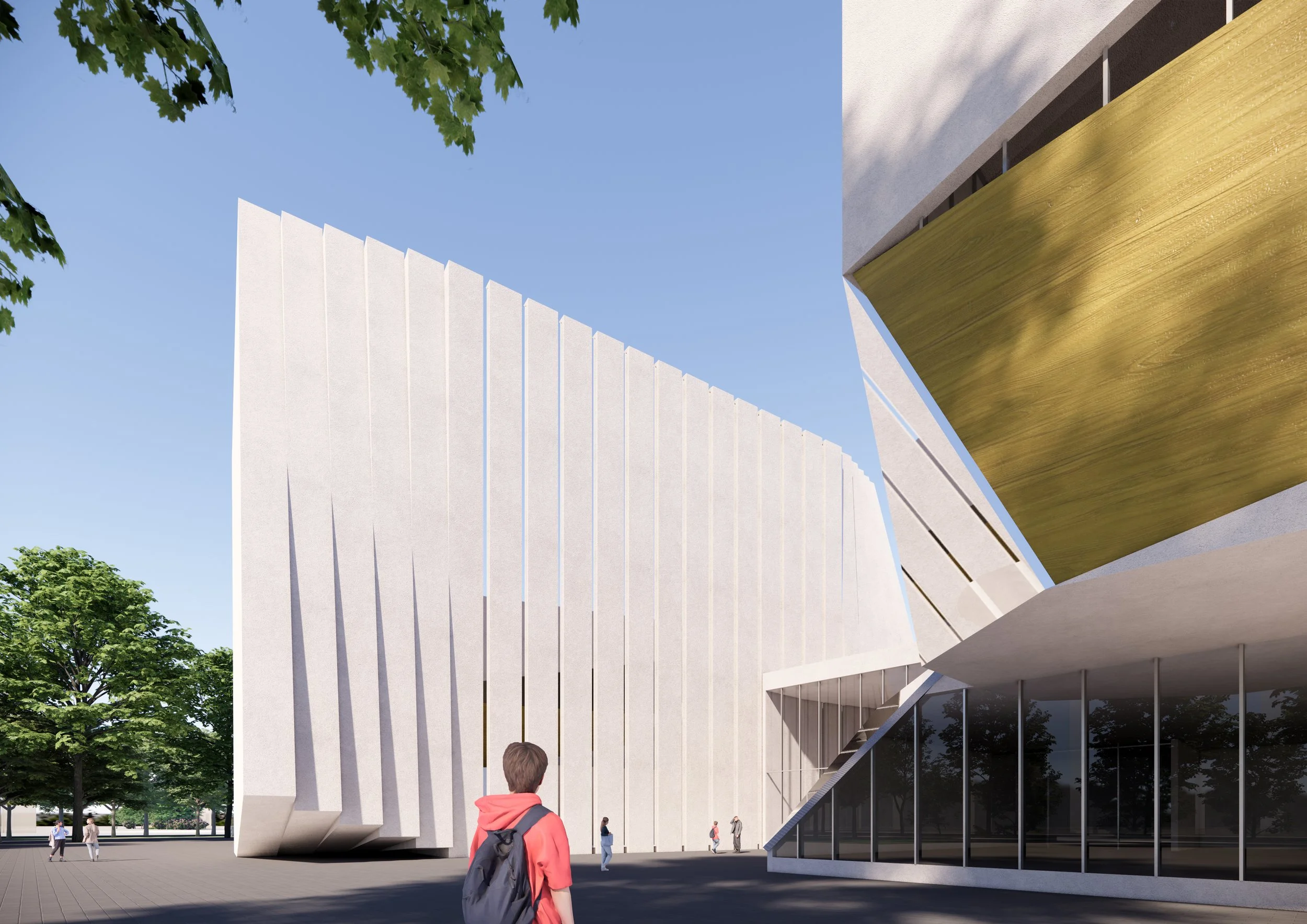
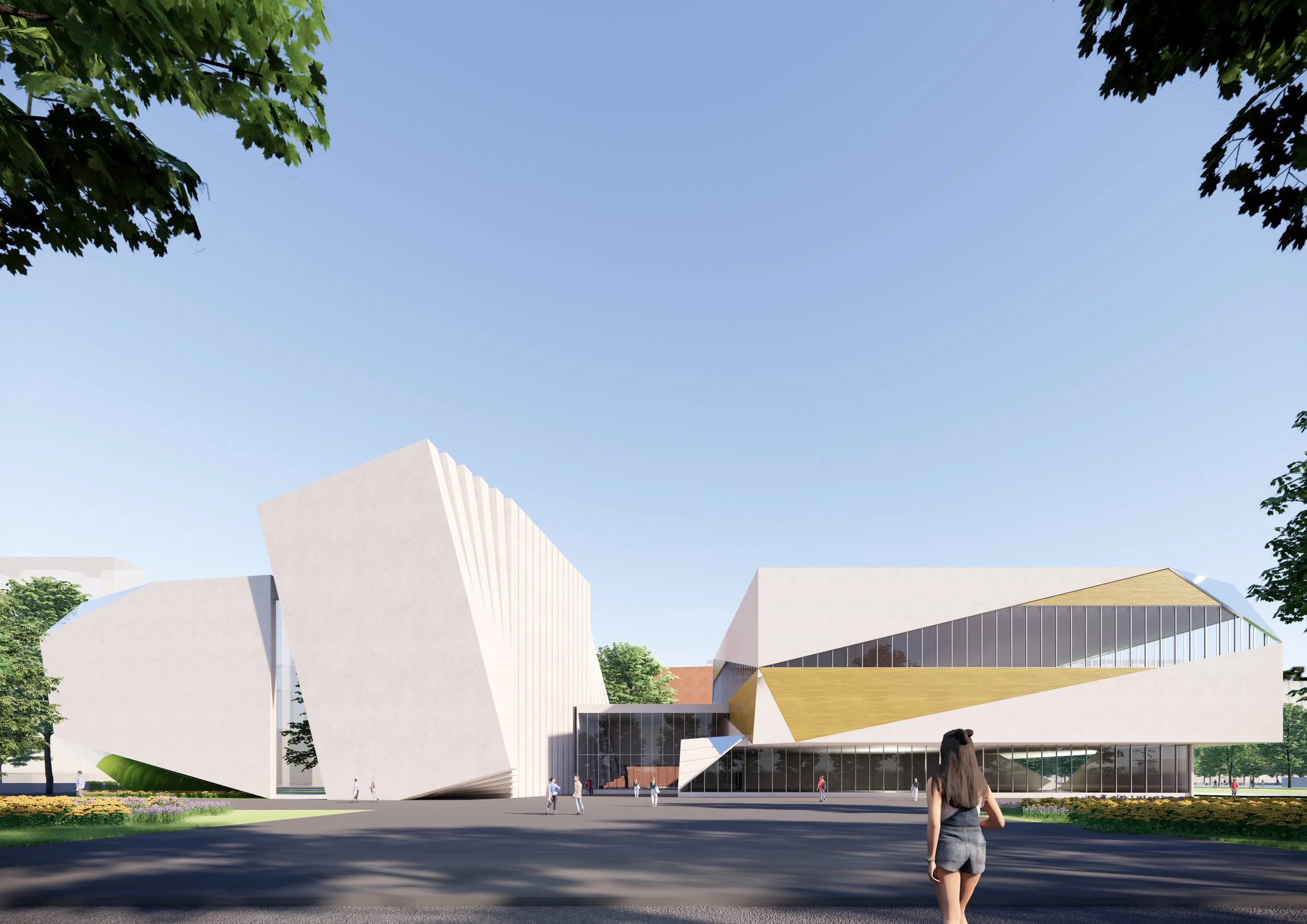
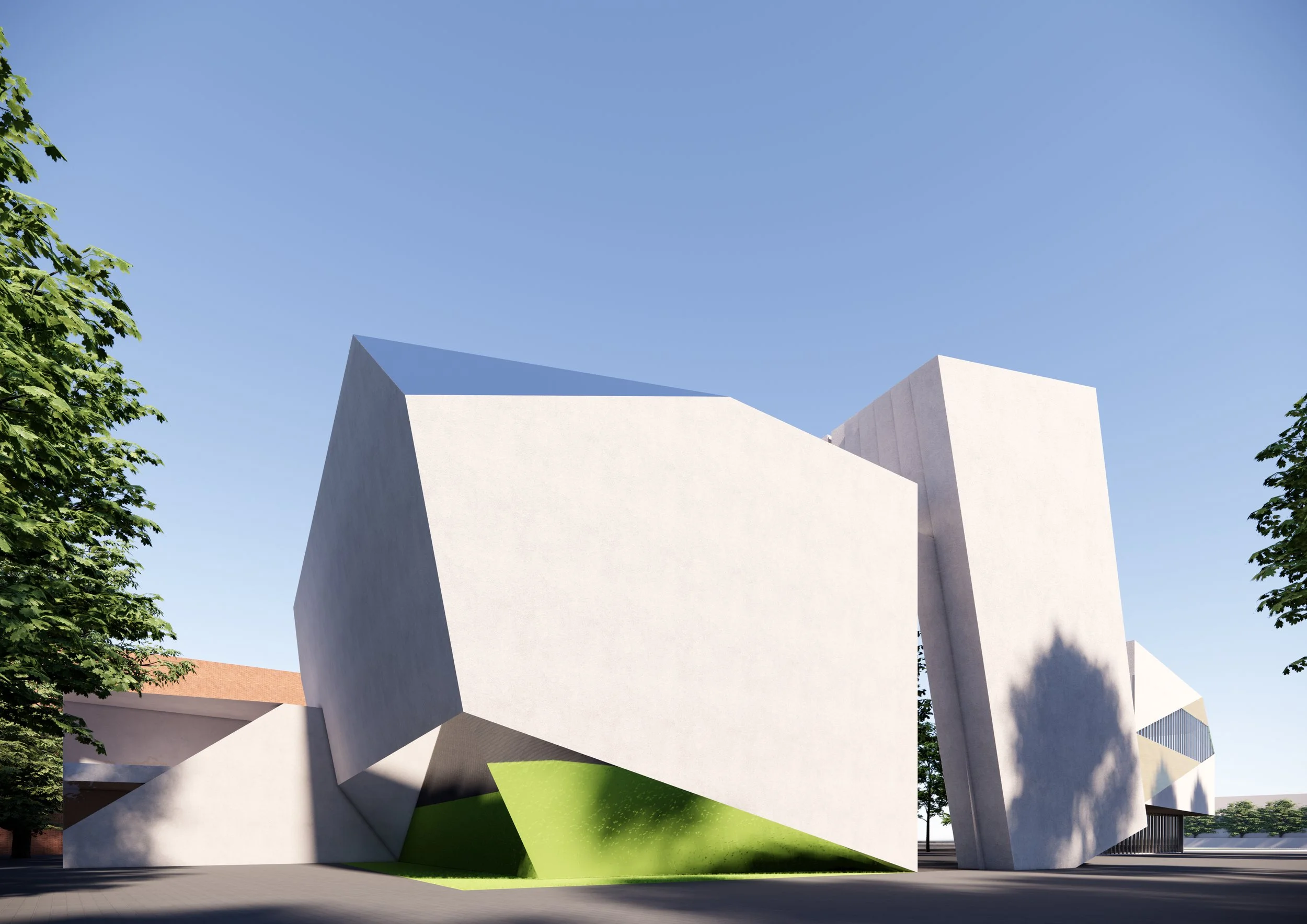
The gymnasium and auditorium are positioned along Beian Road to create a civic interface that accommodates community access while preserving internal security. Teaching blocks are organized for efficient circulation and daylight access, with clustered laboratories and specialty rooms located to promote cross-disciplinary collaboration.
Overall, the proposal demonstrates an adaptive, site-responsive strategy that converts topographic constraint into educational value. By integrating an ecological wetland, active recreational spaces, and a compact programmatic spine, the design delivers a resilient, place-based campus model that prioritizes sustainability, inclusivity, and experiential learning.
CHIEF DESIGNER
Xiaoyi Ma
DESIGN TEAM
Jing Zhu, Pengfei Chen