

BIBA ELEMENTARY SCHOOL RENOVATION
TONGXIN CHILDREN’S PLACE
The Tongxin Learning Center, a non-profit organization, was established to offer fair education opportunities to the children of new immigrants. While accompanying their children, the new immigrants will form a community where families can maintain cultural ties, collaboratively adapt to the new social environment, and strengthen their sense of belonging.
In 2024, the Tongxin Learning Center leased a two-story, 300-square-meter building in Maquanying Urban Village, Chaoyang District, Beijing. The center's mission is to support children under six through picture book reading, movie watching, arts and crafts, and other free programs. It also provides toddler daycare services and classes in cooking, first aid, natural science, and cognitive, social and emotional development. Over the years, Tongxin has attracted volunteers from diverse fields, enabling it to host events like live libraries, parent community sessions, and garden parties.
LOCATION Beijing, China
AREA 300 m²
STATUS Completed
CLIENT Beijing Tongxin Huhui Social Work Service Center
YEAR 2024
PROGRAMS Educational, Interior Renovation
Understanding the nature of Tongxin community and the structural constraints that prevent extensive modifications to the leased building, the design team sought to use furniture and furnishings to showcase the paradoxical yet unified characteristic of this community center: the diversity of cultures coupled with a shared aspiration for a better life.
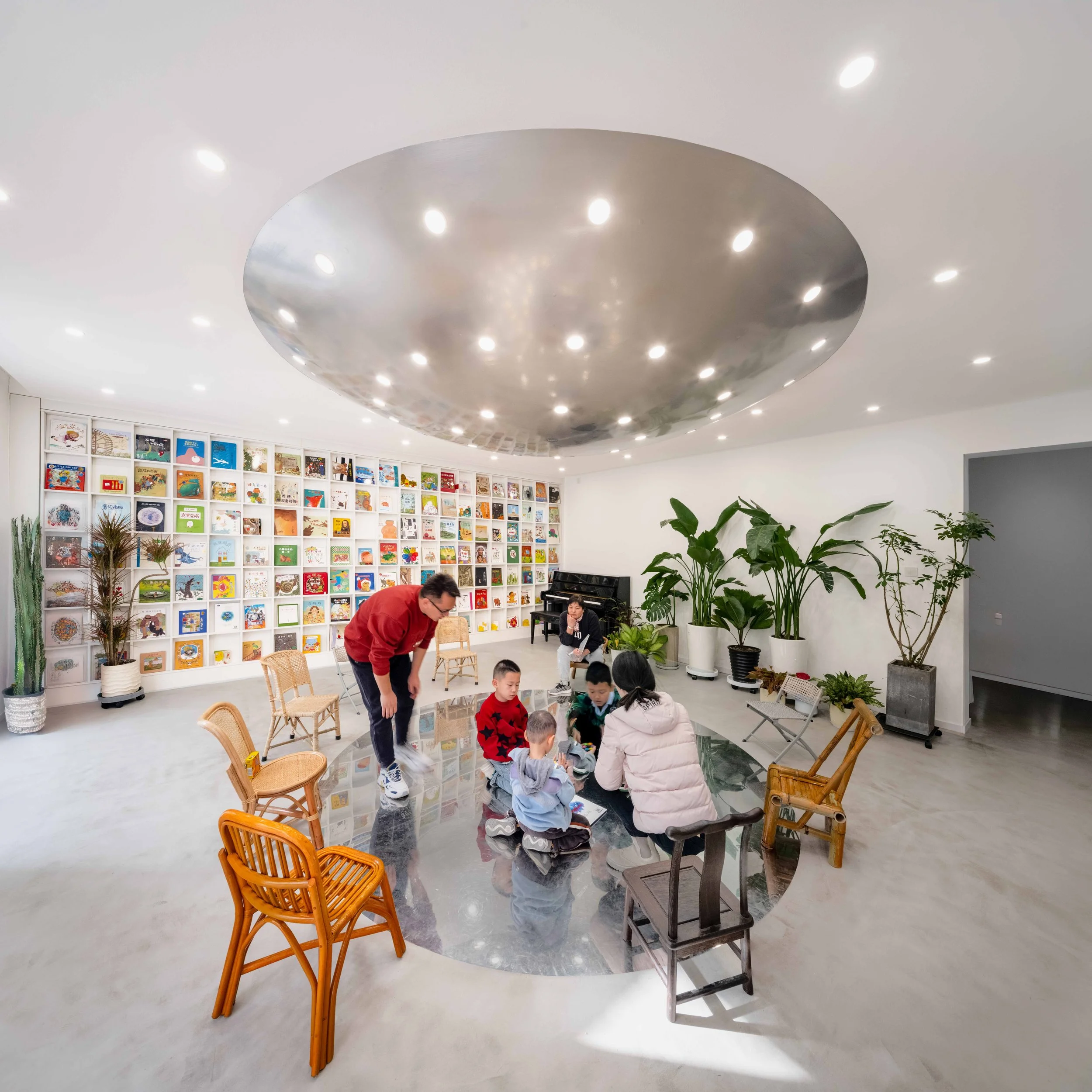
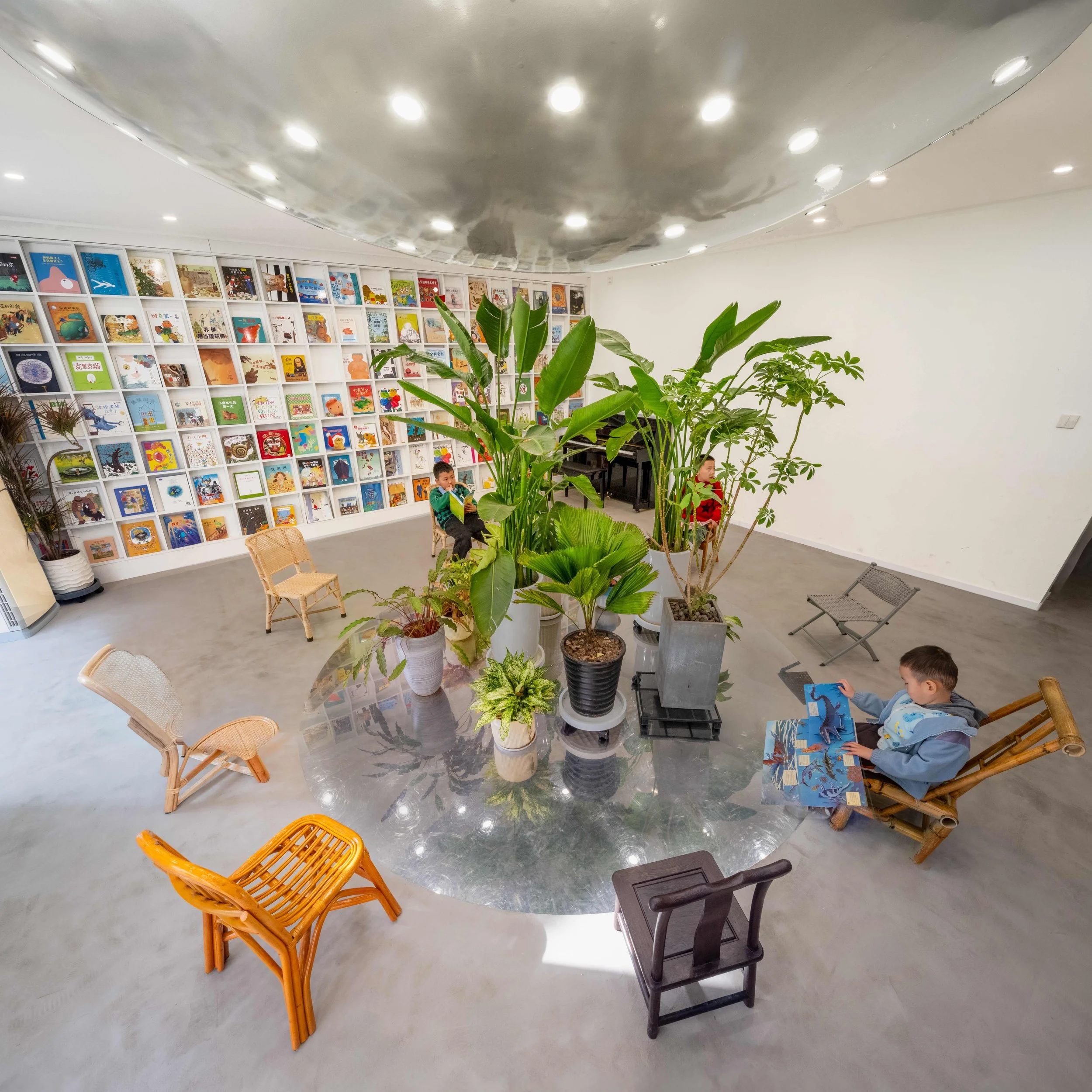
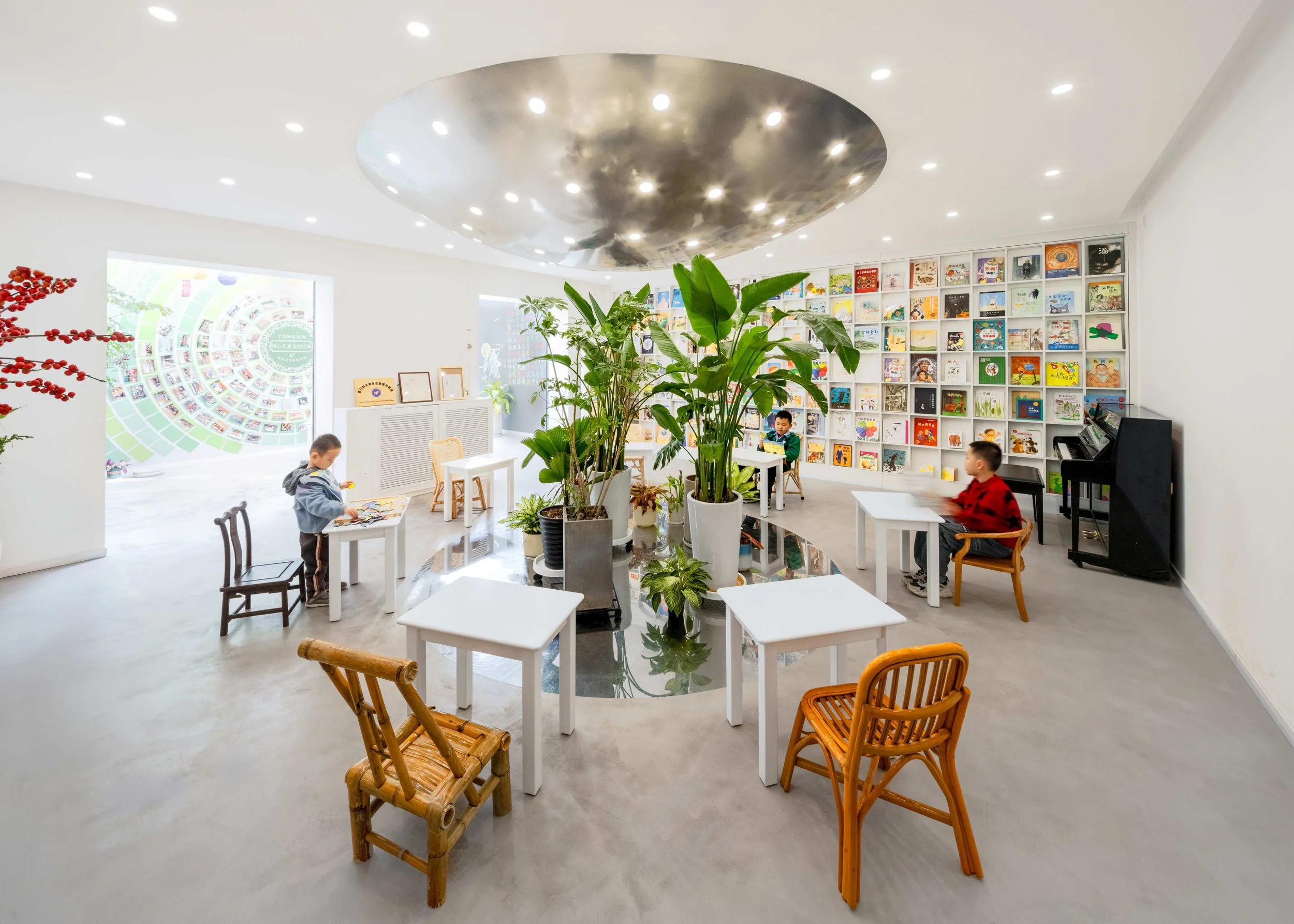
The design incorporates concentric circular forms to embody the literal translation of "Tongxin," meaning "concentric" in Chinese. This motif appears in the portrait wall of the entry atrium, the reception window, and the mirrored floor and ceiling in the main living room, symbolizing diverse individuals converging towards a common destination: a better life.
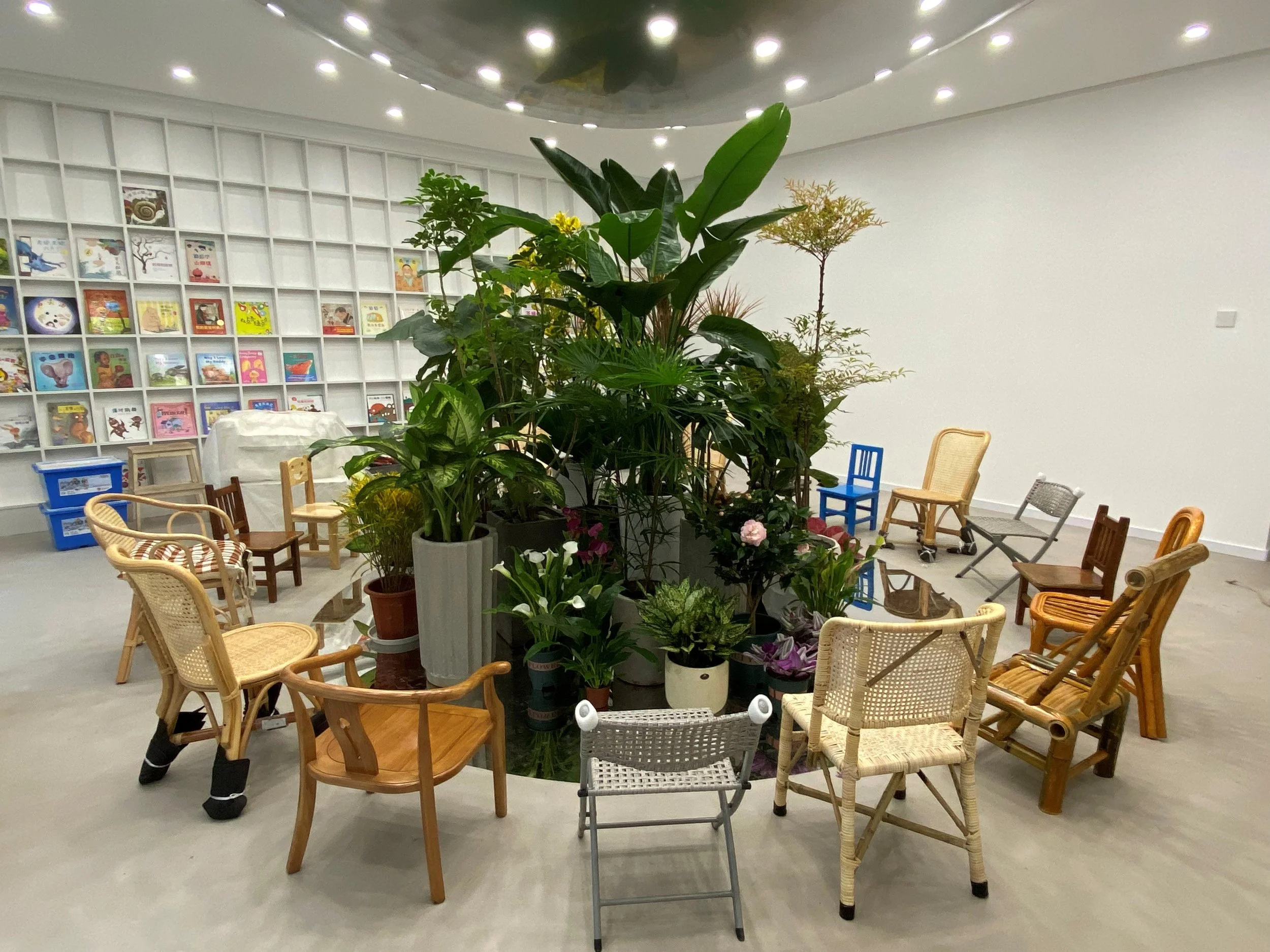
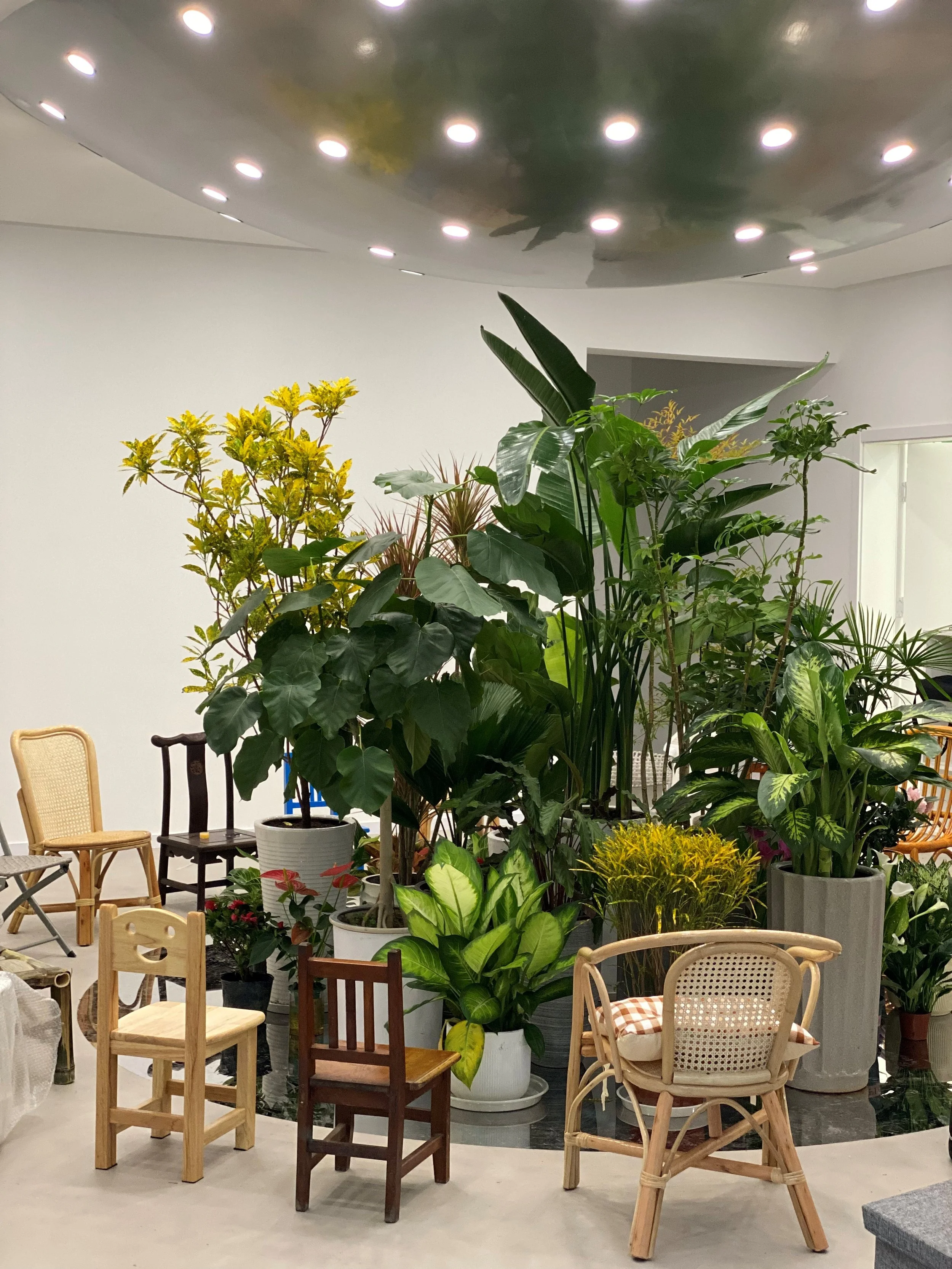
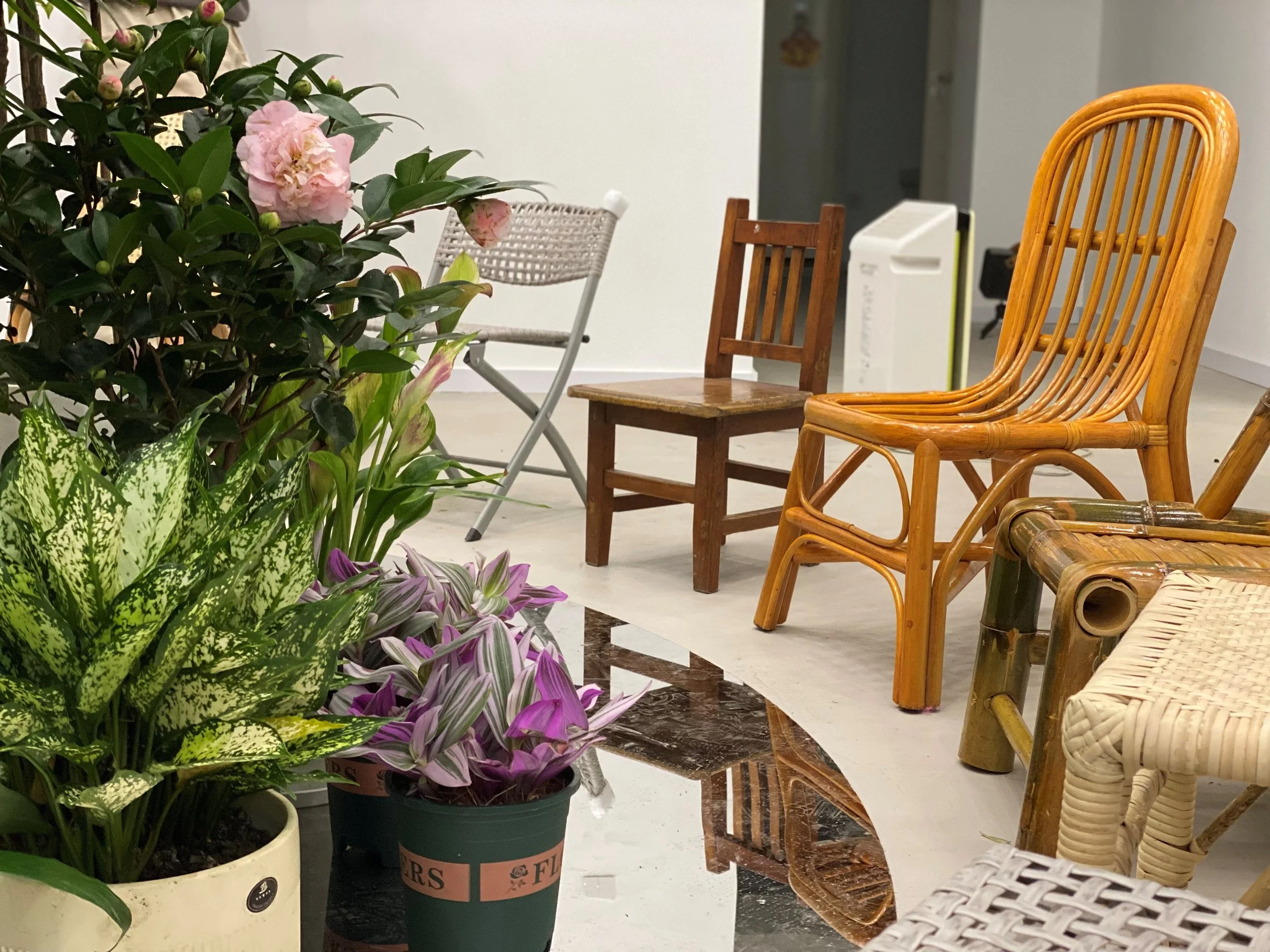
In contrast, a diverse assortment of small chairs and indoor plants represent the various terroirs and climates of different regions in China. These items, initially provided by early patrons or volunteers and later maintained by participating families, symbolize the varied cultural backgrounds of the community. Children can select their own seats and adopt their own plants.
The interior features white writable paint on most walls to brighten the space and allow for graffiti, while floors are finished with poured concrete and wooden flooring. This gallery-like ambiance is designed to showcase plants, books, and children’s artworks, helping children appreciate the beauty in everyday life. Over time, the center will collect more and more family photos and artworks, with each child potentially becoming an artist-in-residence. The variety of plants and chairs may also be upgraded. Tongxin, much like a growing child, will continually evolve, becoming a shared home for these families.
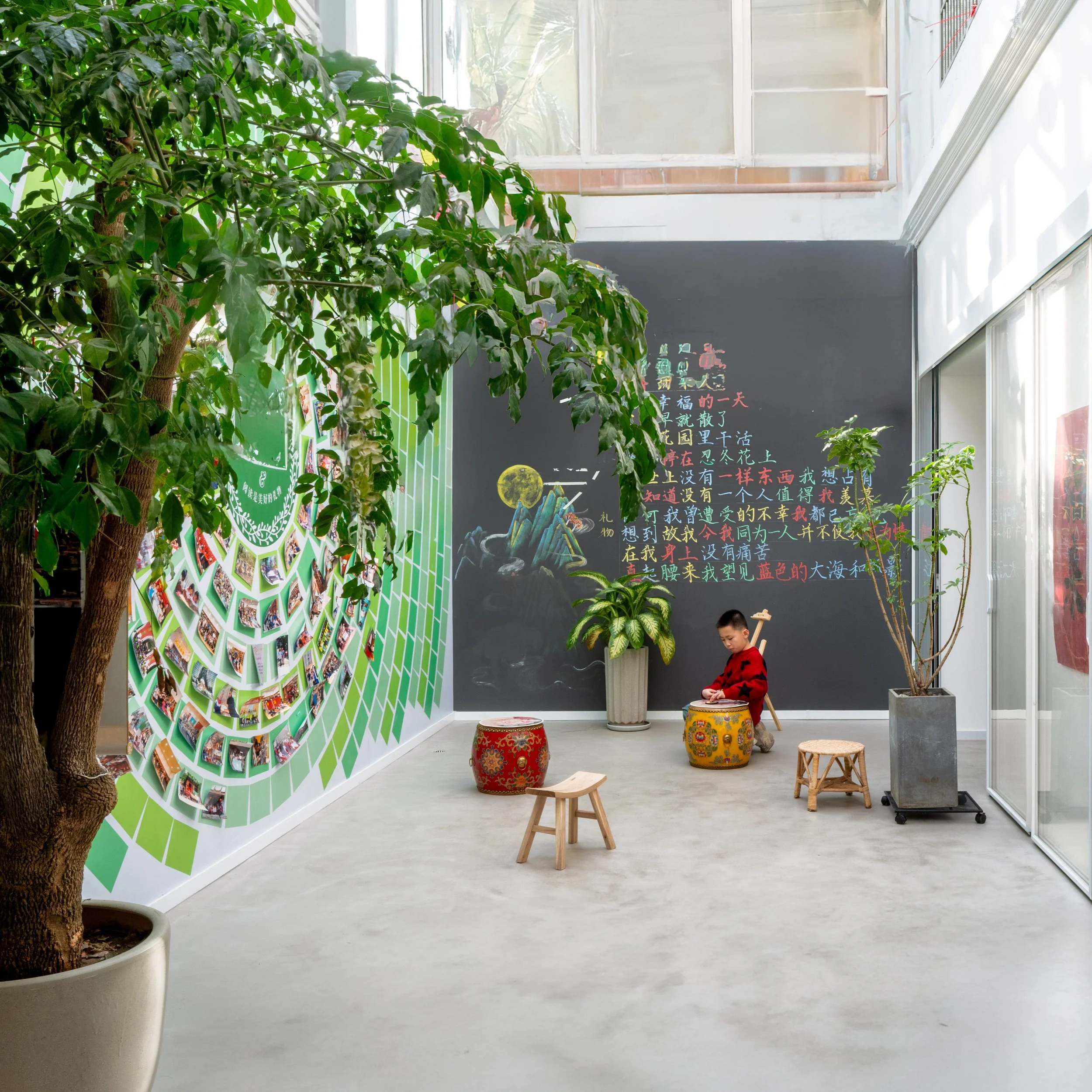
Notable features of the learning center include the preserved entry atrium and the upper sunroom, with a climbing net added above the atrium. Children may lie on the net and observe activities such as art and crafts or small gatherings below, fostering playful interaction. The sunroom provides an engaging space for children to nurture plants and small animals, and functions as an extension of the natural science classroom.
Given the multiple missions of the learning center, adaptability of the space is crucial. The lower-level living room features mirrors in circular shape on the floor and ceiling, adding dynamics and cohesion to the space and allows for flexible arrangements of plants and seating to accommodate various scenarios such as individual learning, small-group learning, lectures, performances, and movie nights. The upper-level living room, carpeted for safety and comfort, provides a crawling area for infants and toddlers, with a mirrored ceiling adding a playful touch. Both living rooms are designed to maximize space use, supporting a wide range of activities and establishing the Tongxin Learning Center as a vibrant community hub for new immigrants of all ages.
CHIEF DESIGNER
Xiaoyi Ma
DESIGN TEAM
Jing Zhu, Jiajia Wang
CREDITS
Jing Zhu, Bo Zhang (Photographer)