
BIBA ELEMENTARY SCHOOL RENOVATION
BEIJING NO. 12 HIGH SCHOOL
LIZE CAMPUS
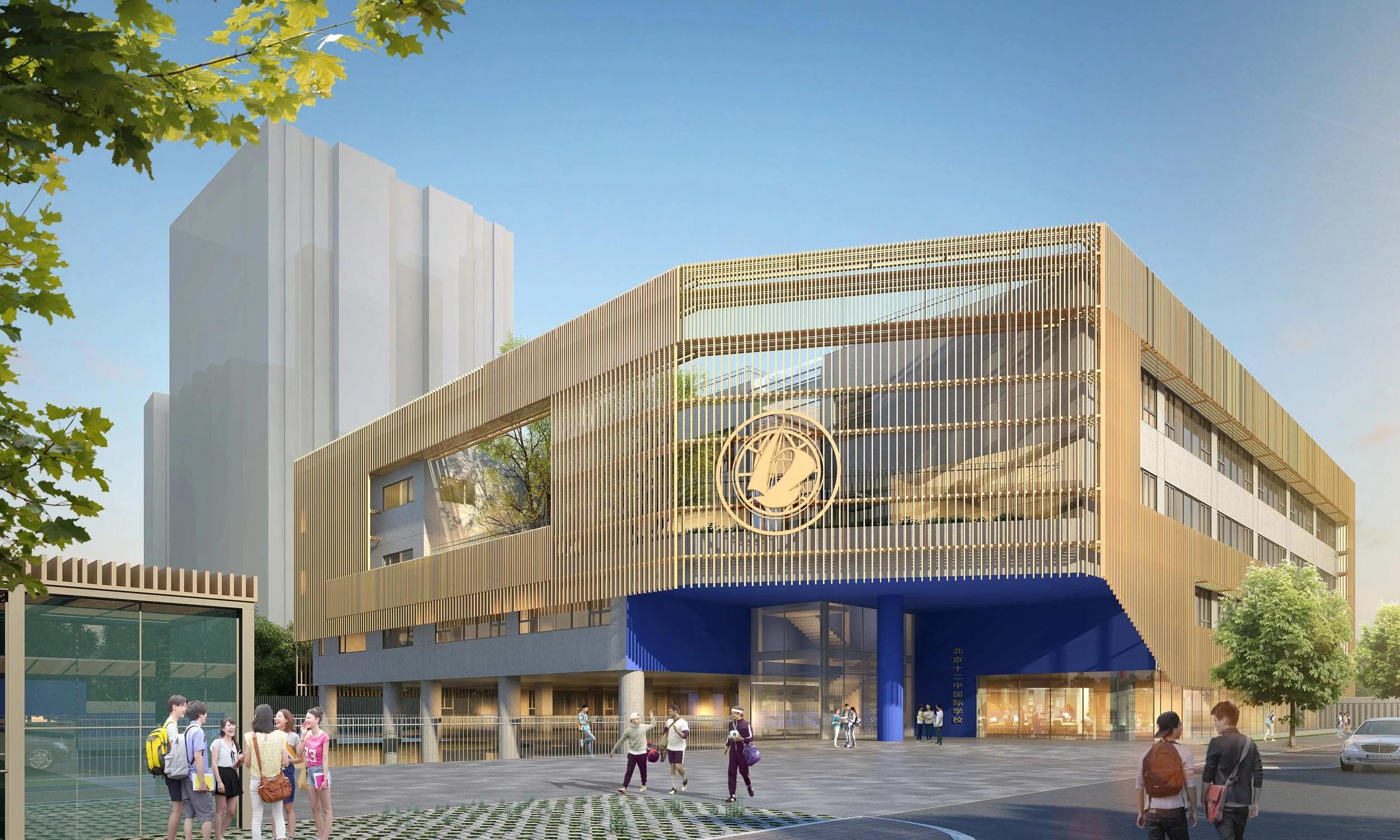
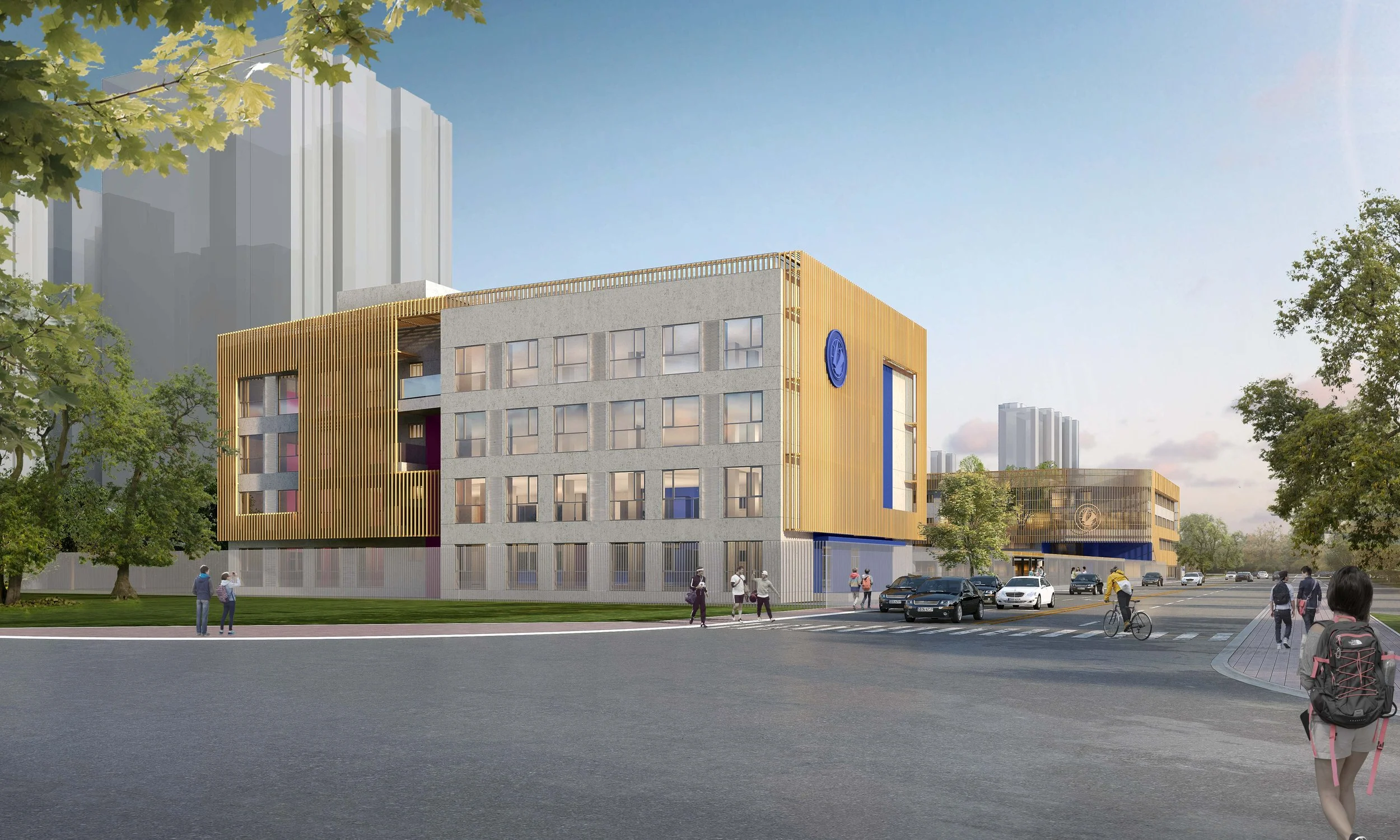
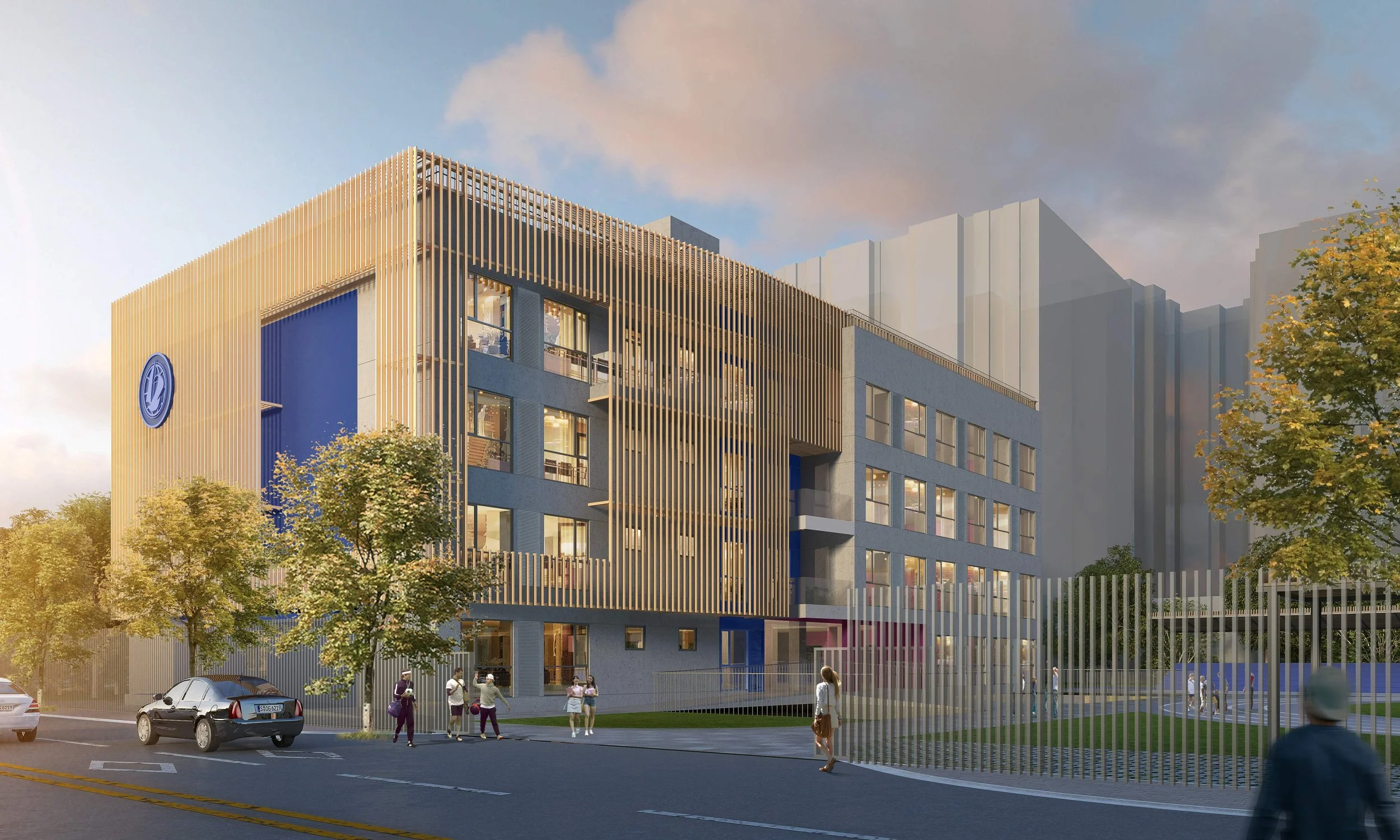
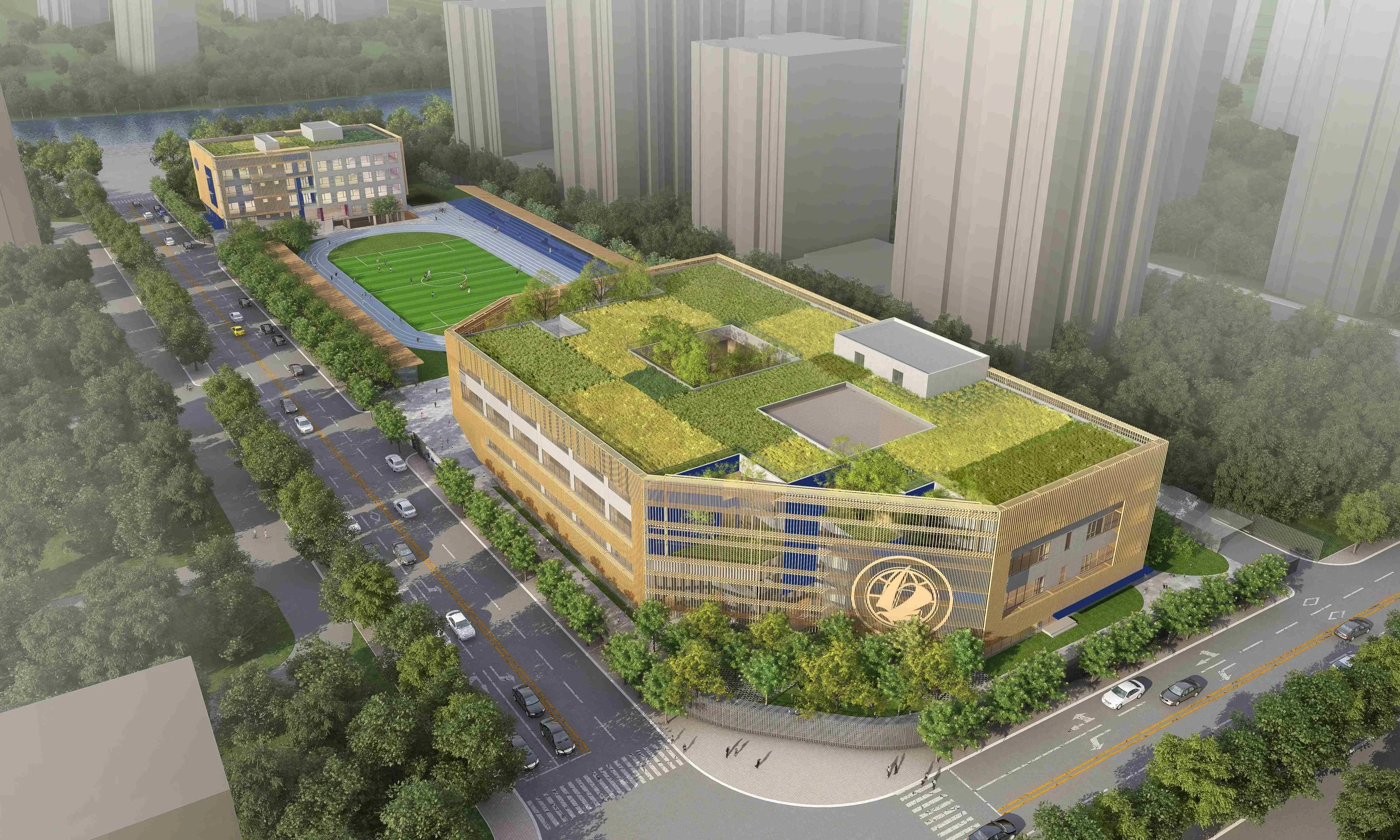
Beijing No.12 High School Lize Campus is an international secondary school situated in central Beijing, featuring an exceptionally compact campus layout. To avoid obstruction from the high-rise residential buildings to the south, the teaching block is positioned on the eastern side of the site to maximise sunlight exposure. The dormitory block occupies the western side, adjacent to the green belt, while the sports facilities are situated at the centre of the site. Faced with constrained land availability, we adopted a development strategy of ‘reclaiming space underground’. The area beneath the running track was transformed into the campus's vibrant hub, accommodating public facilities such as a theatre, swimming pool, basketball court, dining hall, dance studios, and library. Simultaneously, sunken courtyards and a system of light wells introduce natural light and ventilation into the subterranean spaces. This approach not only effectively expands usable floor area but also creates a distinctive spatial experience.
LOCATION Beijing, China
AREA 34187 m²
STATUS Completed
CLIENT Beijing Fengtai District Education Bureau
YEAR 2022
PROGRAMS Education, Architecture, Interior Design
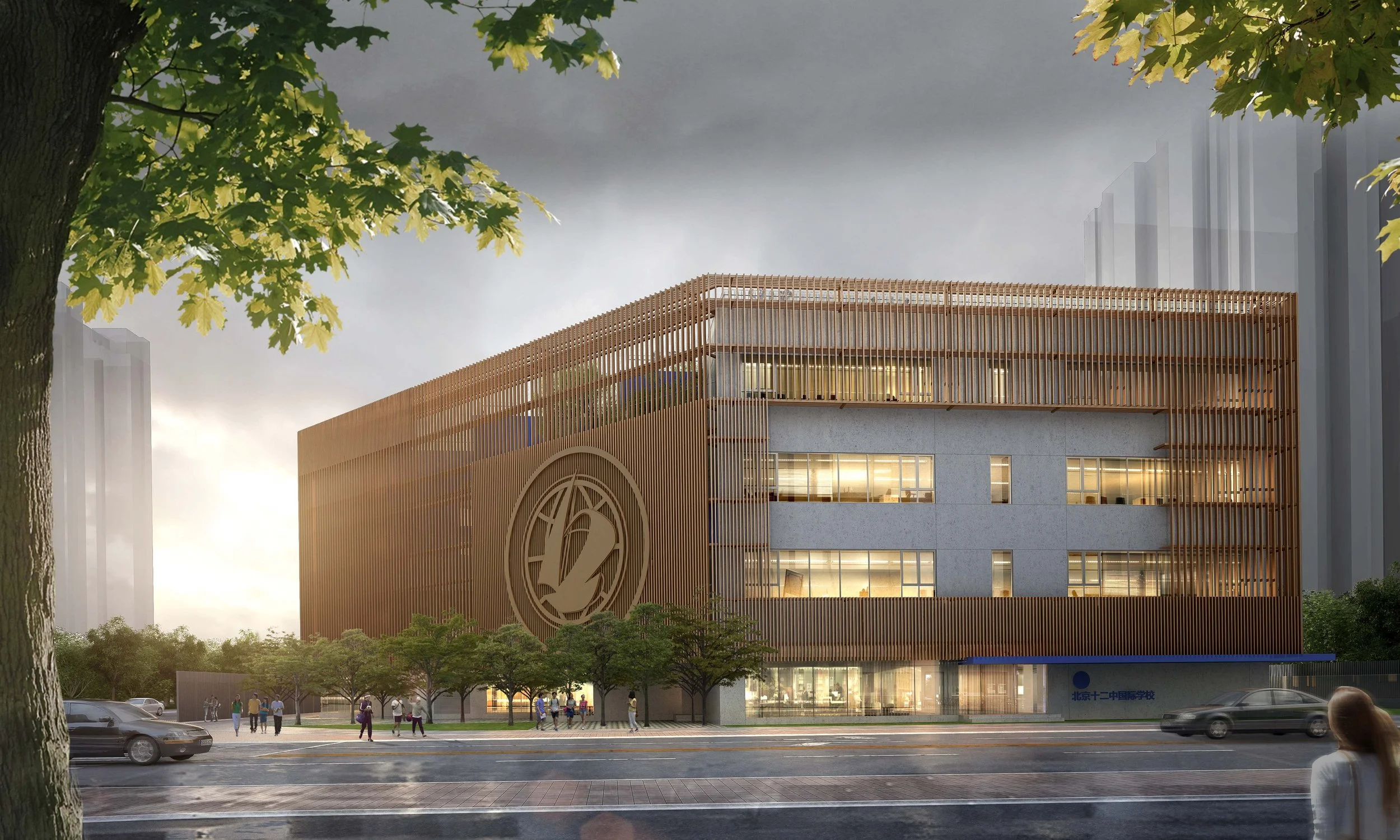
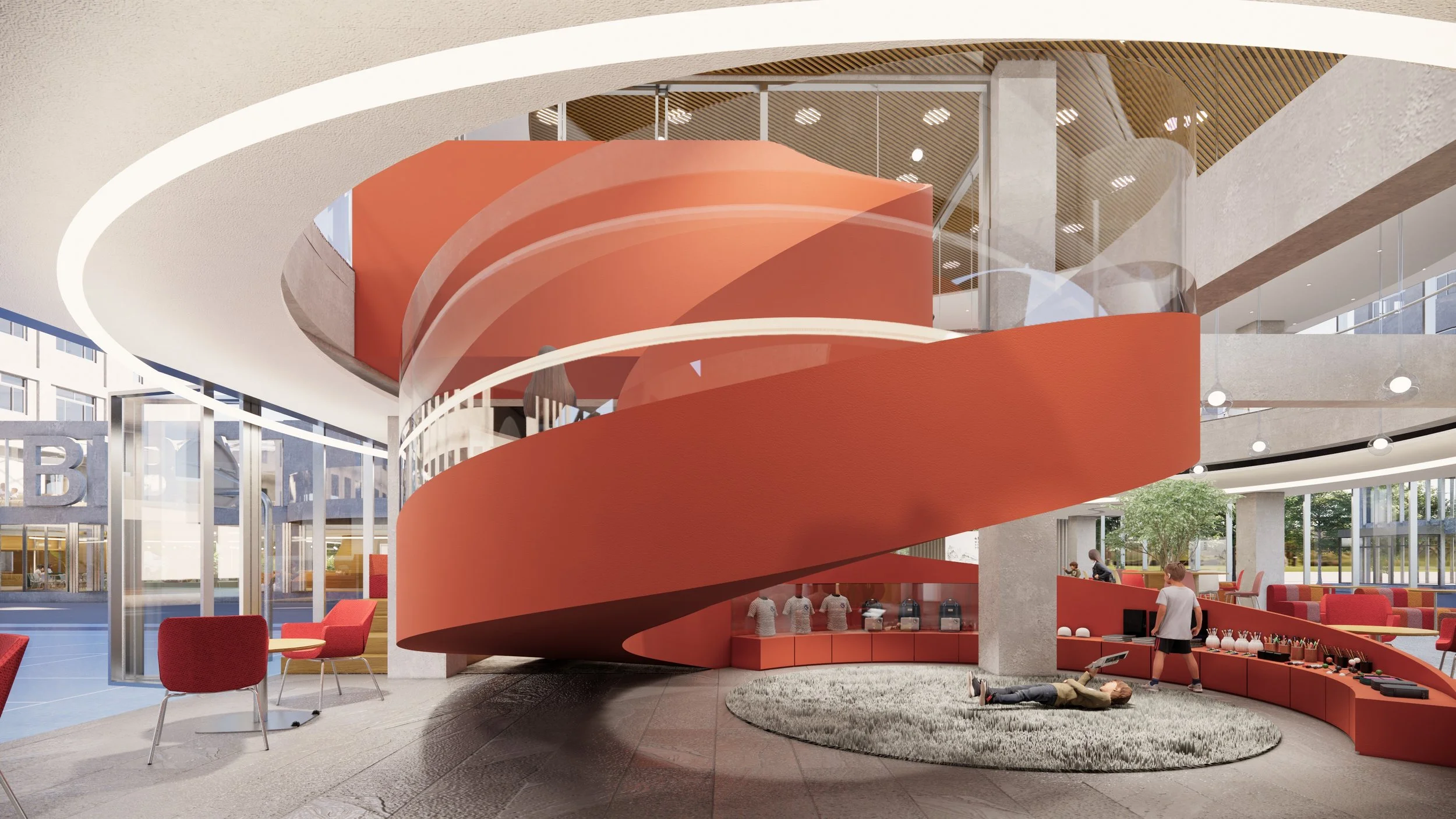
‘Blooming from within’ is our vision. The atrium space, extending from the basement level to the fifth floor, presents the school's distinctive interdisciplinary curriculum and club culture in a harmoniously staggered arrangement. Beyond the formal theatre, the atrium's amplified staircase ingeniously forms a 200-seat semi-open-air theatre at basement level. This interacts with the ground-floor gallery, echoing the school's artistic ethos of ‘music, dance, poetry and painting’. Through angled cuts and stepped terraces in the building mass, the teaching block cleverly creates rooftop activity platforms at various levels. This facilitates swift access to the outdoors during brief interludes between lessons.
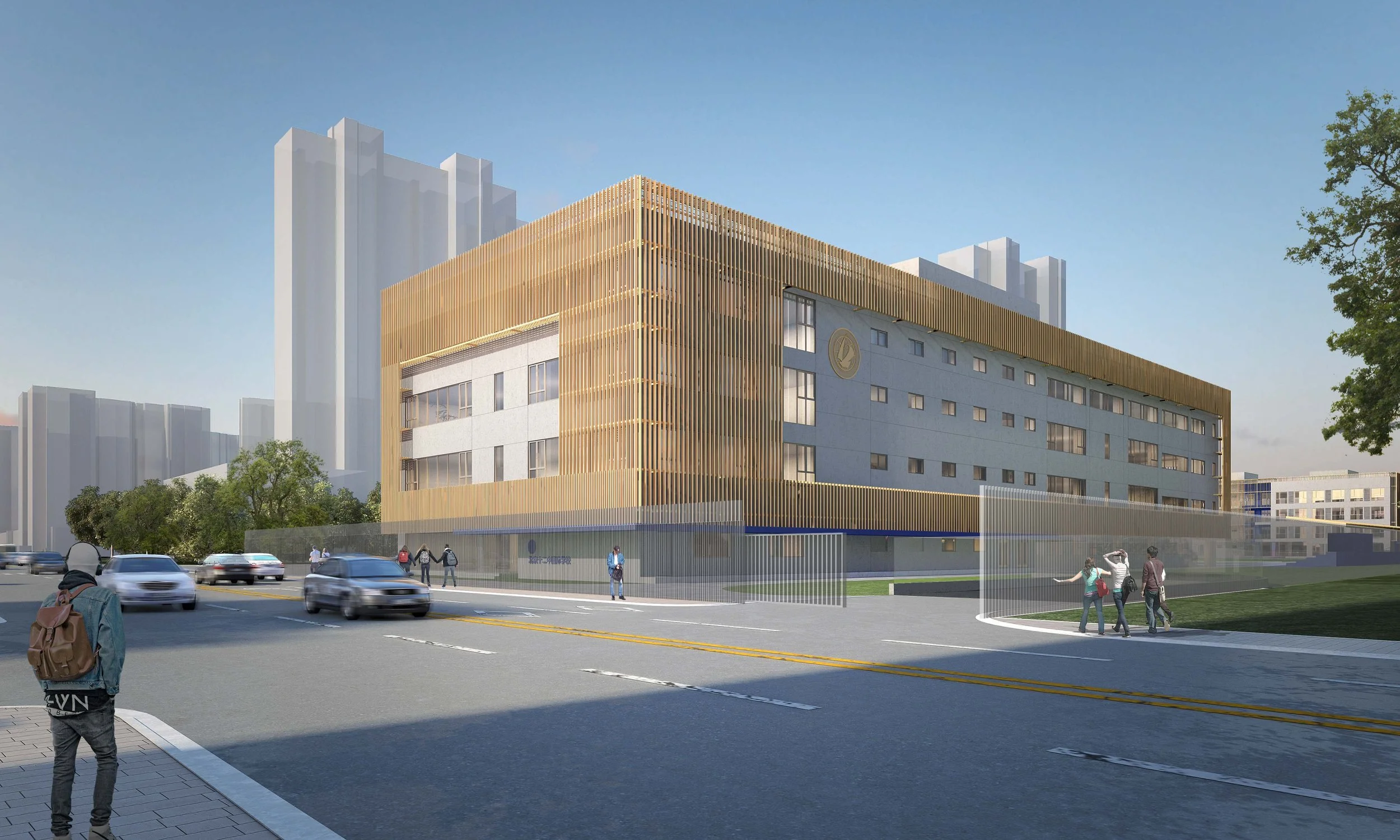
The building's façade employs a double-skin construction: an inner layer of eco-friendly exterior wall coating, overlaid by an outer layer of terracotta-effect aluminium alloy grille system. The varying density of the grille's spacing creates a continuous rhythmic effect. Grilles are omitted at windows requiring ample natural light, such as those in teaching spaces, producing a façade effect that contrasts solid and void elements.
In interior design, we achieve sustainability and low-maintenance objectives by minimising the use of finishing materials. The spatial design prioritises the needs of both staff and students, employing movable partitions and modular furniture to enable flexible adjustment and reconfiguration of spaces, thereby accommodating the dynamic requirements of evolving curricula. Through shared and differentiated strategies, we dissolve the boundaries of traditional teaching spaces to construct diverse learning environments. Within constrained budgets, we adhere to principles of versatility, adaptability, reconfigurability, and reusability. Course-driven cultural elements guide spatial layouts, fostering an environment that supports communication, collaboration, critical thinking, and creativity. This enables every student to discover their preferred learning approach within these spaces.
This campus embodies our most cherished vision for education: that every child may discover their own rhythm of blossoming here, that every talent may find its most fitting space to flourish, and that the energy of learning may spring from within, ultimately radiating each pupil's unique brilliance.
CHIEF DESIGNER
Xiaoyi Ma
DESIGN TEAM
Pengfei Chen, Jiajia Wang, Chaoyi Meng, Yue Zhao, Renzheng Zhu, Xuejiao Zhou, Yang Ming