
BIBA ELEMENTARY SCHOOL RENOVATION
GOER SCHOOL
SECONDARY SCHOOL CAMPUS
Weifang, China
Transforming GoerTek's original factory into a school is itself a declaration of value that transcends time and space: it concerns memory and innovation, function and meaning, and is a tangible testament to GoerTek's commitment to giving back to society. This school, blending technology and nature, is a dreamland where children can unleash their imagination and grow freely.
LOCATION
AREA
G Group Co.,Ltd
In Design
STATUS
CLIENT
Education, Theater, Architectural Renovation, Interior Design
2025
YEAR
46800 m²
PROGRAMS
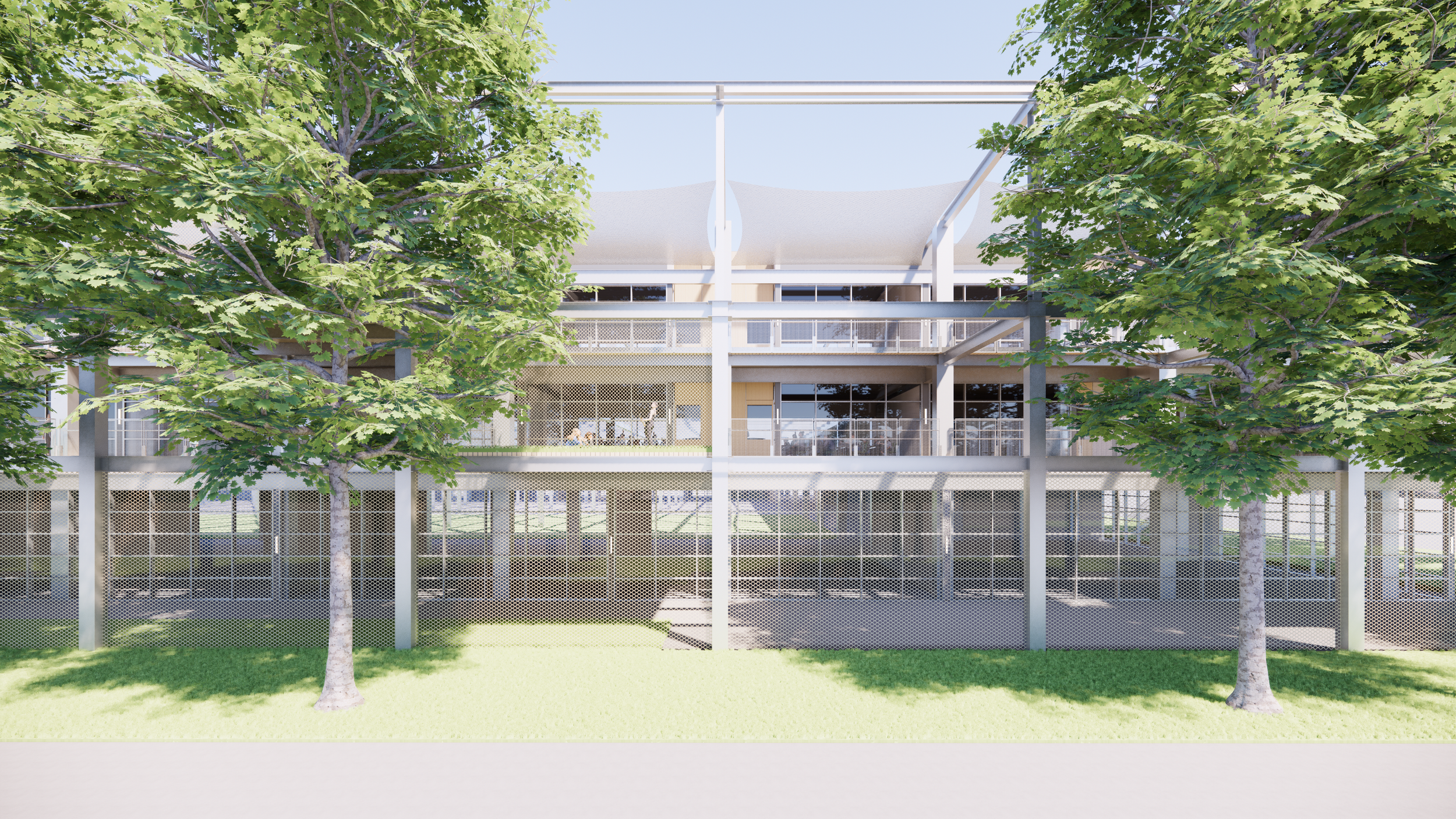
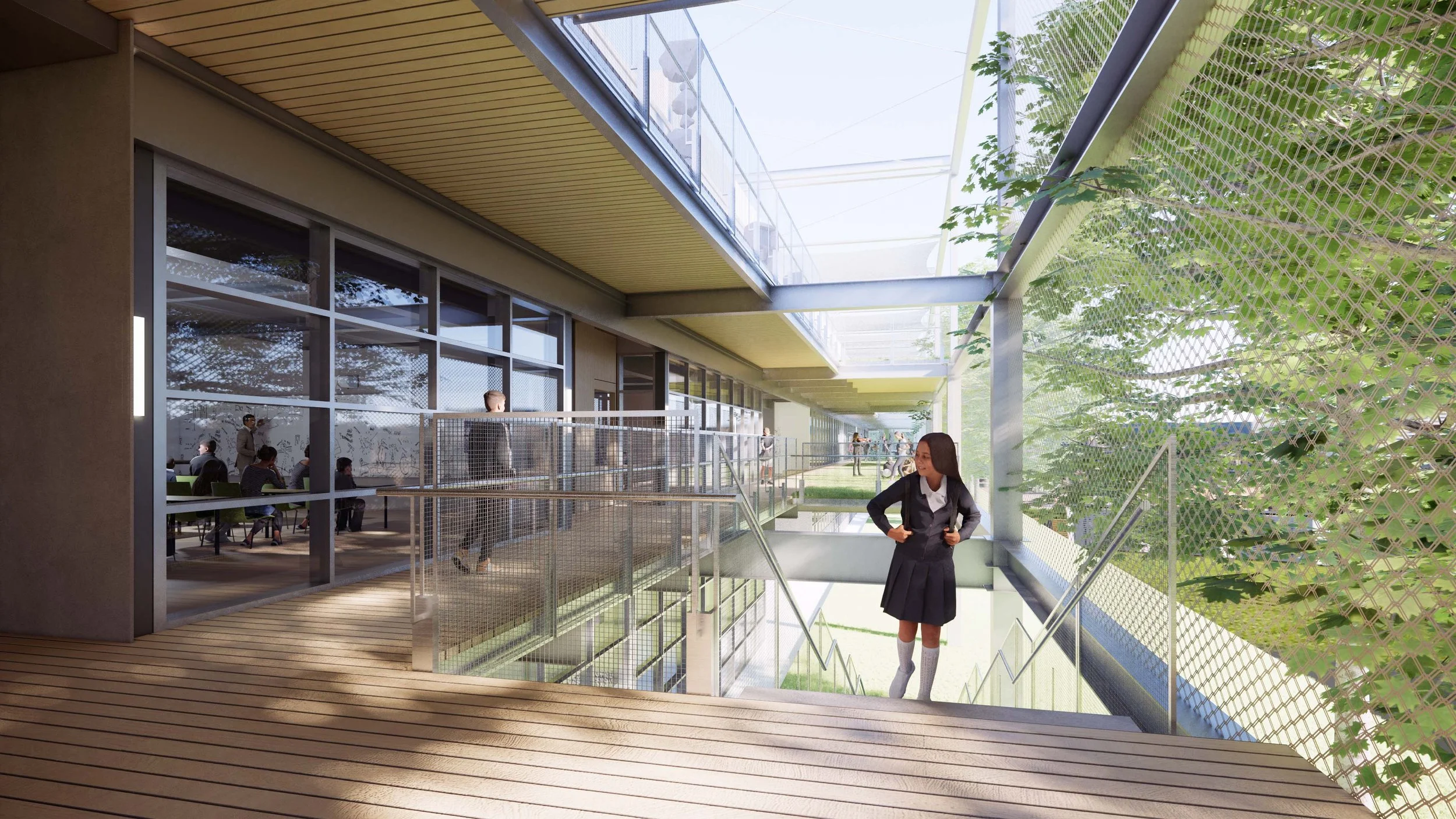
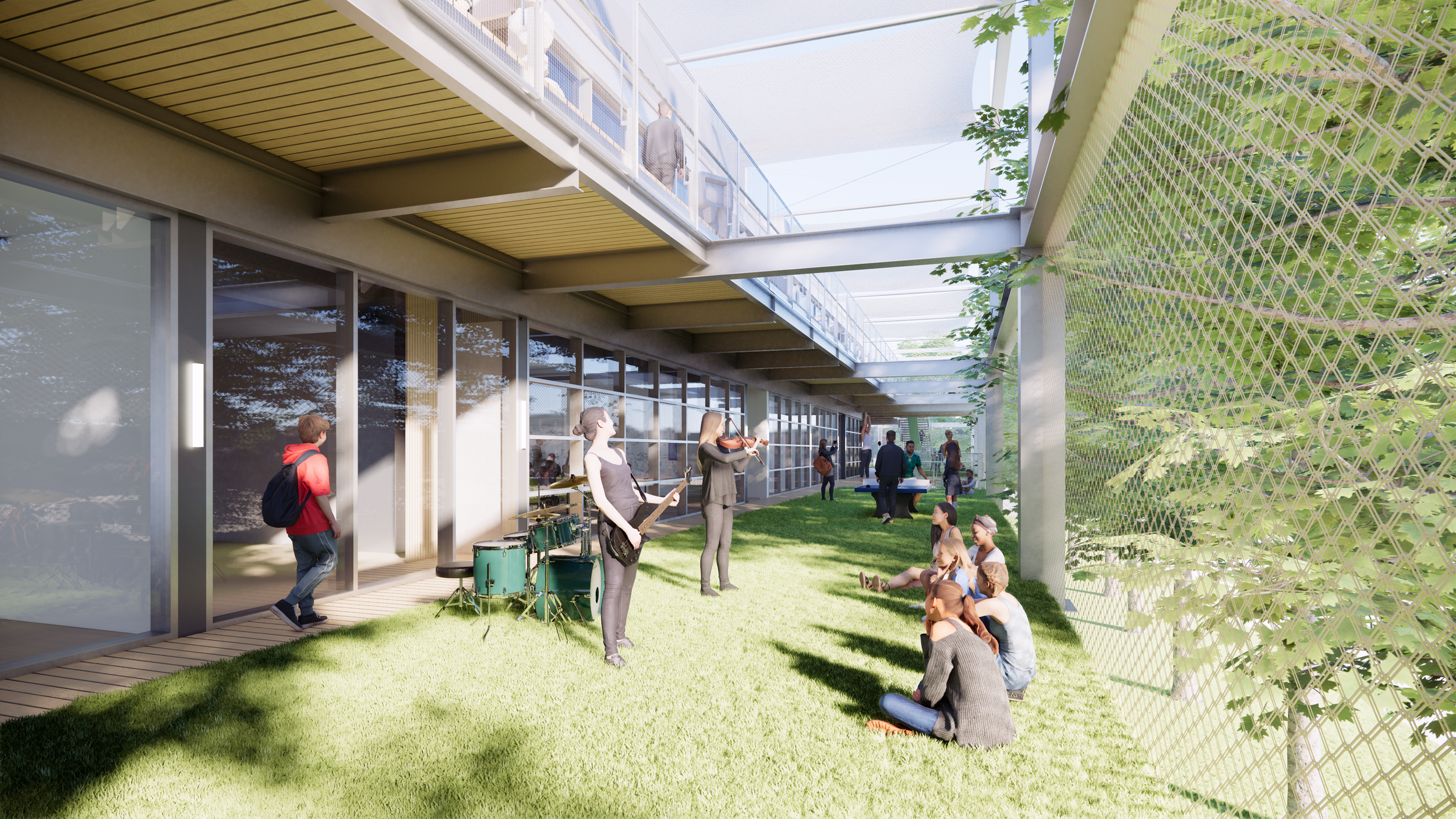
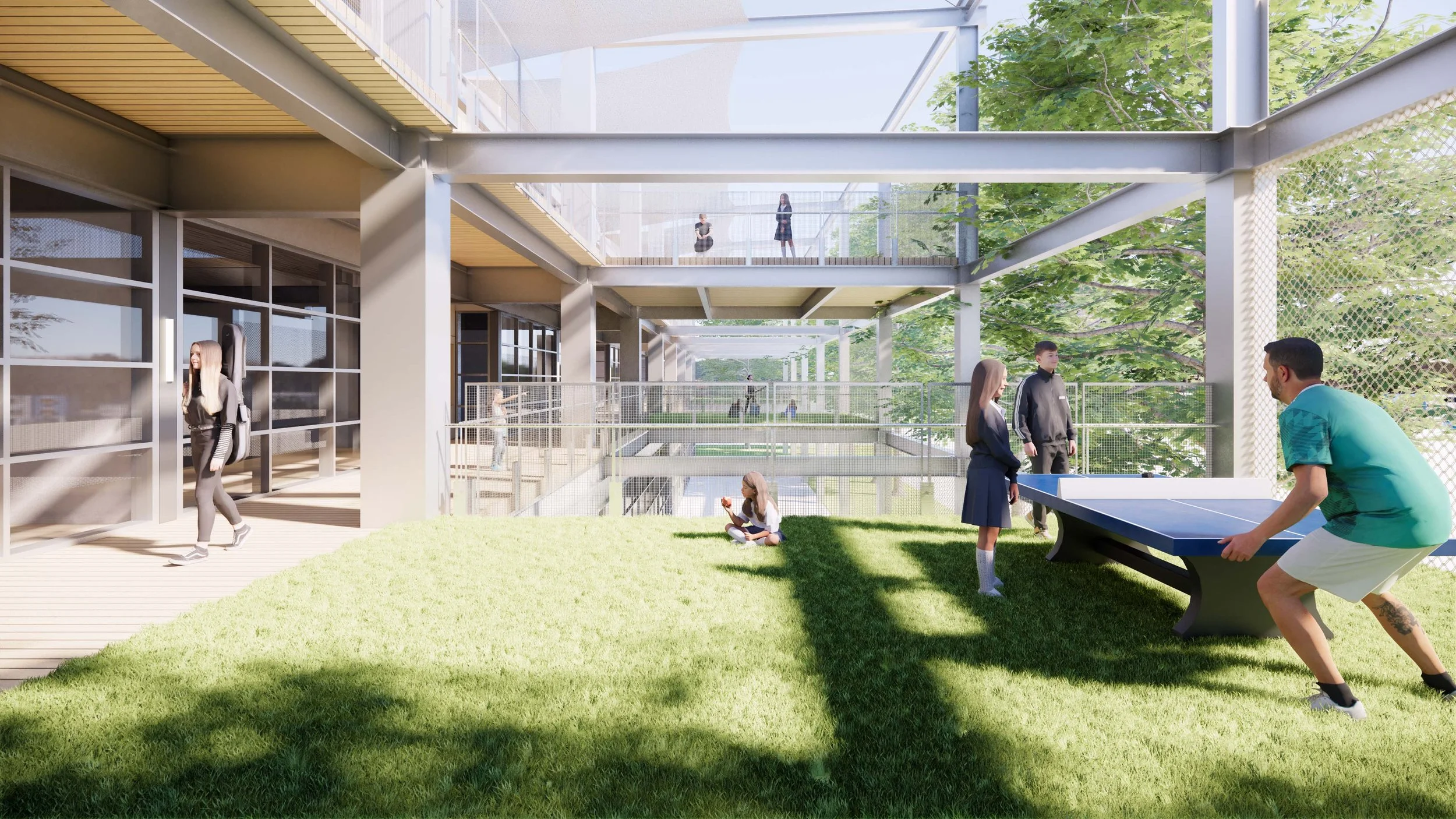
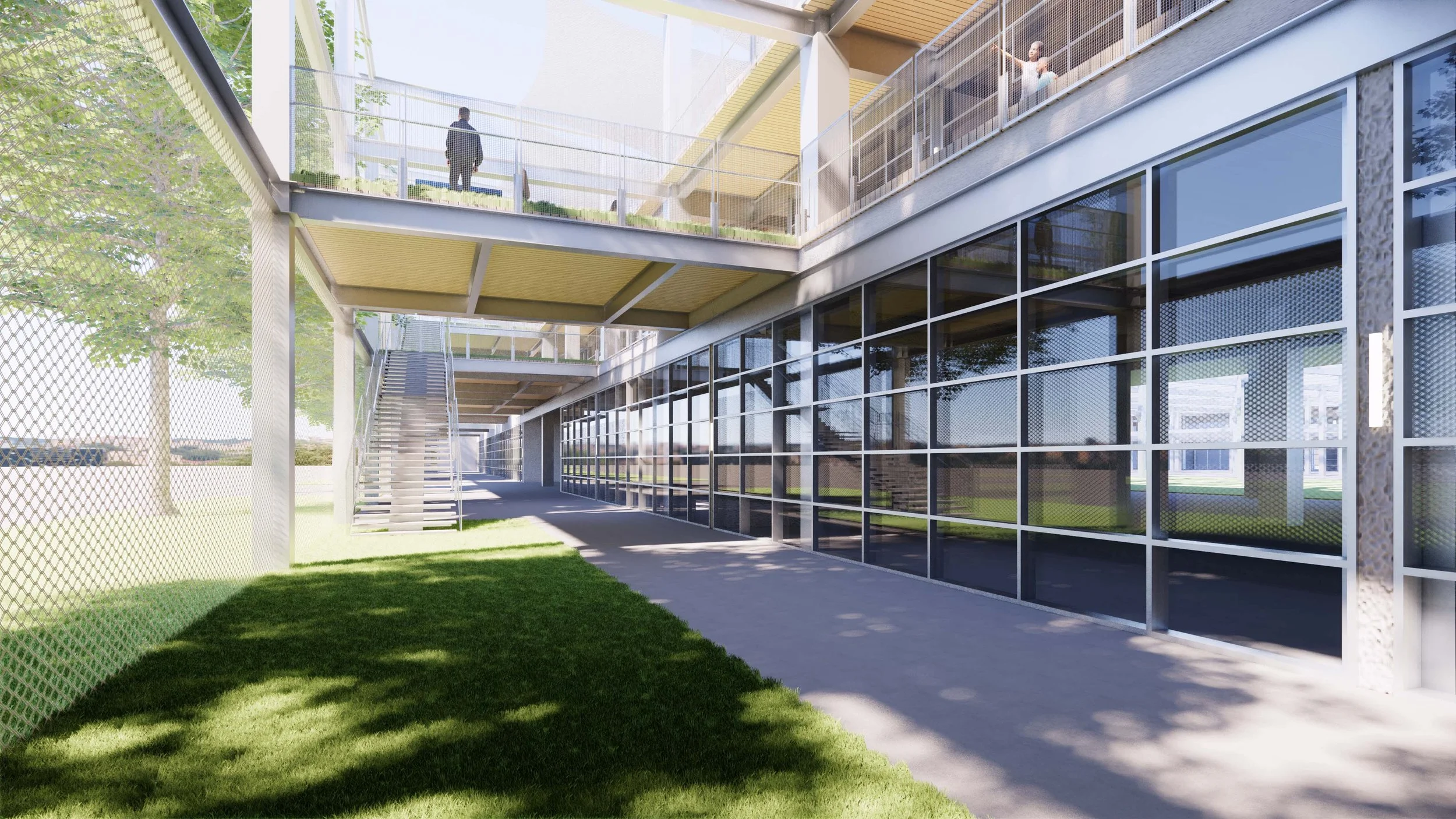
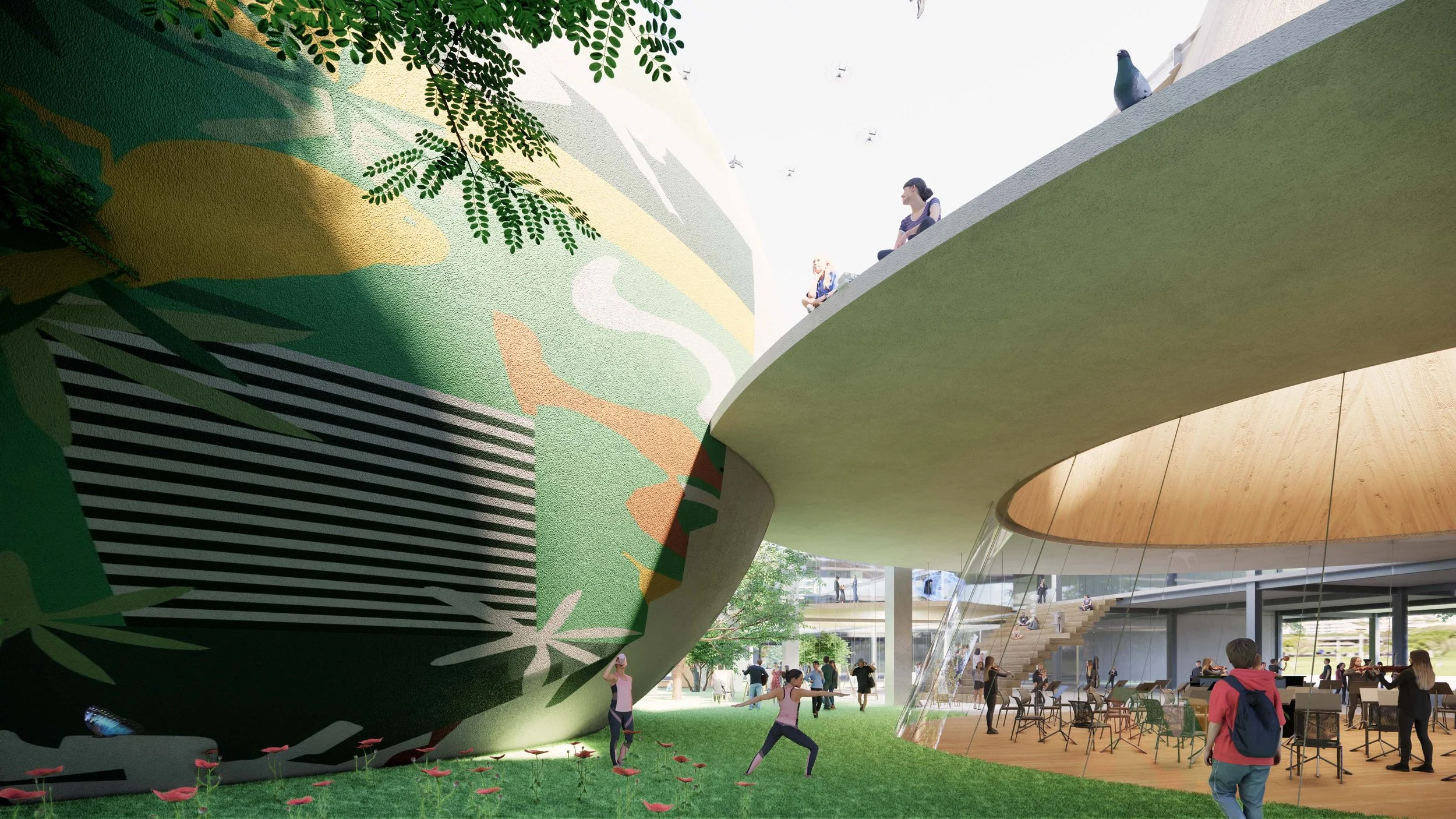
The outermost ring of the building is a three-dimensional "Plane Garden." The original plane trees and other native plants beside the original exterior walls have been fully preserved, and the building facade has been appropriately set back to create a natural, permeable interface. Here, children can touch the leaves, run and play, and experience the changing seasons. The original steel structure frame has been deliberately preserved, and the exposed industrial texture becomes a vivid teaching material for Goertek's history.
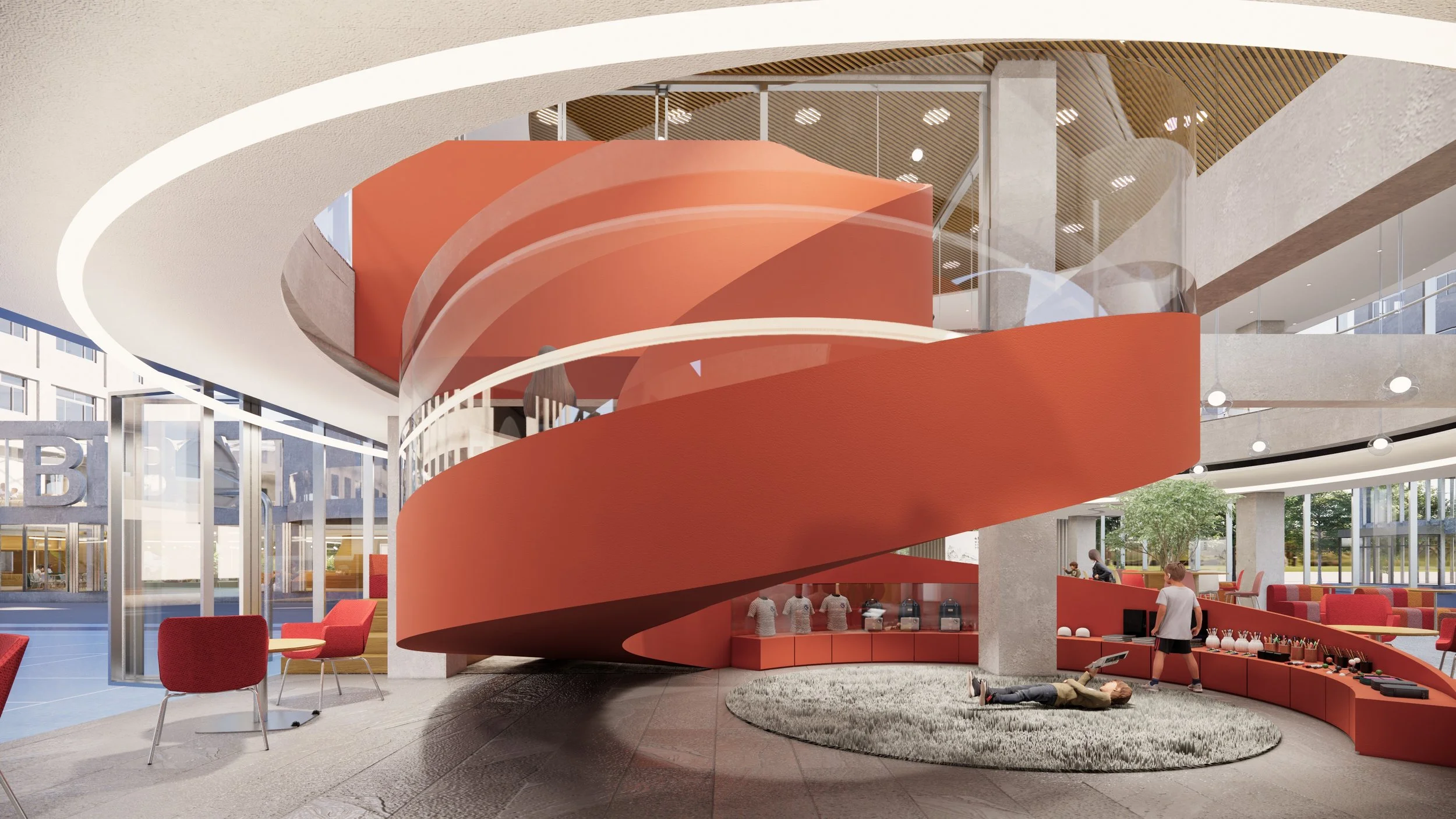
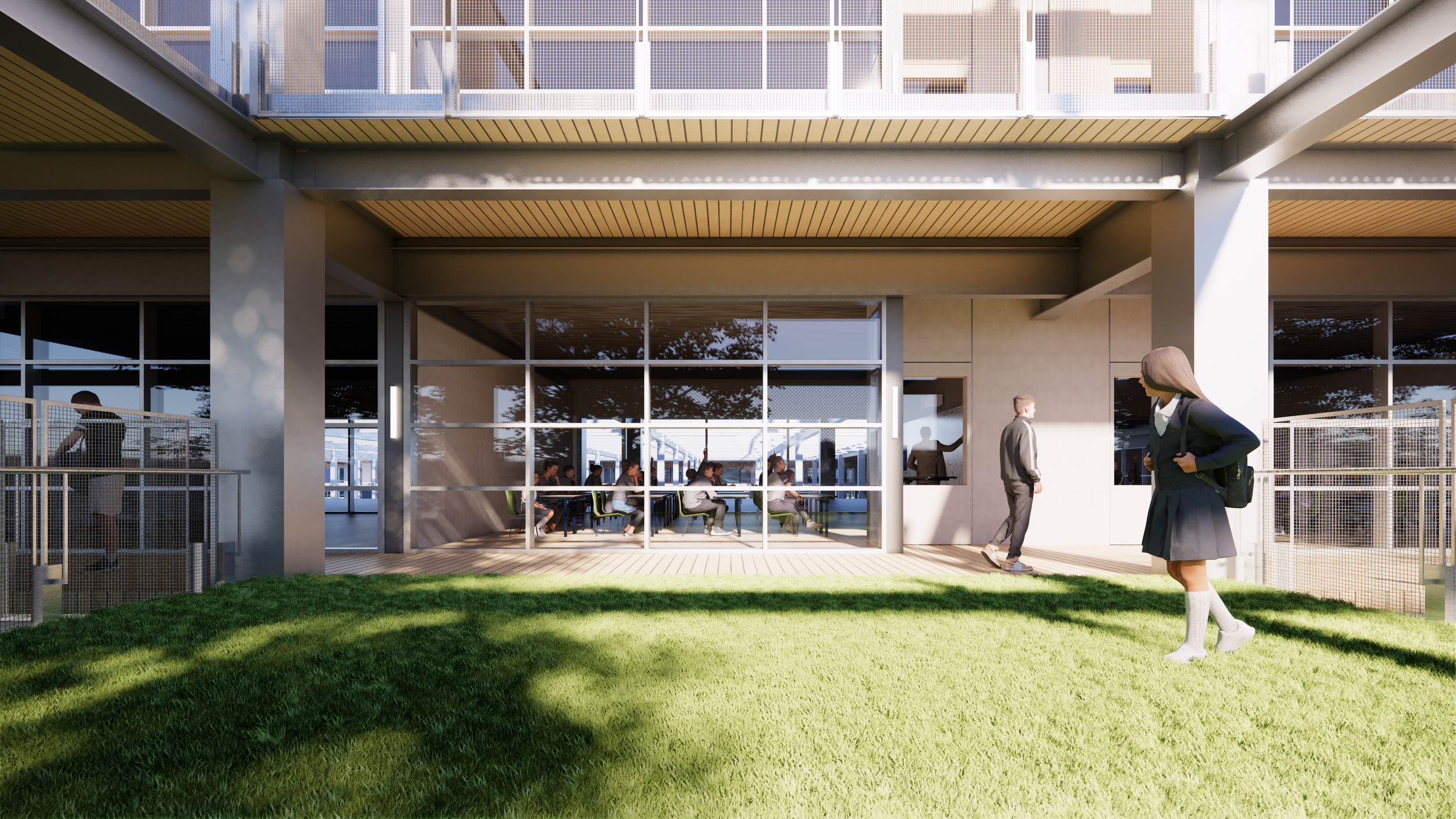
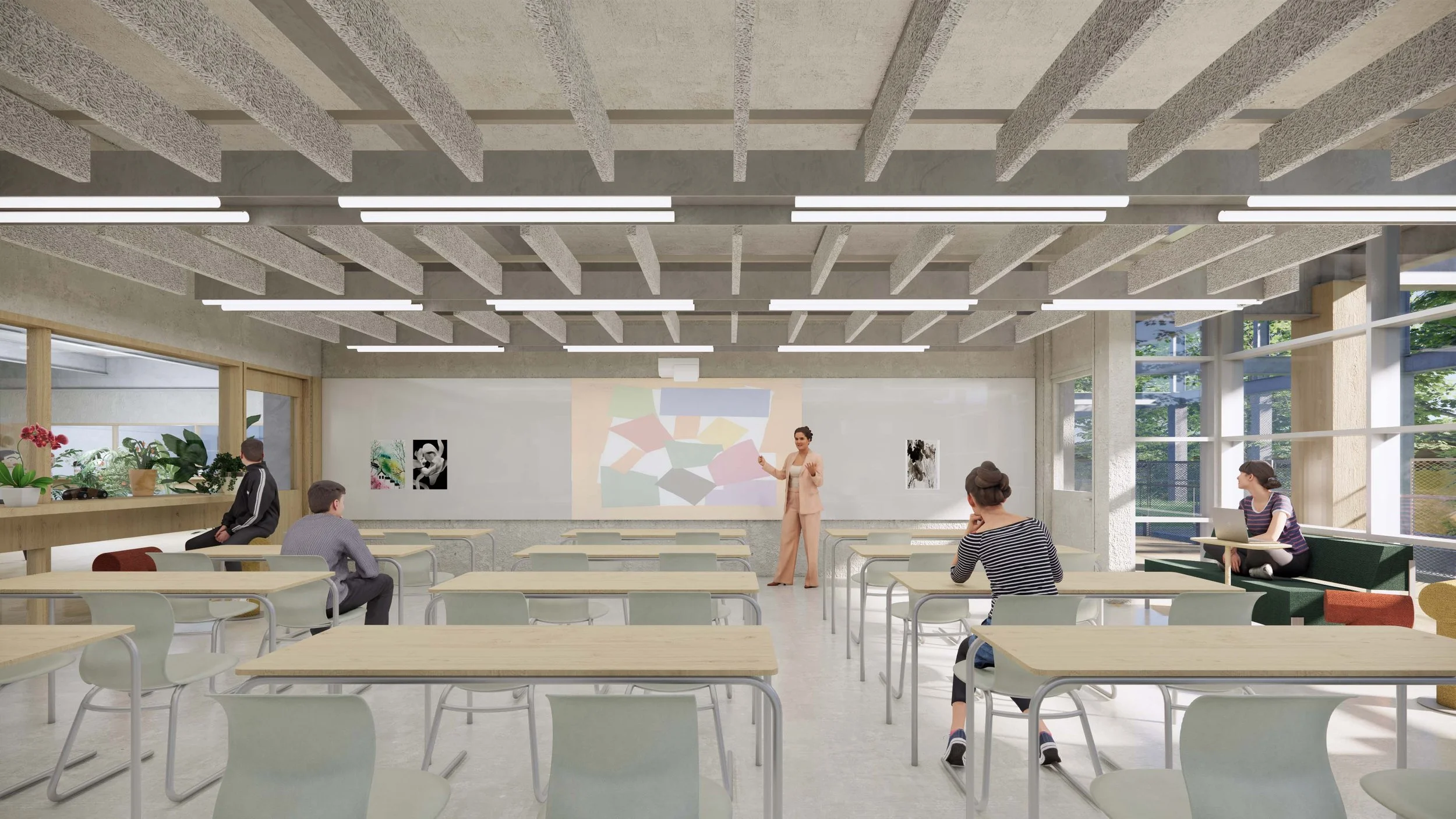
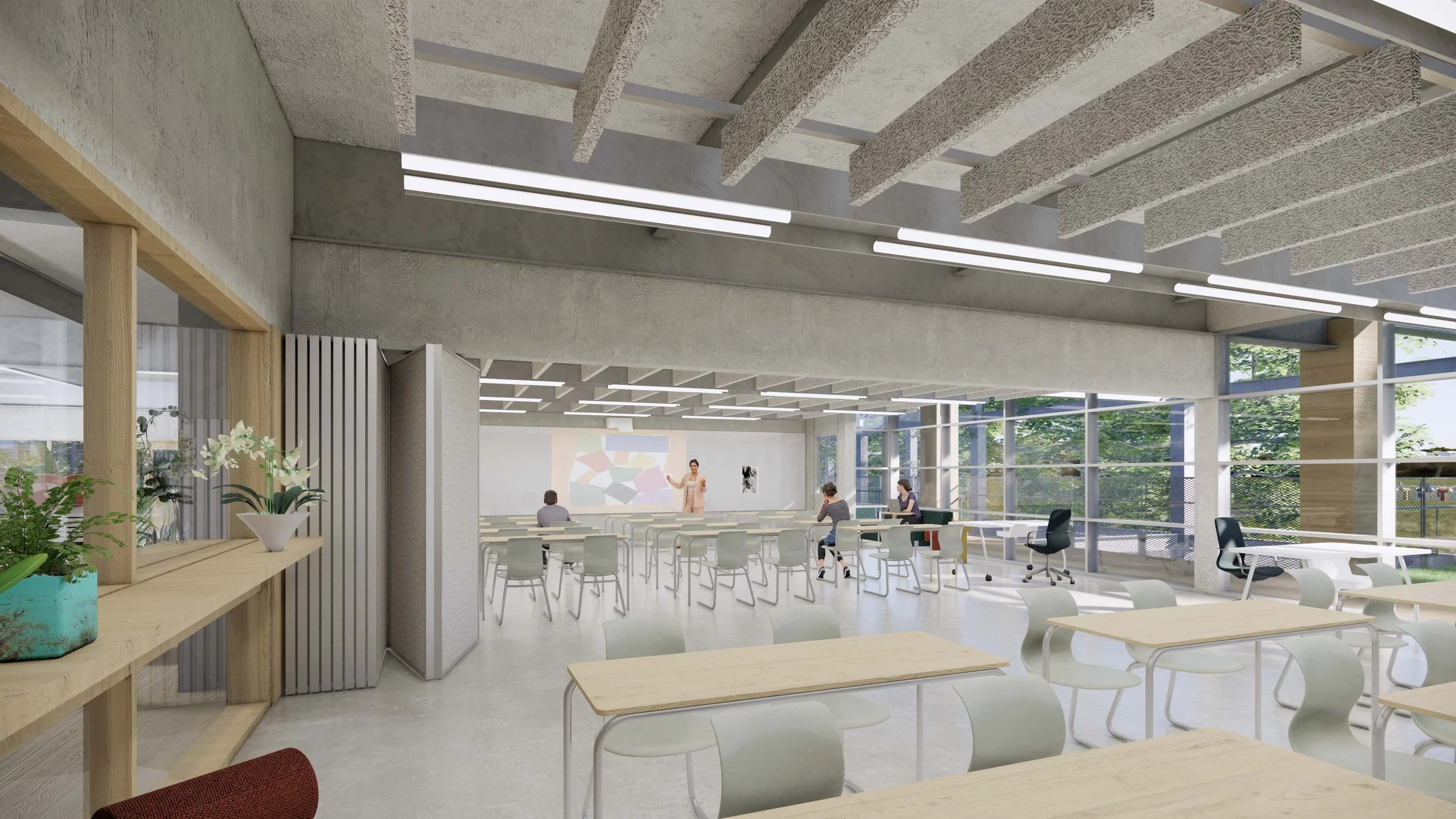
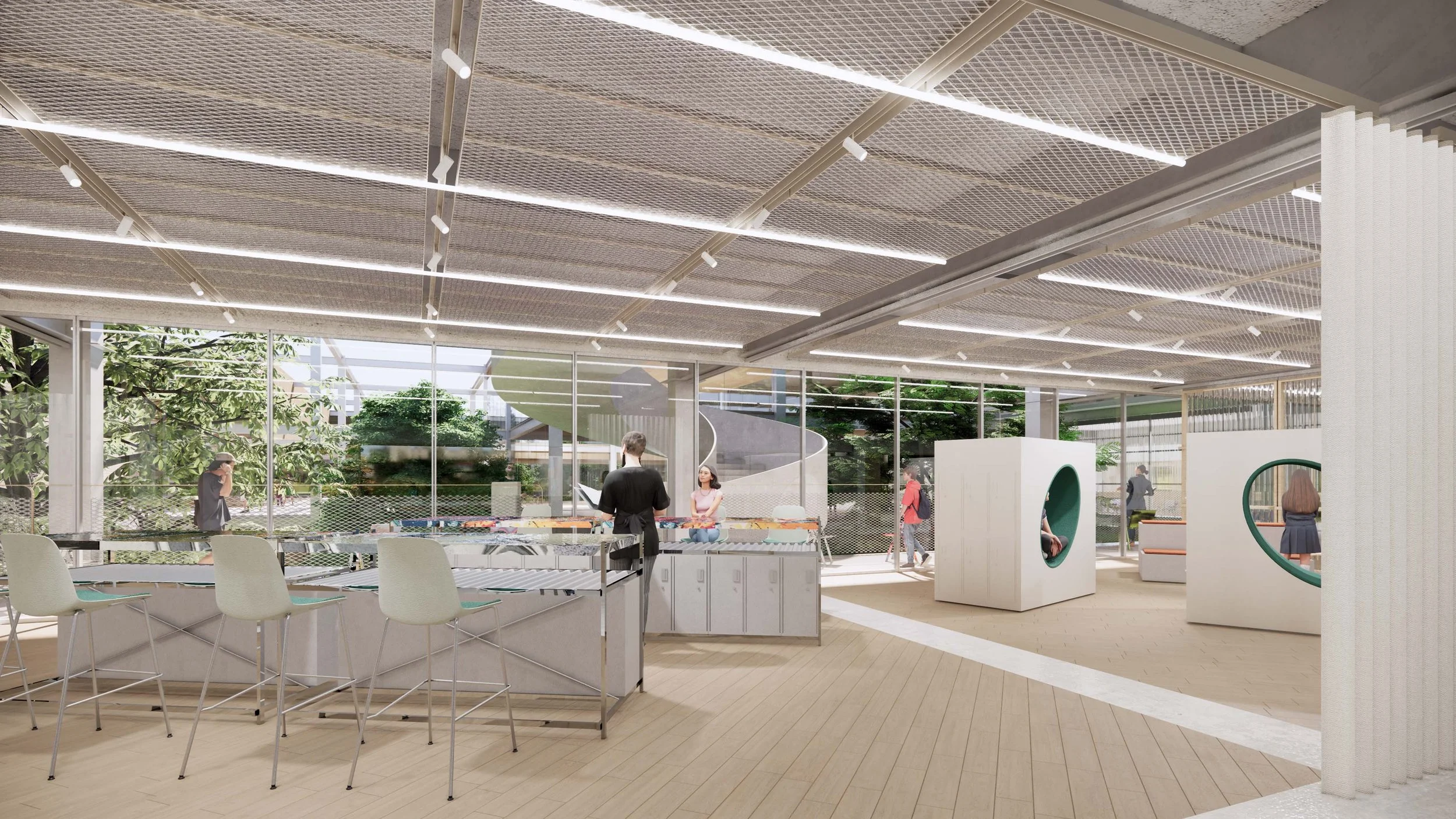
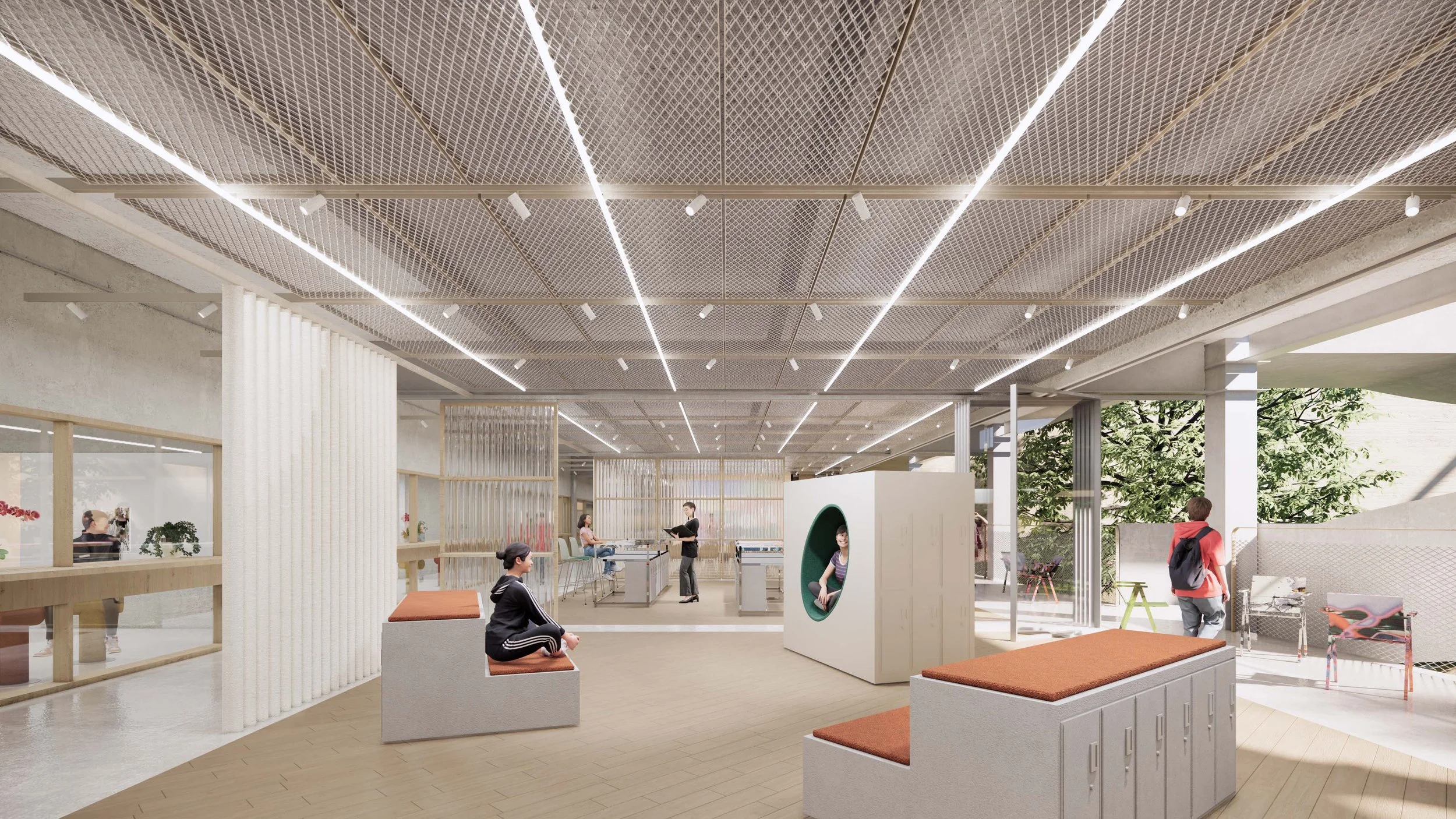
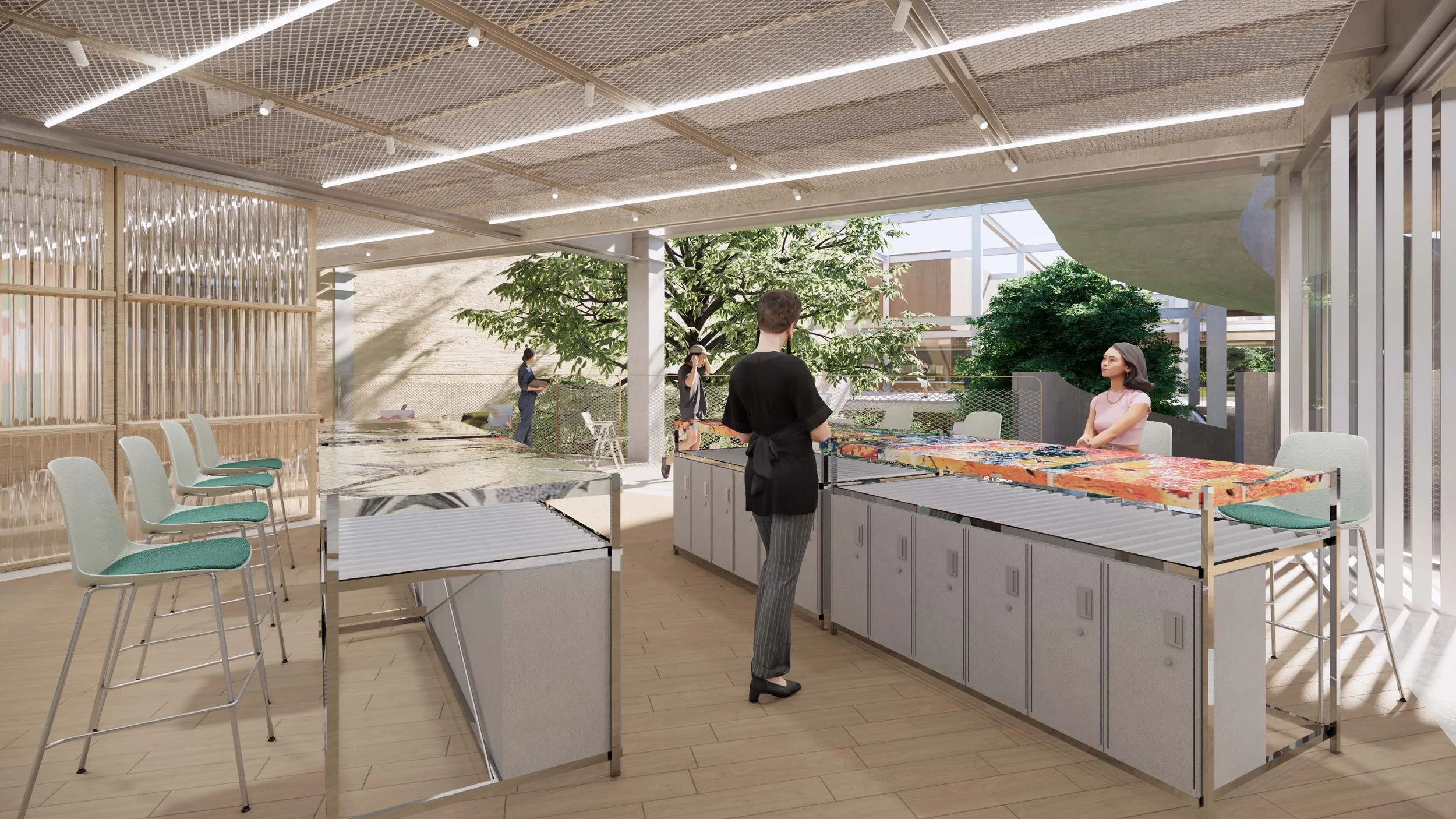
The middle ring of the building houses subject classrooms, laboratories, and public activity areas. Classrooms use standardized configurations for easy switching between different usage scenarios; laboratories integrate technologies to achieve multidisciplinary applicability. All teaching spaces face the Plane Garden, bringing in natural light through floor-to-ceiling windows, allowing students to grow surrounded by sunshine, fresh air, and plants. Public activity areas are arranged around the inner courtyard, with shared learning centers and informal learning areas scattered throughout, breaking down subject boundaries and encouraging cross-age collaboration.
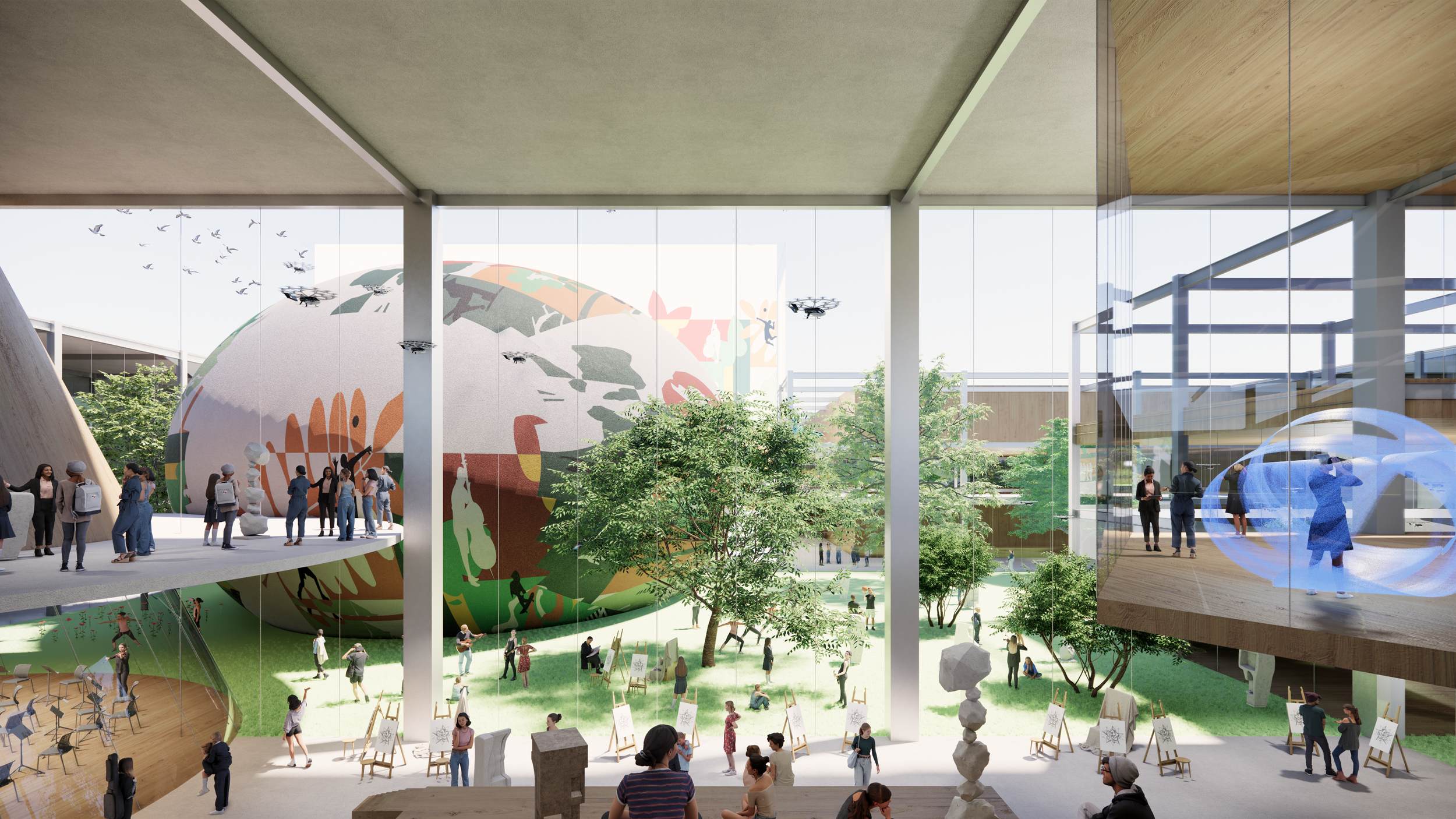
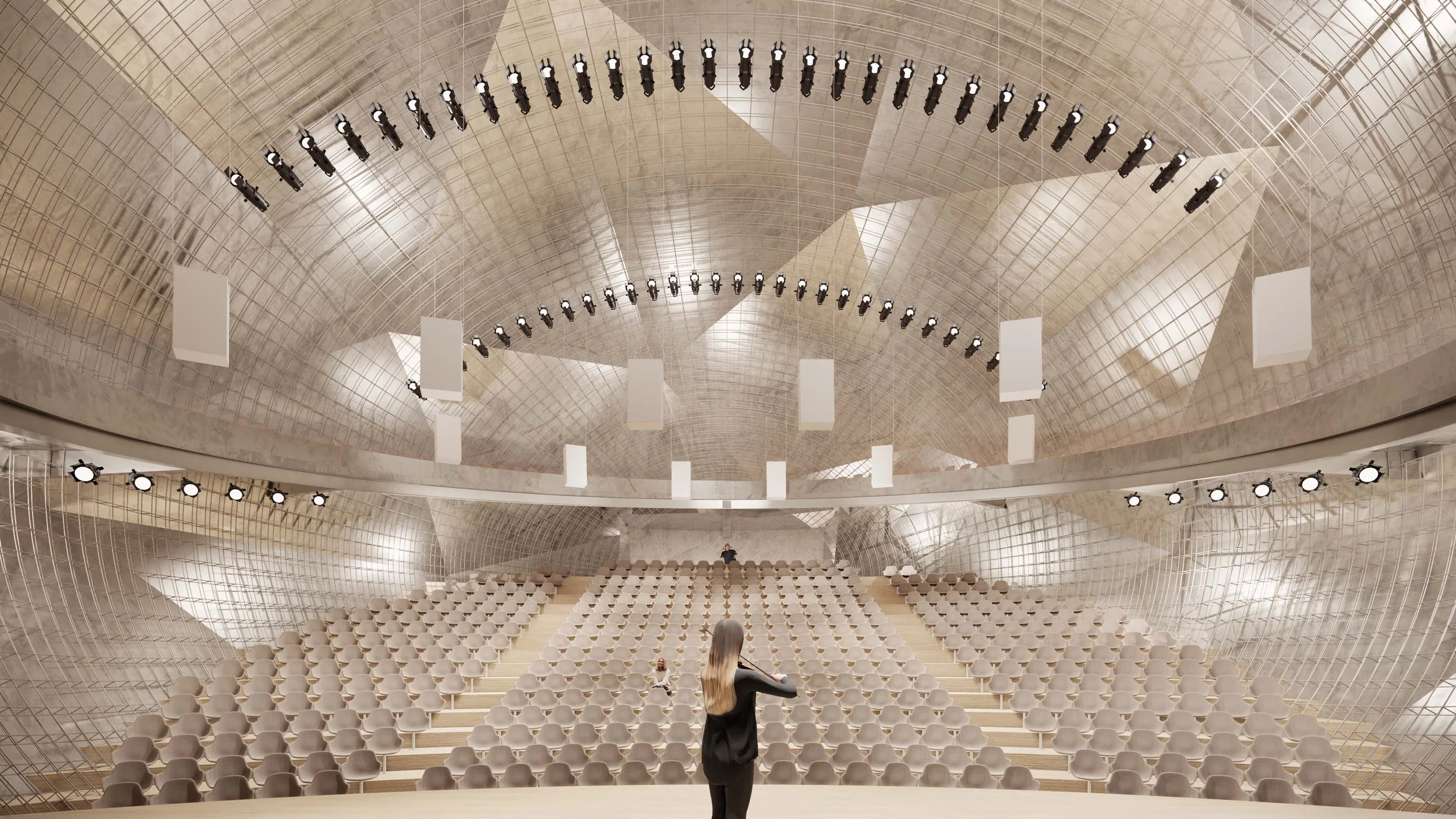
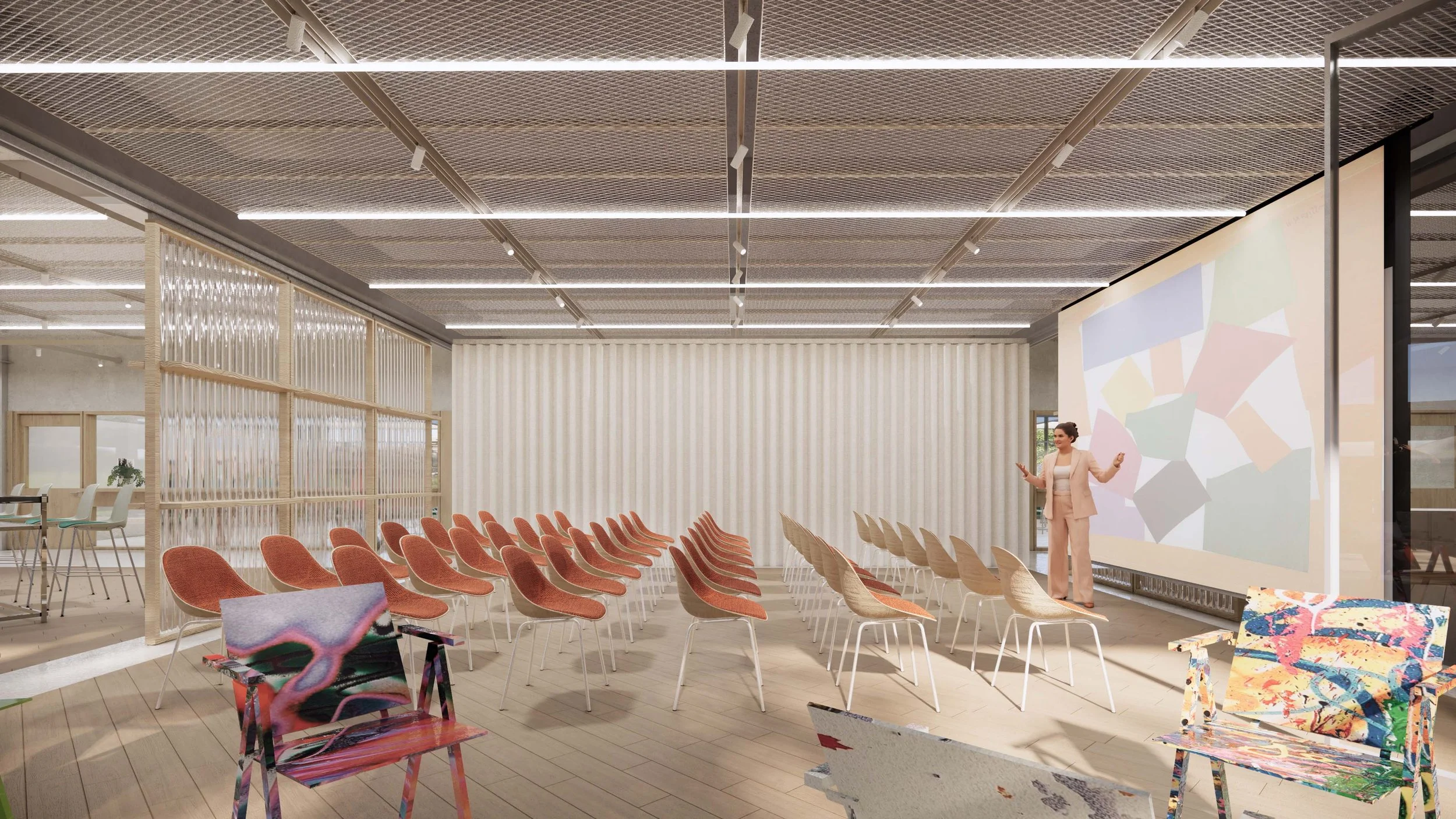
The innermost layer of the building serves as the school's energy hub. Public teaching facilities such as the gymnasium, the Taipei Arena theater, the library, the barn-style assembly hall, and the dance studio blend seamlessly with the ground-floor G LAB, G STUDIO, and outdoor courtyards, creating a cross-disciplinary, cross-age learning paradise. The gymnasium can also function as a venue for 1,000 people, achieving space reuse and cost optimization through a dual-stage system with the Taipei Arena theater. High-ceilinged areas can accommodate drone flight zones and robotics competitions, while public spaces incorporate VR/AR immersive learning experiences, galleries, and other scenarios, comprehensively serving the core objective of "learning."
The interior design returns to the essence of education. Redundant decorations are eliminated, allowing exposed pipes and a clear structure to become intuitive engineering and physics teaching materials. The spatial layout is highly flexible to adapt to the continuous evolution of future education models. Acoustics, lighting, and intelligent facilities are compatible with group, small group, and individual learning, supporting integrated online and offline teaching, and oriented towards future education.
Green technology is integrated throughout. The rooftop solar photovoltaic system was reused and upgraded, connecting it to the campus smart microgrid. Through Goertek's self-developed sensors and IoT platform, real-time energy consumption data for the entire building was collected and visualized, serving as a "living textbook" for students to understand new energy technologies and smart energy management. The building also enhanced natural ventilation and lighting, employing a high-performance building envelope to achieve refined energy-saving operation.
This school is a dreamland for children's growth, a vibrant arena for thought: open, diverse, and bursting with creative energy. Here, art, sports, and technology inspire each other; learning and play seamlessly switch; and collaborative innovation becomes a daily routine. Talented individuals with a blend of aesthetics, health, and technological innovation naturally flourish here.
CHIEF DESIGNER
Xiaoyi Ma
DESIGN TEAM
Jing Zhu, Jiajia Wang, Pengfei Chen, Yun Hong, Shi Fu, Yan Xia, Weihui Yan