
BIBA ELEMENTARY SCHOOL RENOVATION
BEIJING HUANG CHENG GEN SCHOOL
The Changping Campus of Huang Cheng Gen Primary School showcases design practice that highly integrates architectural concepts with educational philosophies. It is also the first school architecture in Beijing built in accordance with the Passive House Standards. Huang Cheng Gen Primary School, with a history of over 100 years, and Inclusive Architectural Practice, a design firm with extensive experience in education architectural design, both agreed to think out of the box regarding public schools’ space planning and building imagery, and build a learner-centered “School of the 21st Century”.
LOCATION Beijing, China
AREA 29098 m²
STATUS Completed
CLIENT Beijing Changye Real Estate Development Co., Ltd.
YEAR 2019
PROGRAMS Education, Architecture, Interior, Landscape Design
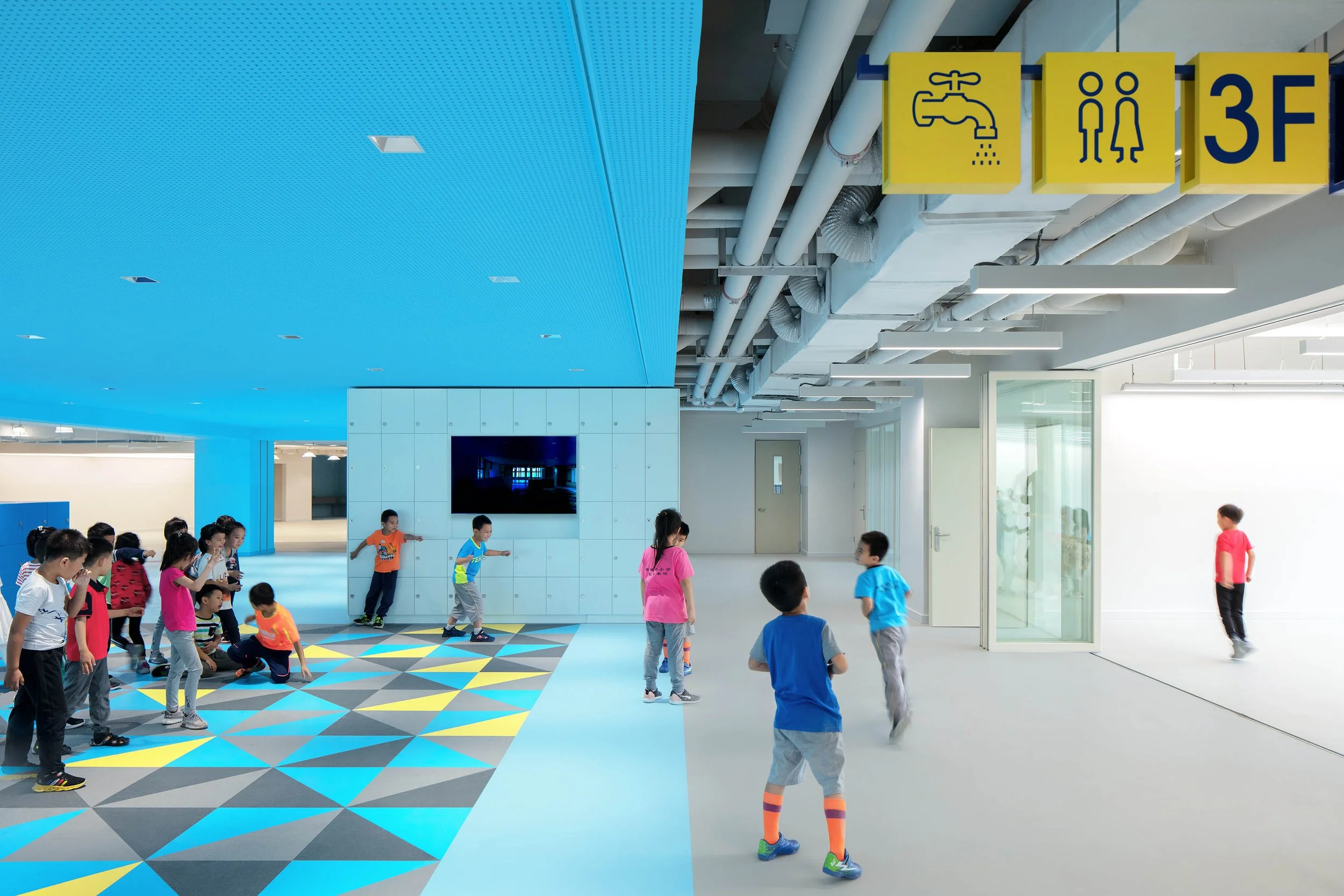
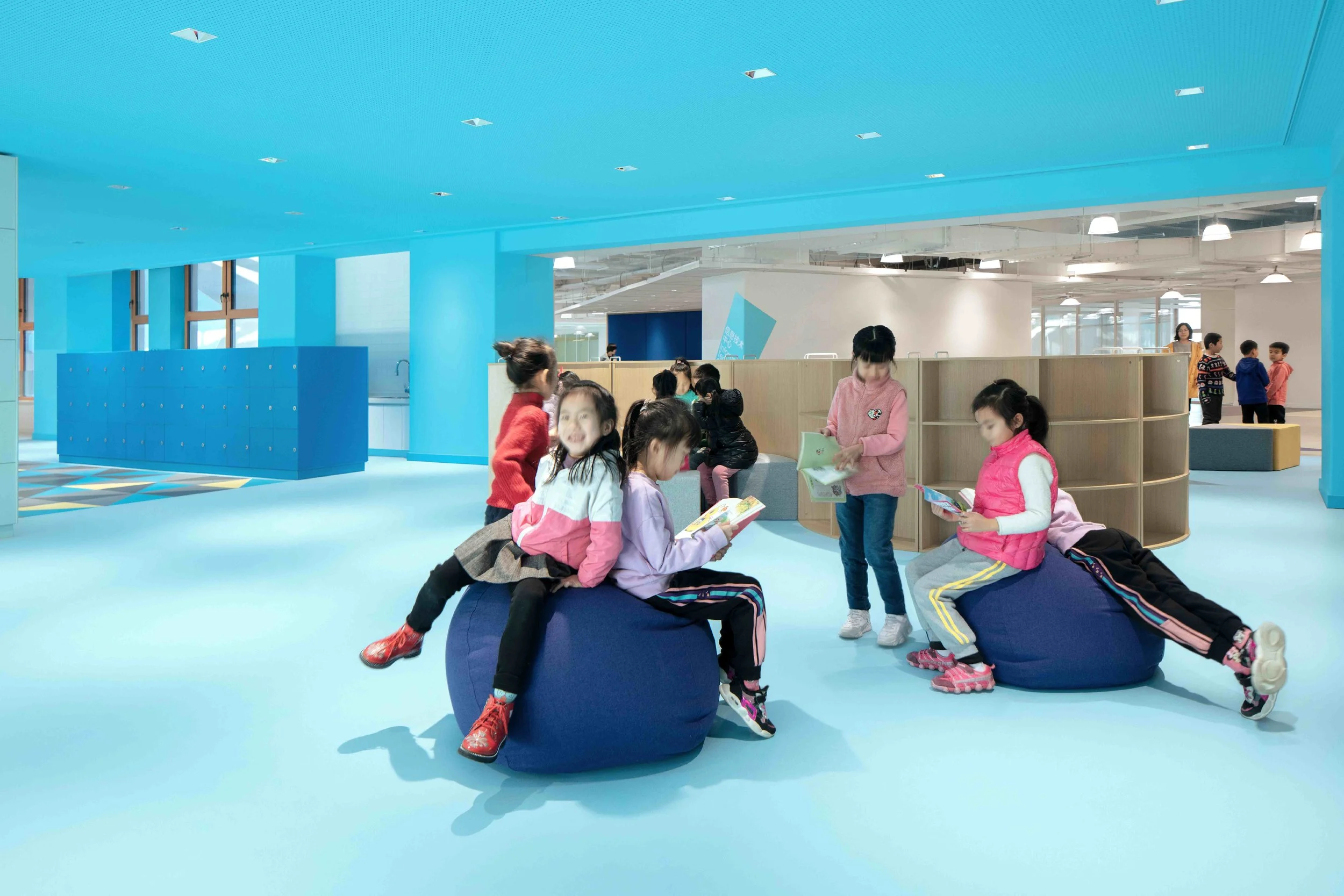
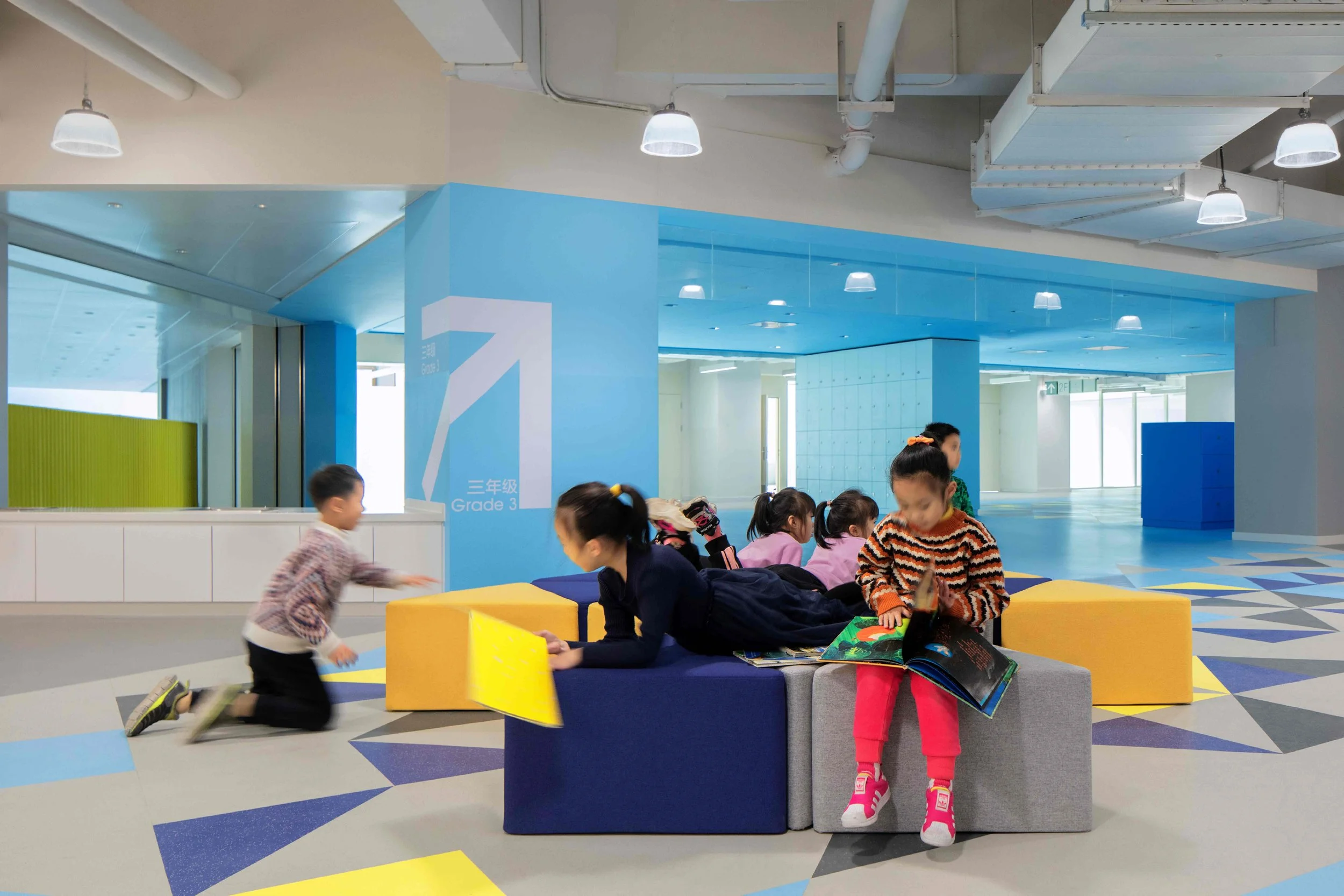
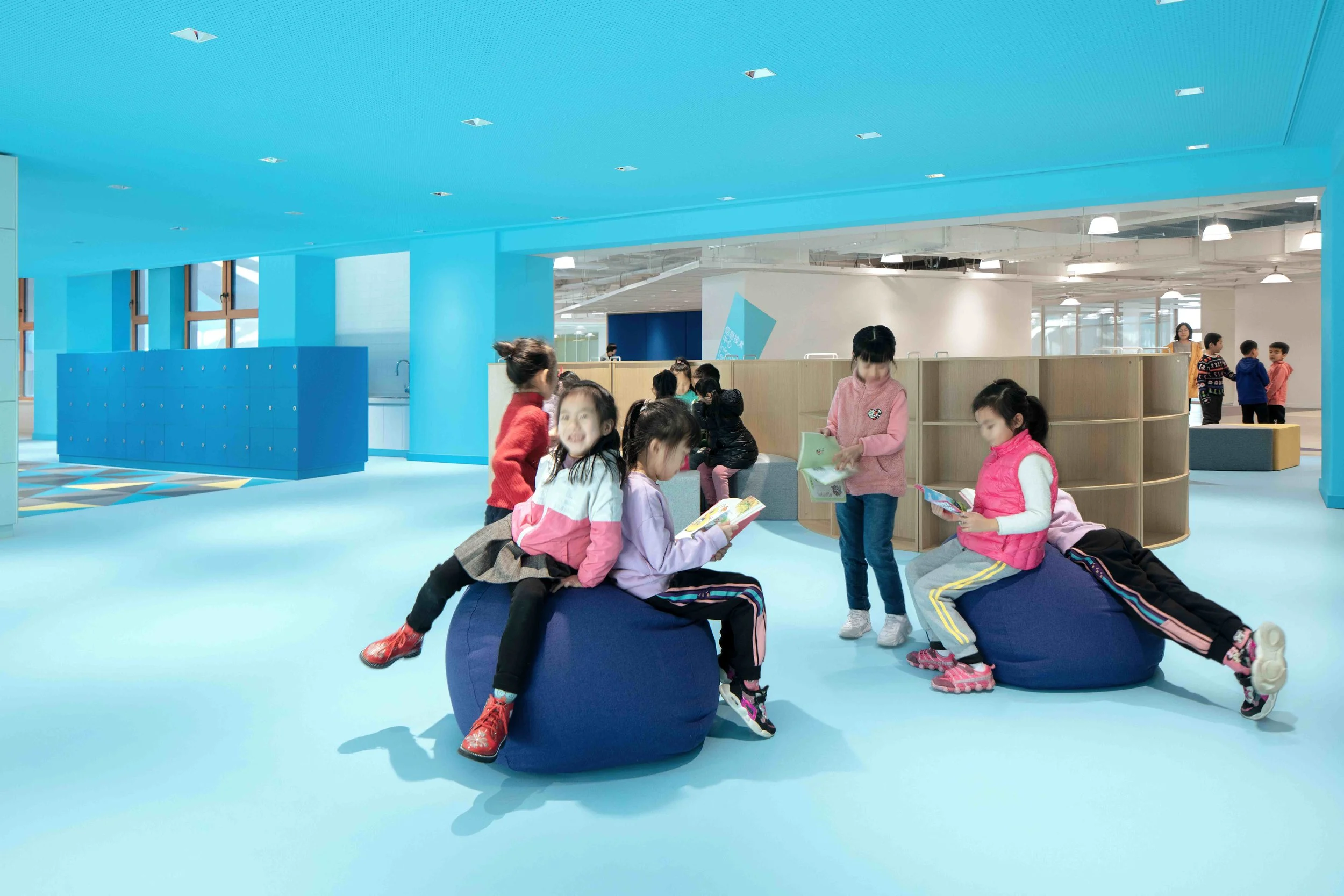
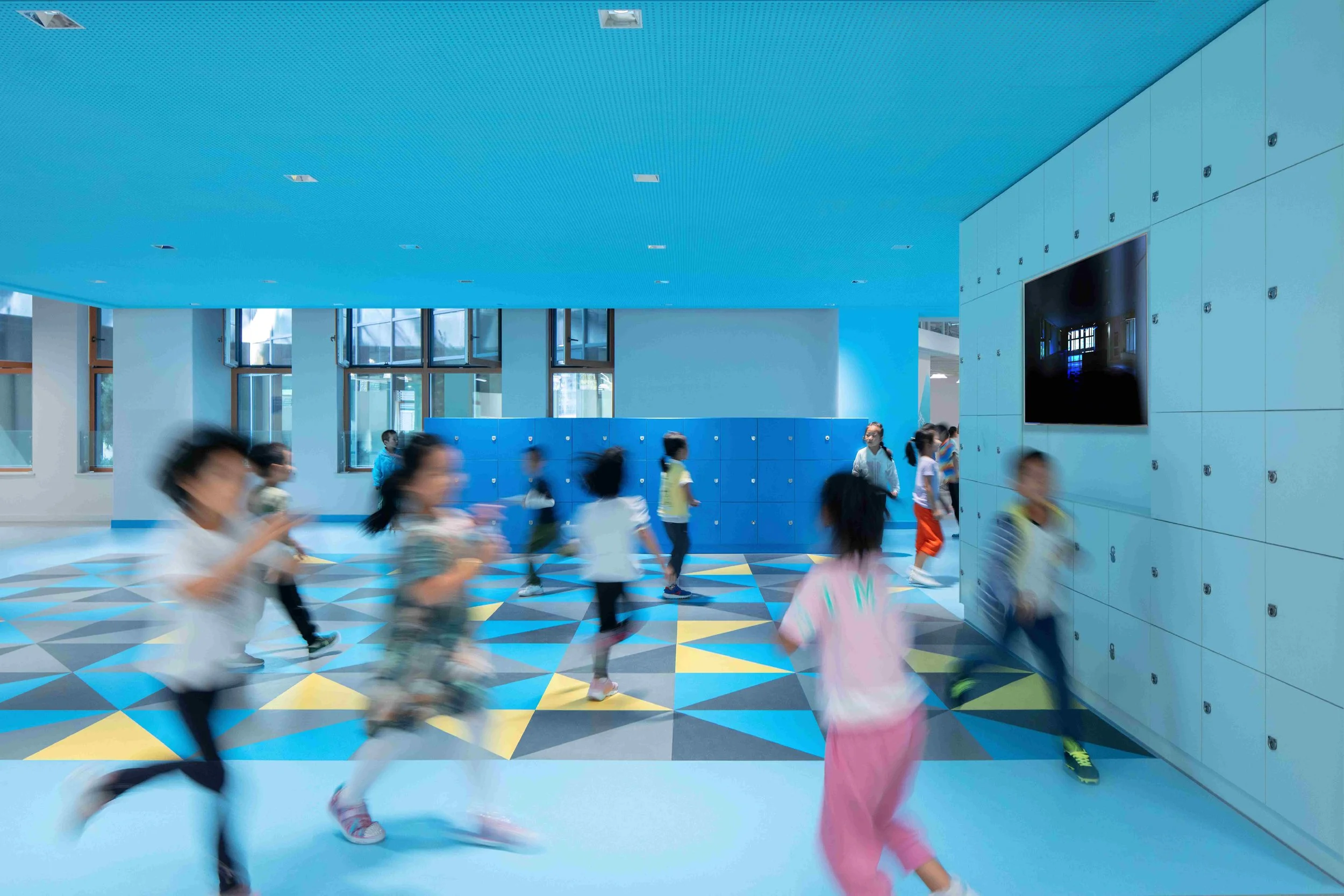
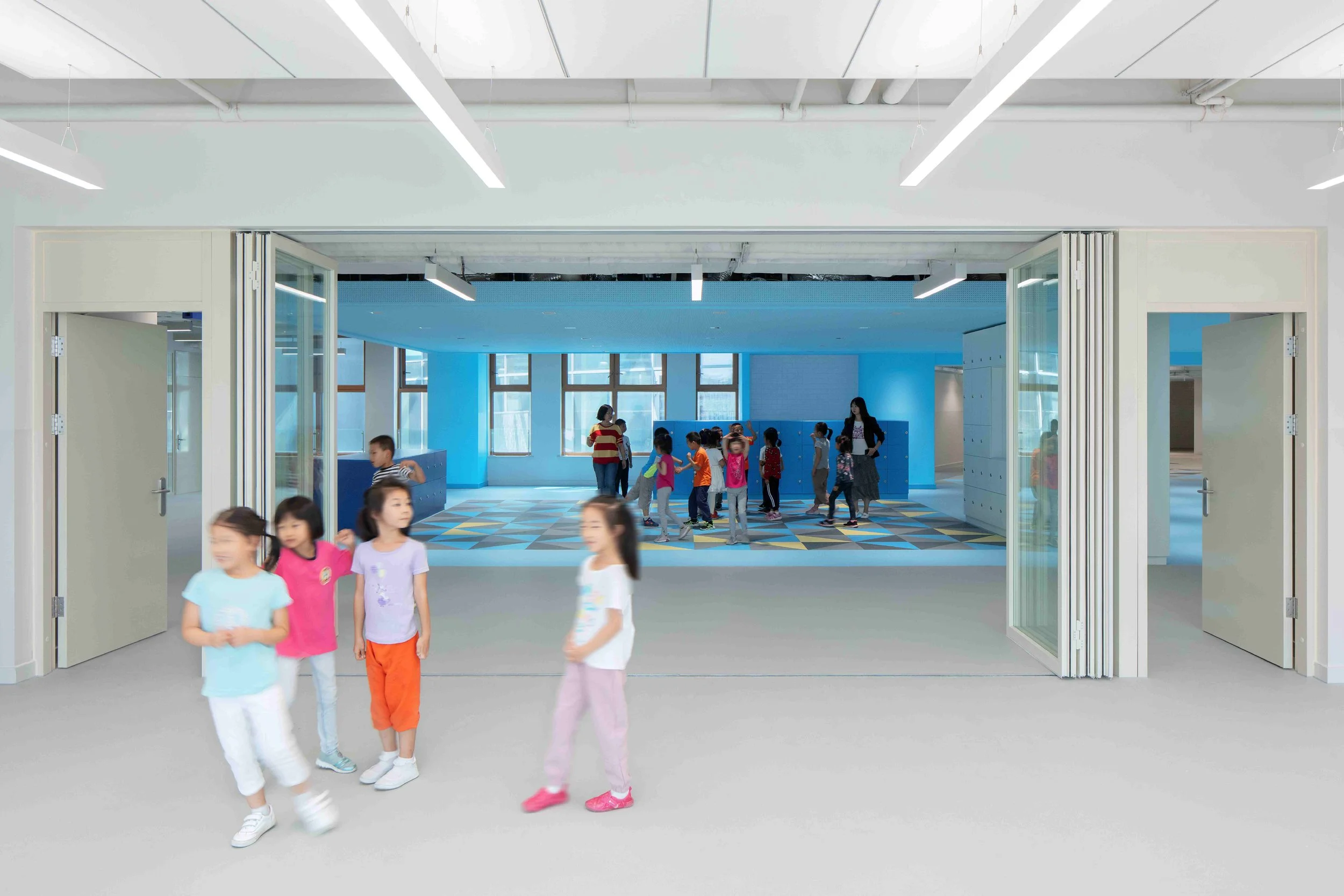
The architecture is comprised of a multi-tier model of spaces. First, “the Learning Community” replaces the traditional "cell + bell" classroom layout and constitutes the basic unit of the space. There are 160 students in each grade, which, according to research, is the maximum number of people for a child to remember in a year. The learning community is also called "the Grade Living Room", which provides the children with safety and a sense of belongingness, facilitating openness while acting as an extension of classes and cross-disciplinary learning.
The Grade Living Rooms, the single-subject classrooms, the library, the multifunctional gymnasium, the canteen and the auditorium form several boxes, which rotated layout, in consideration for ample natural light and ventilation, in turn form multiple triangular courtyards. Therefore, the design is named “A Story of Boxes and Courtyards”. This design layout effectively reduces the scale of the building’s massing, while enhancing the forms of the interior and exterior spaces.
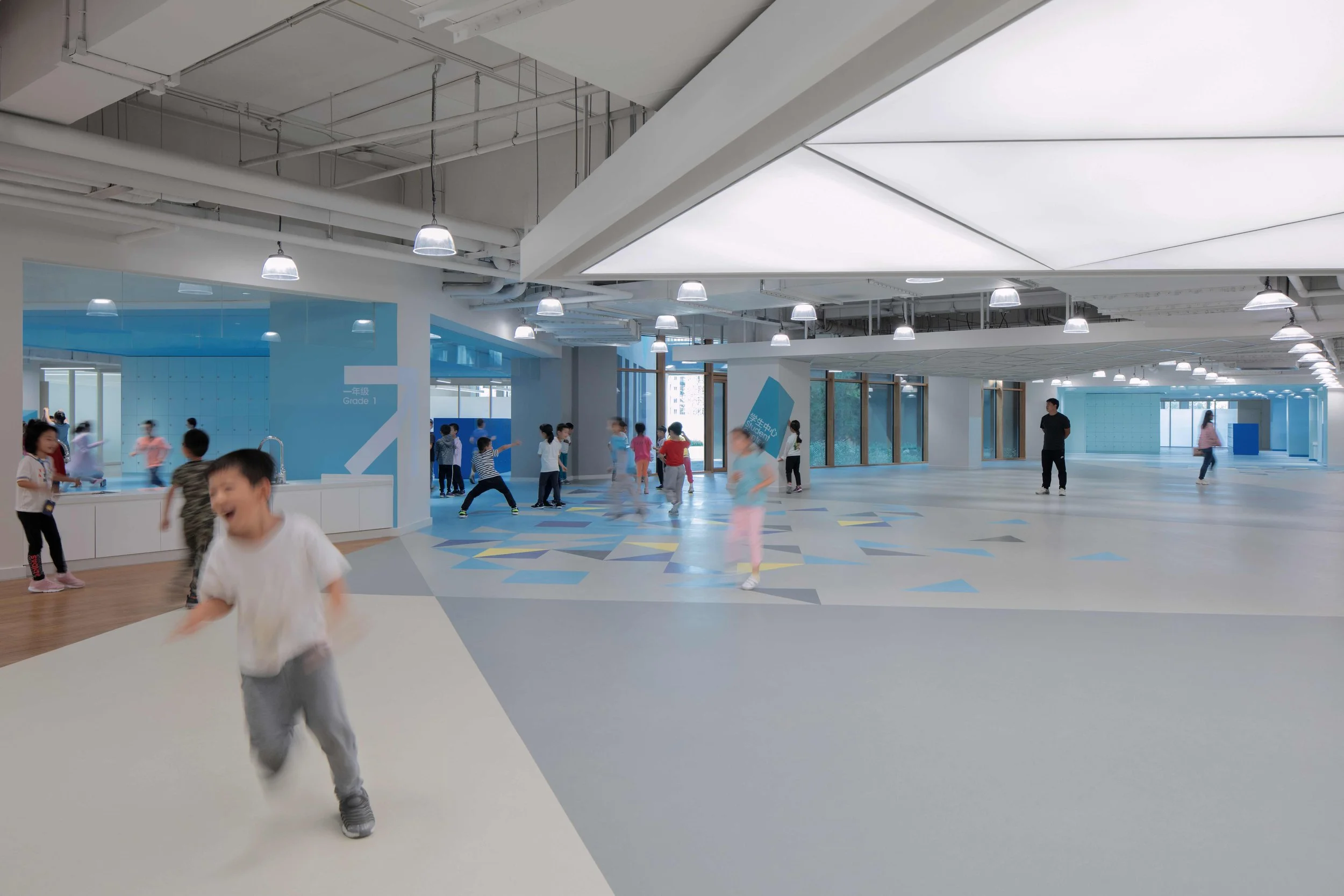
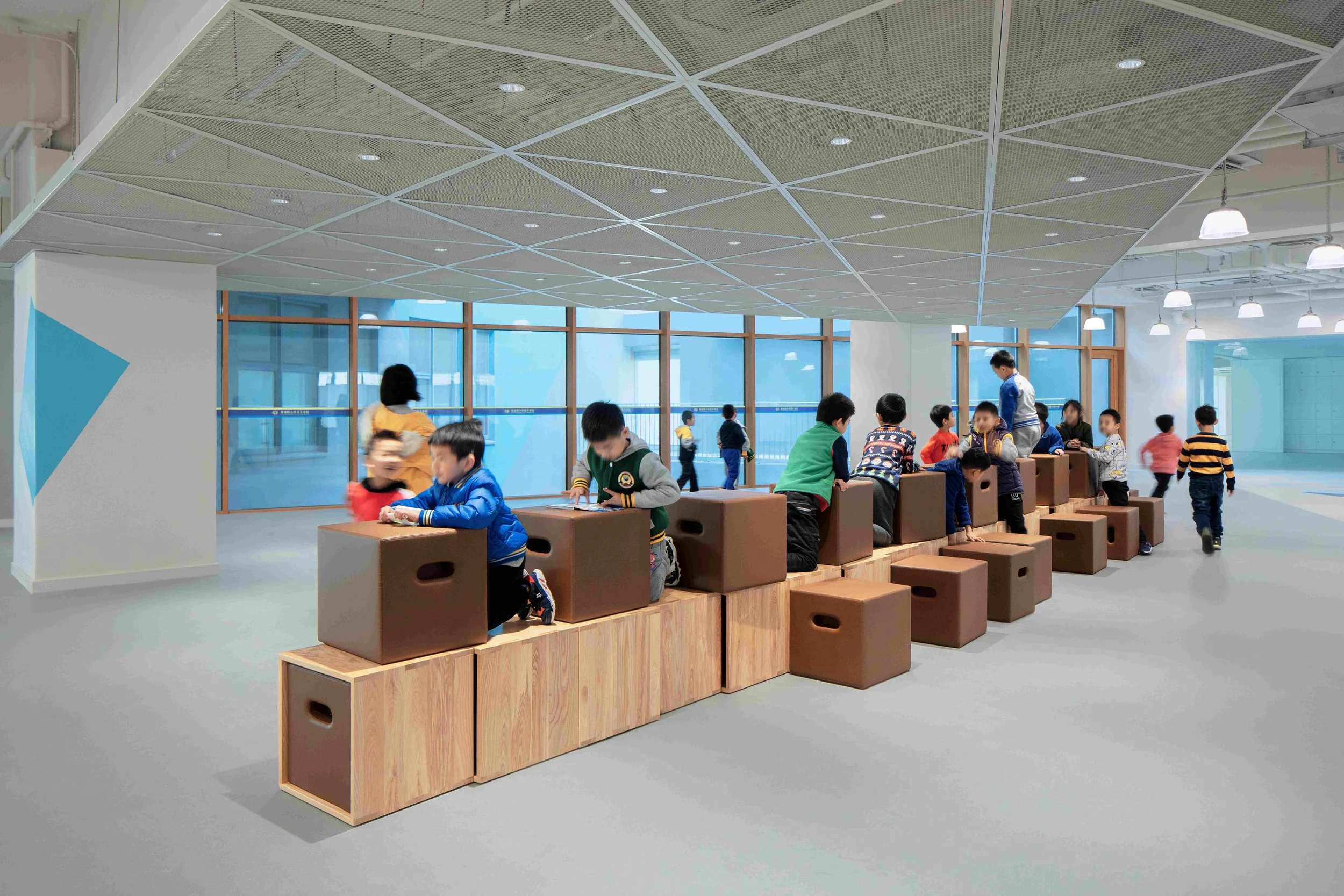
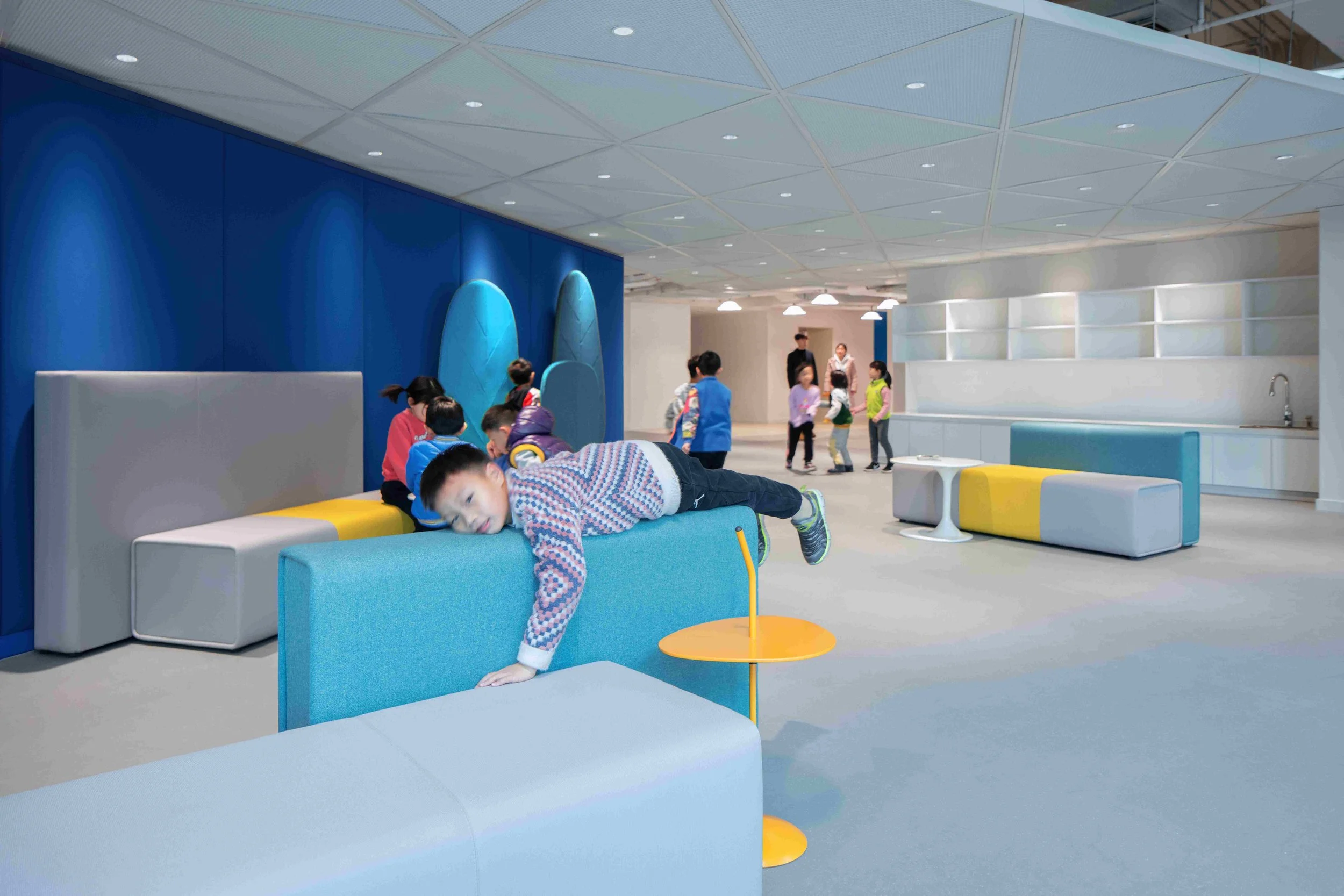
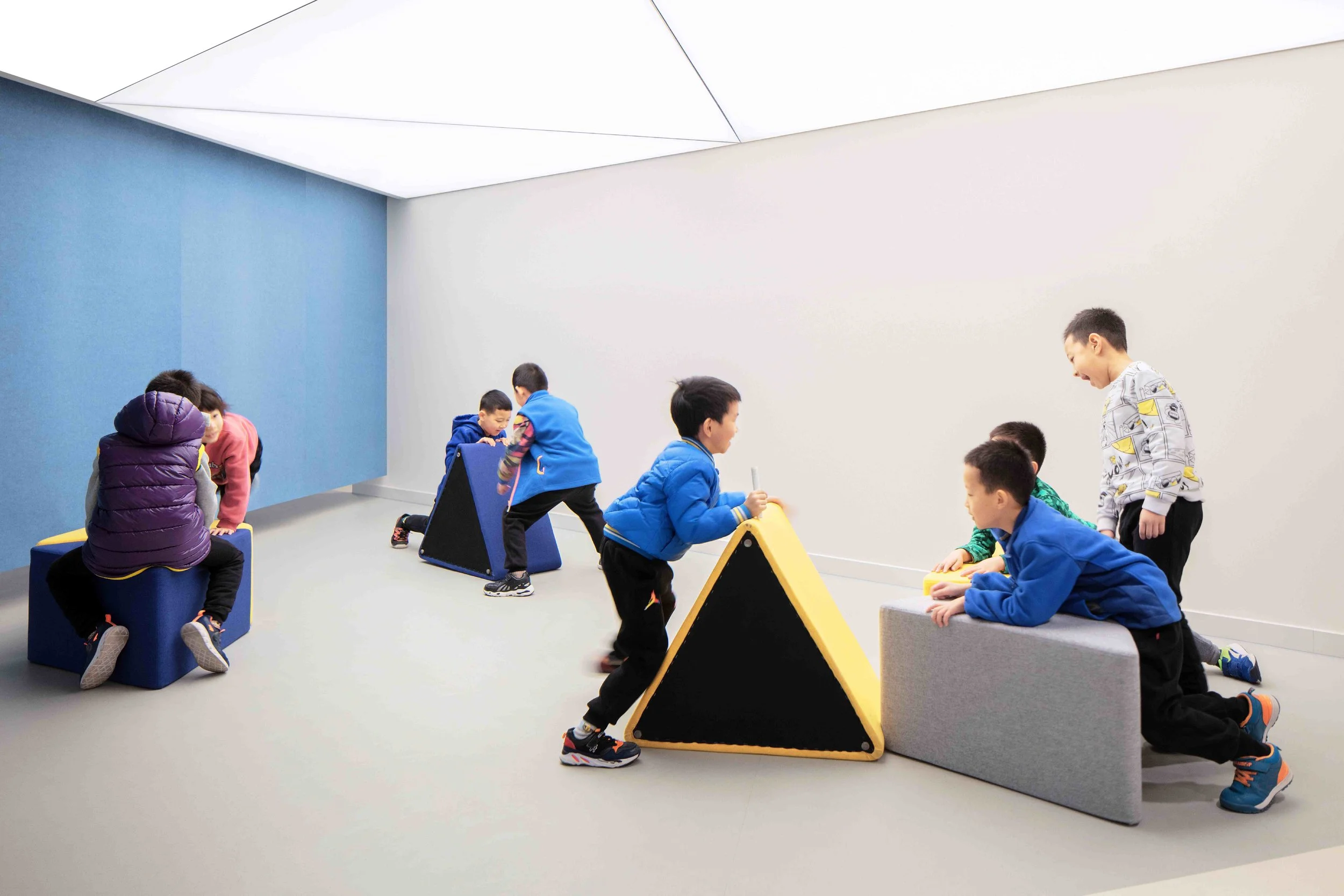
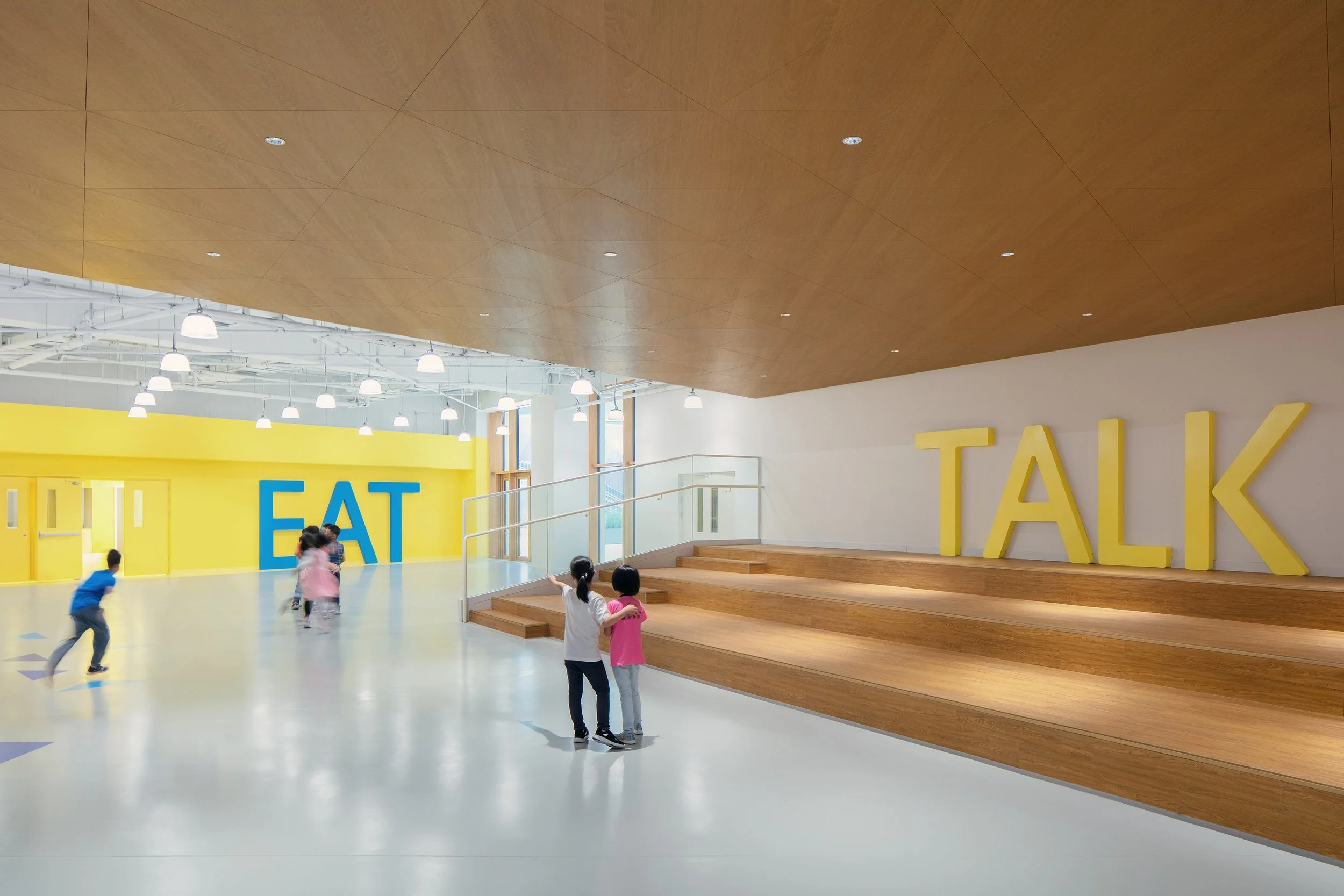
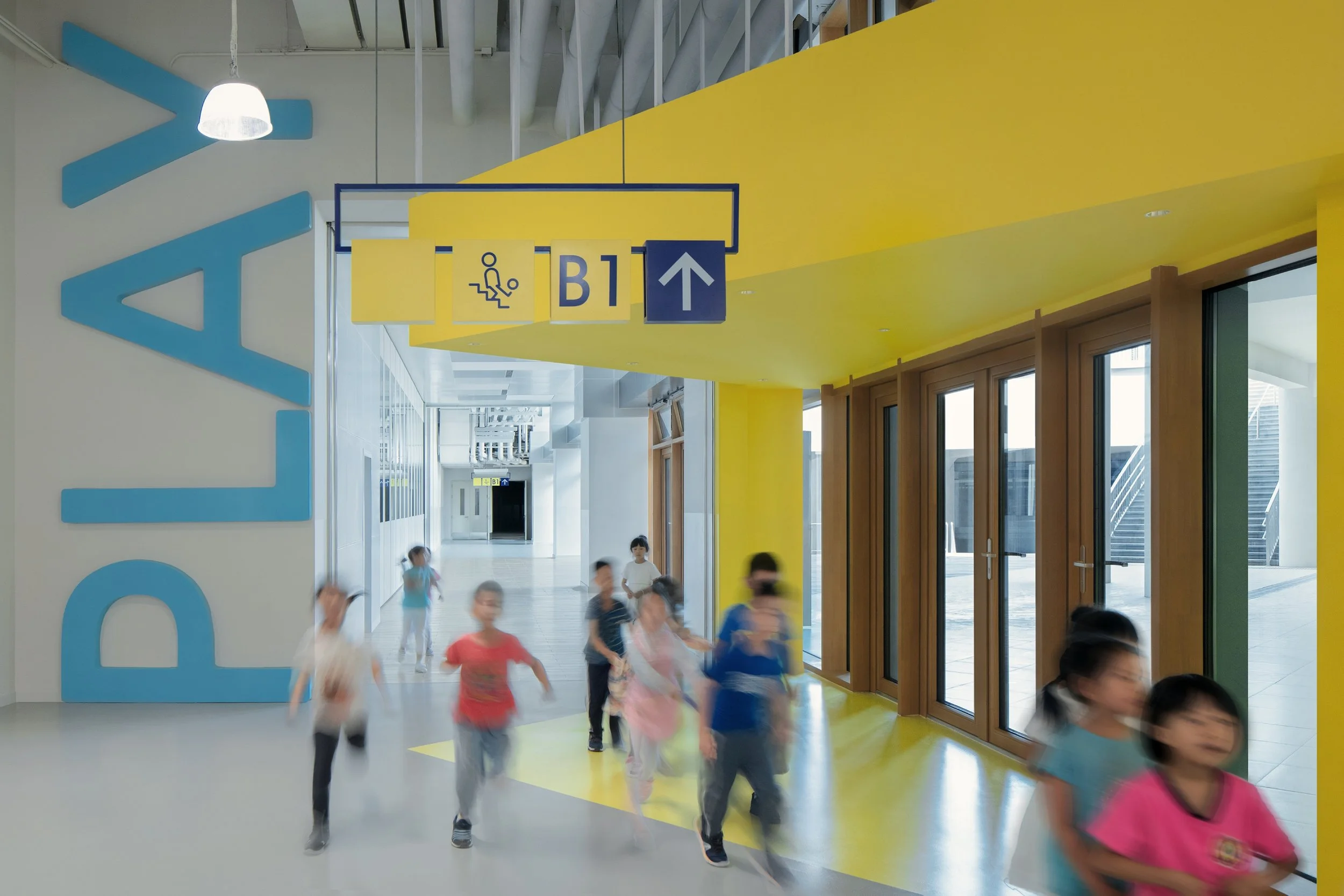
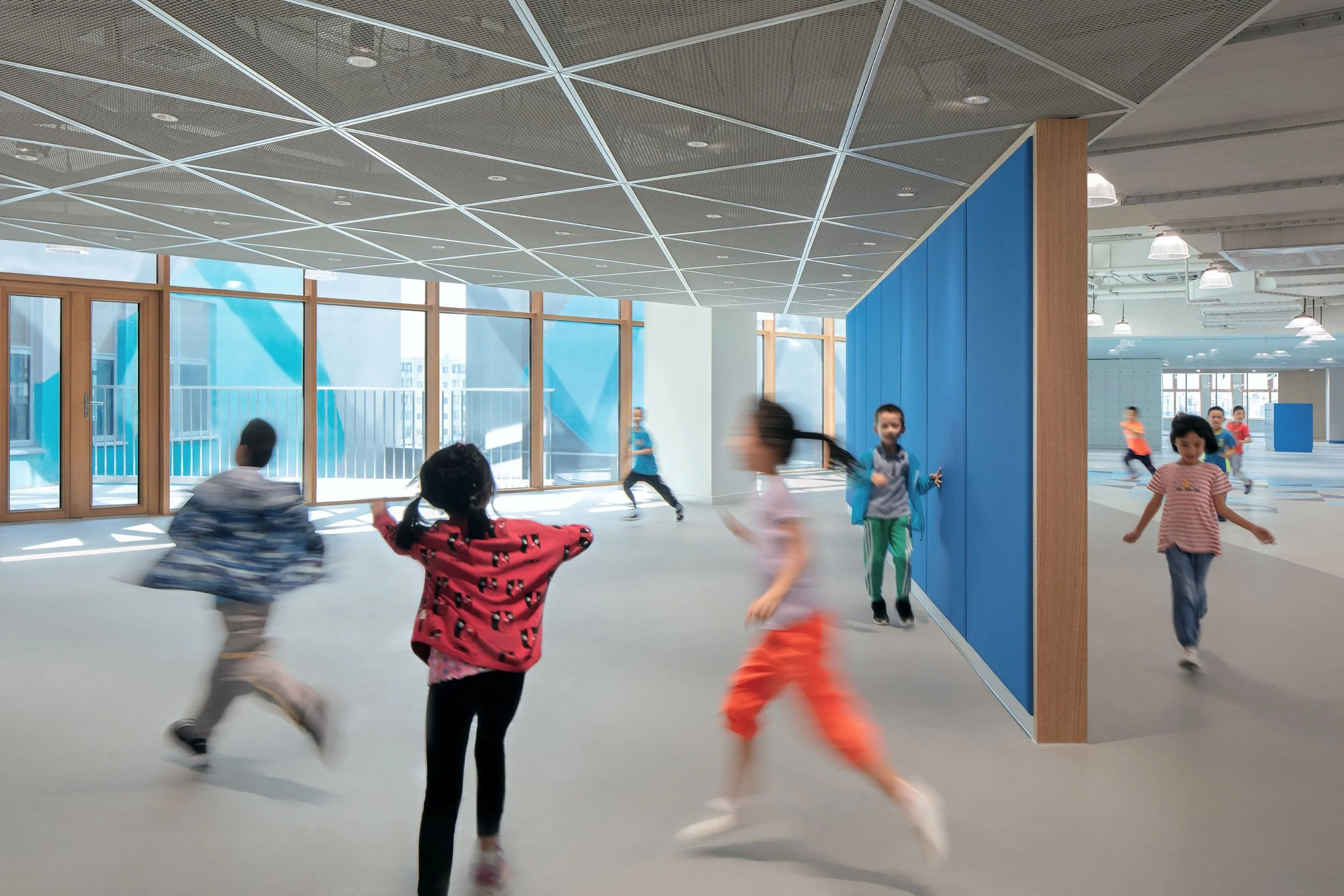
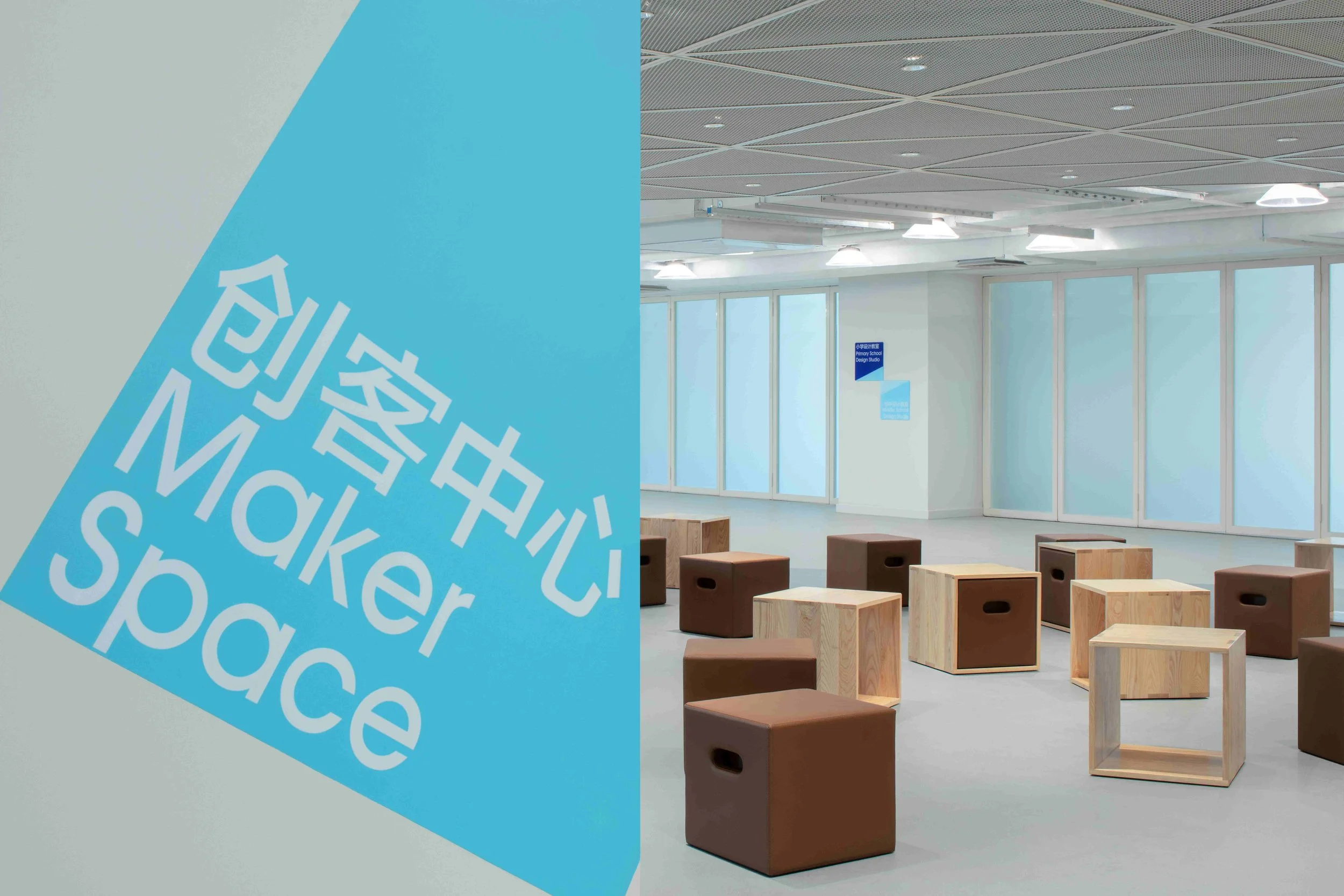
The polygonal spaces defined by the "boxes" connect to the various classrooms, and form the Lifestyle Center, Student Center, Makerspace, Cybercafe and other subject learning centers. Replacing traditional corridors, these learning centers create multipurpose environment for lectures, demonstrations, exhibitions, performances, and project-based learning, achieving the educational ideal of “Learning Anywhere, Anytime”. These common areas are called "the Intelligent Centers", a prototypical space model in accordance with the theory of “Multiple Intelligences” put forward by the famous educator Howard Gardener.
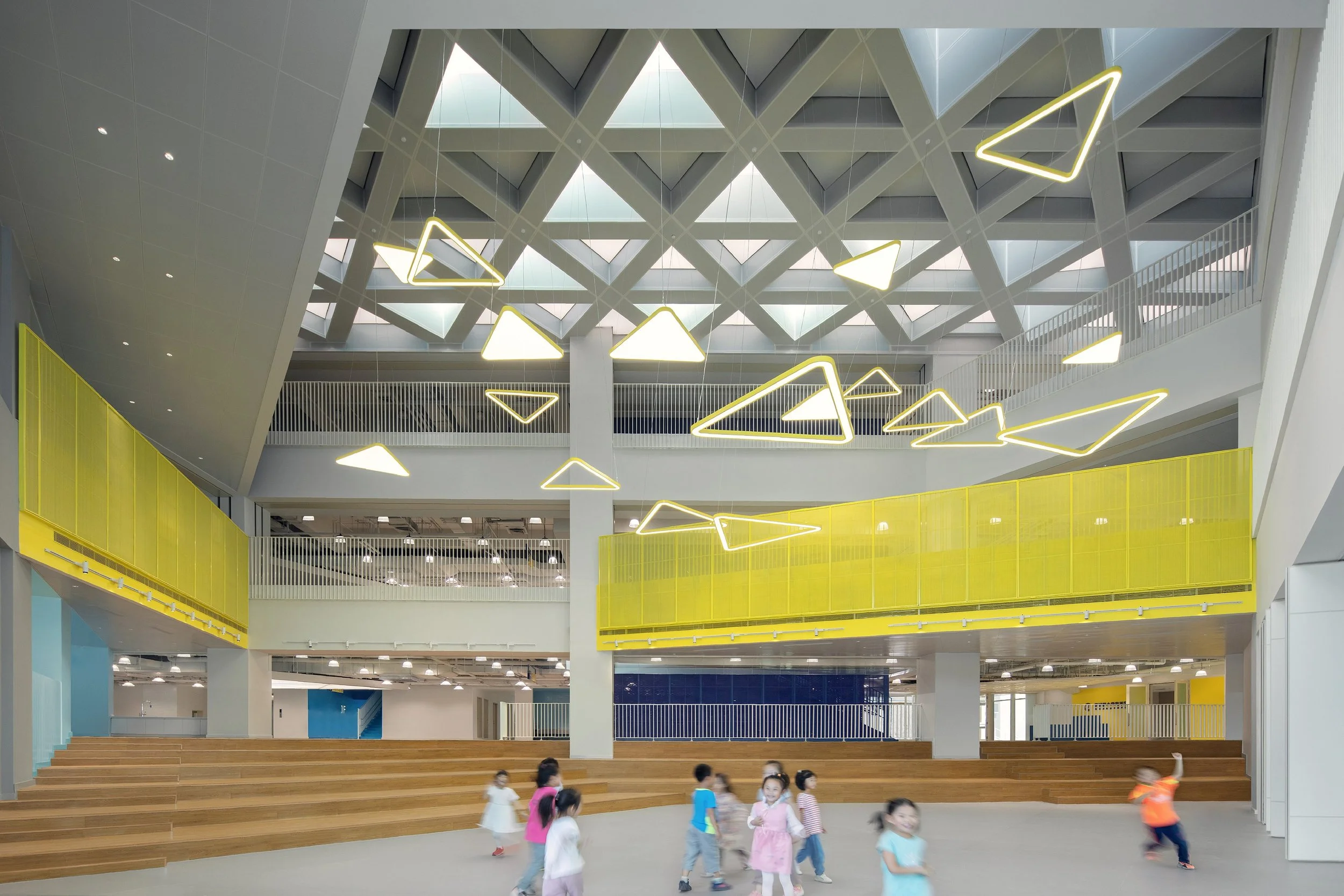
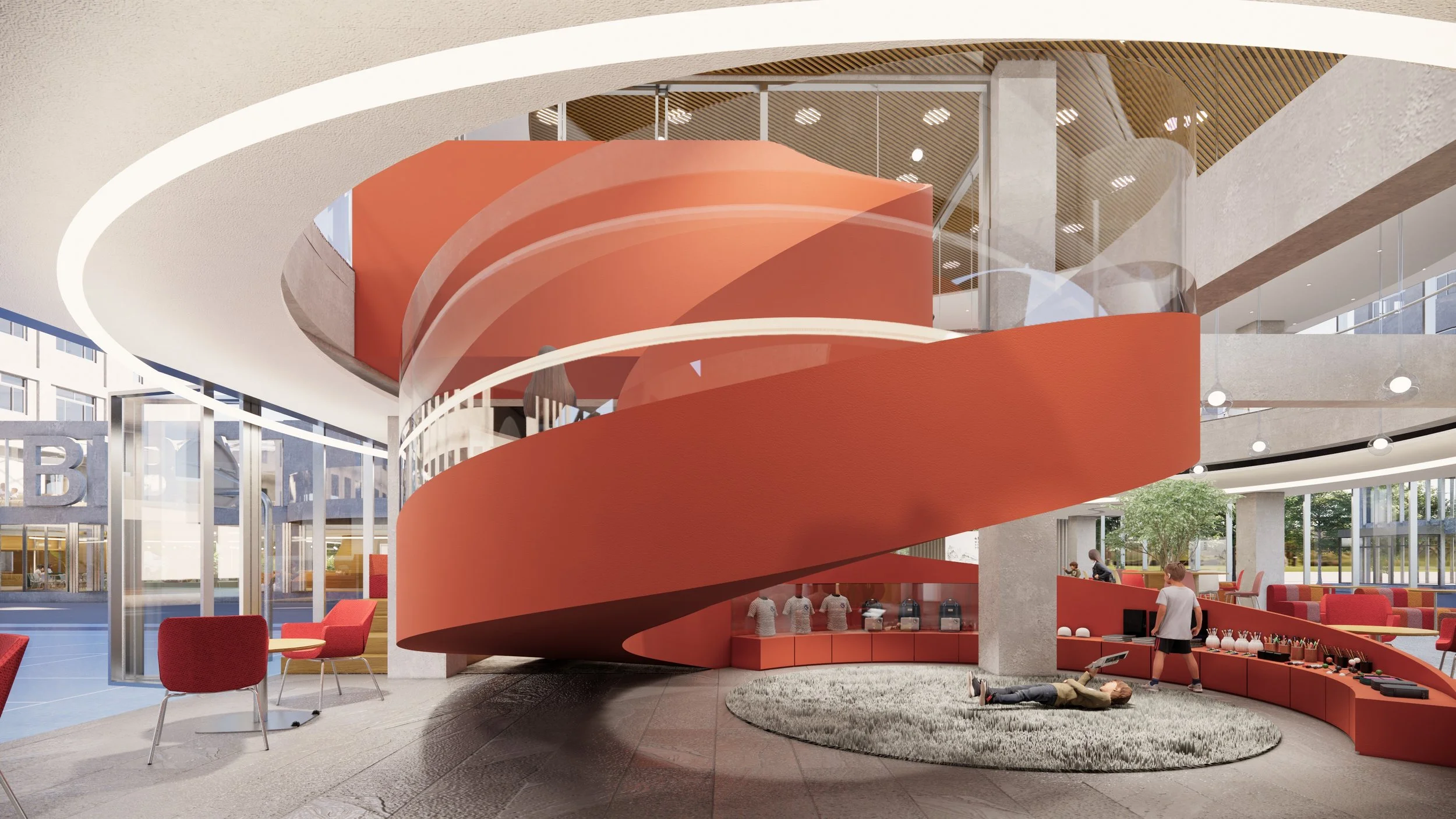
Ultimately, the design establishes an educational spatial structure founded on balance rather than hierarchy. Centrifugal force encourages exploration and innovation; centripetal force provides safety and belonging. The tension between the two sustains the continuity of learning. The school thus becomes a living ecosystem—where knowledge, body, and emotion interact, attract, and regenerate. Education is reinterpreted as a gravitational process: expanding through connection, and forming order and meaning within a shared field of gravity.
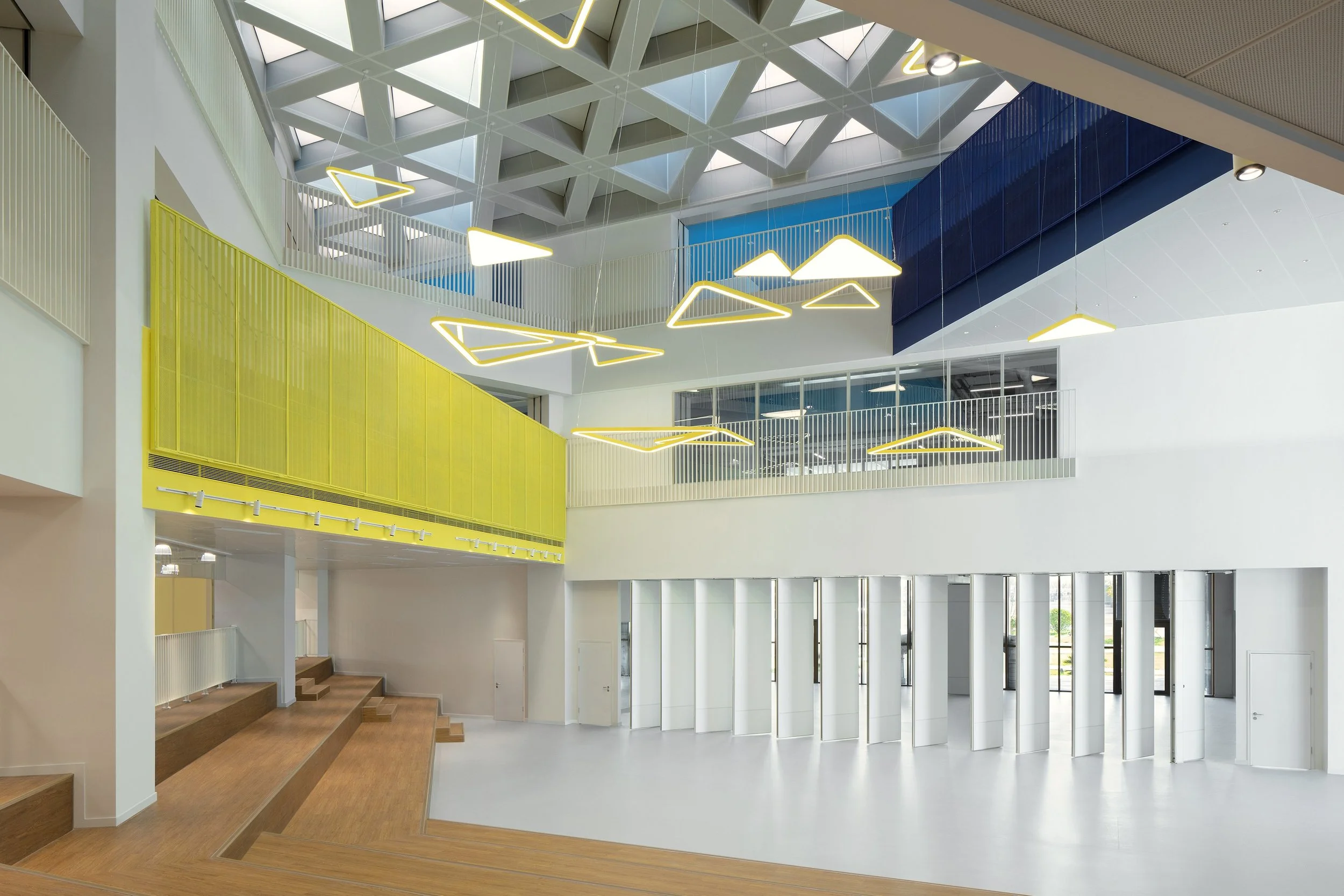
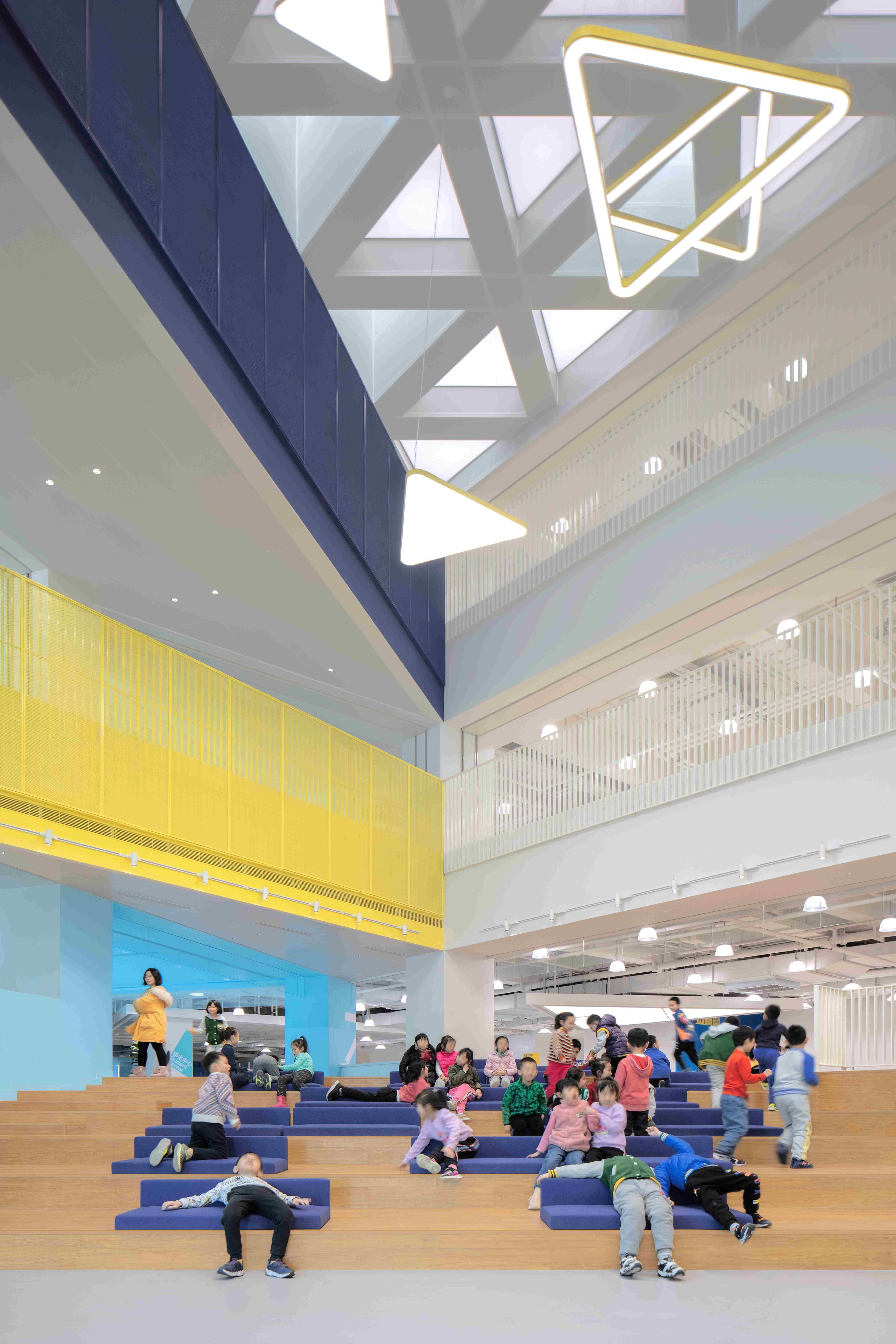
The largest courtyard is a three-story interior atrium in the center of the building, which functions as a Performing Arts Hall as well as a “town center”. It is connected to the dance and drama studios as well as the “Performing Arts Courtyard”, forming a sequence of indoor and outdoor spaces for informal performing and gathering. The "Lifestyle Courtyard" is an outdoor sunken courtyard that connects the canteen, the gymnasium and the band rehearsal room, forming an ideal location for music assemblies in the summer.
CHIEF DESIGNER
Xiaoyi Ma
DESIGN TEAM
Chaoyi Meng, Pengfei Chen, Yan Xia, Xuejiao Zhou, Yang Ming, Jiajia Wang, Yue Zhao, Renzheng Zhu, Yue Wu, Jiequn Liang, Lei Bao
CREDITS
Zhi Xia (Photographer)