
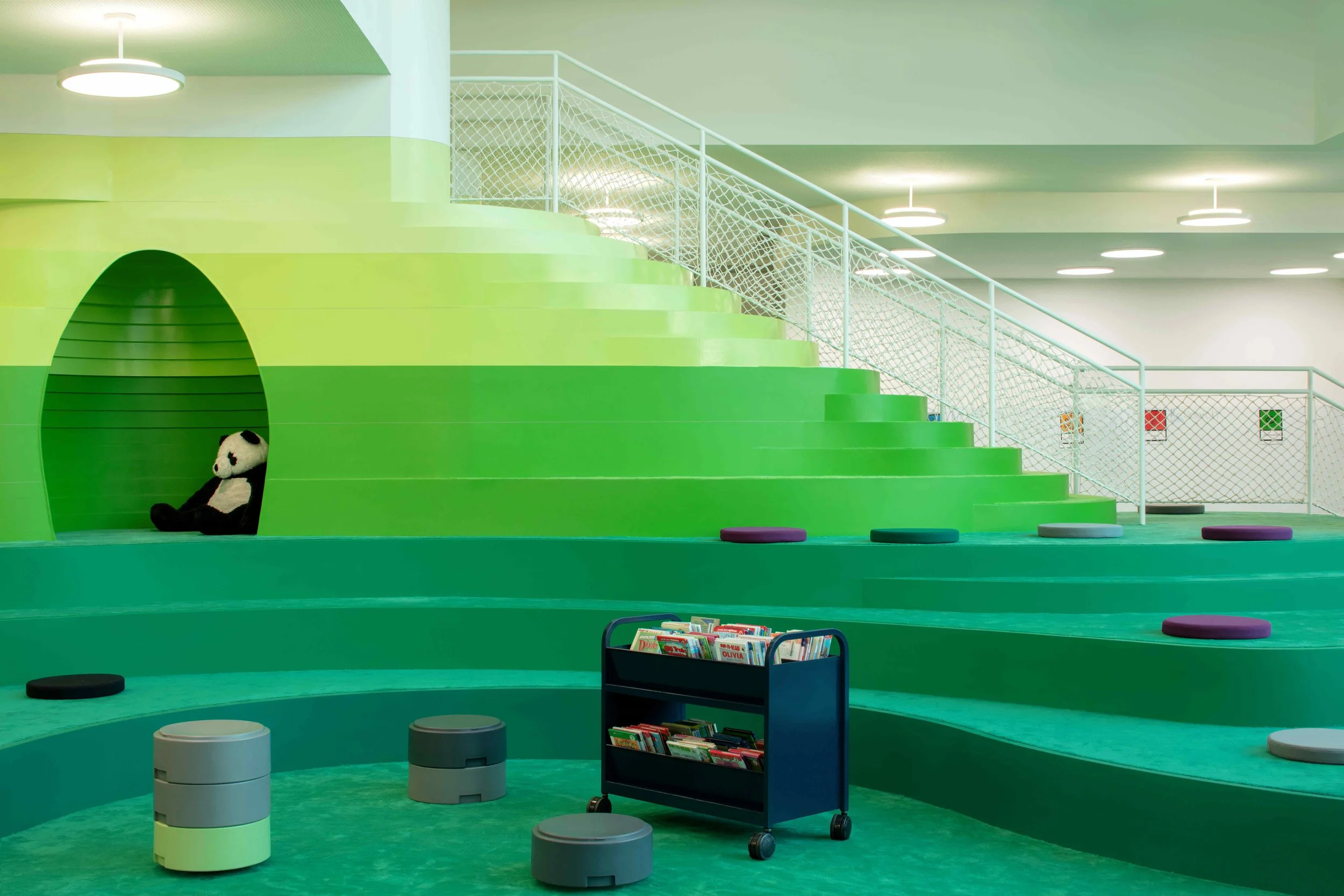
BIBA ELEMENTARY SCHOOL RENOVATION
INTERNATIONAL SCHOOL OF
BEIJING EXPANSION
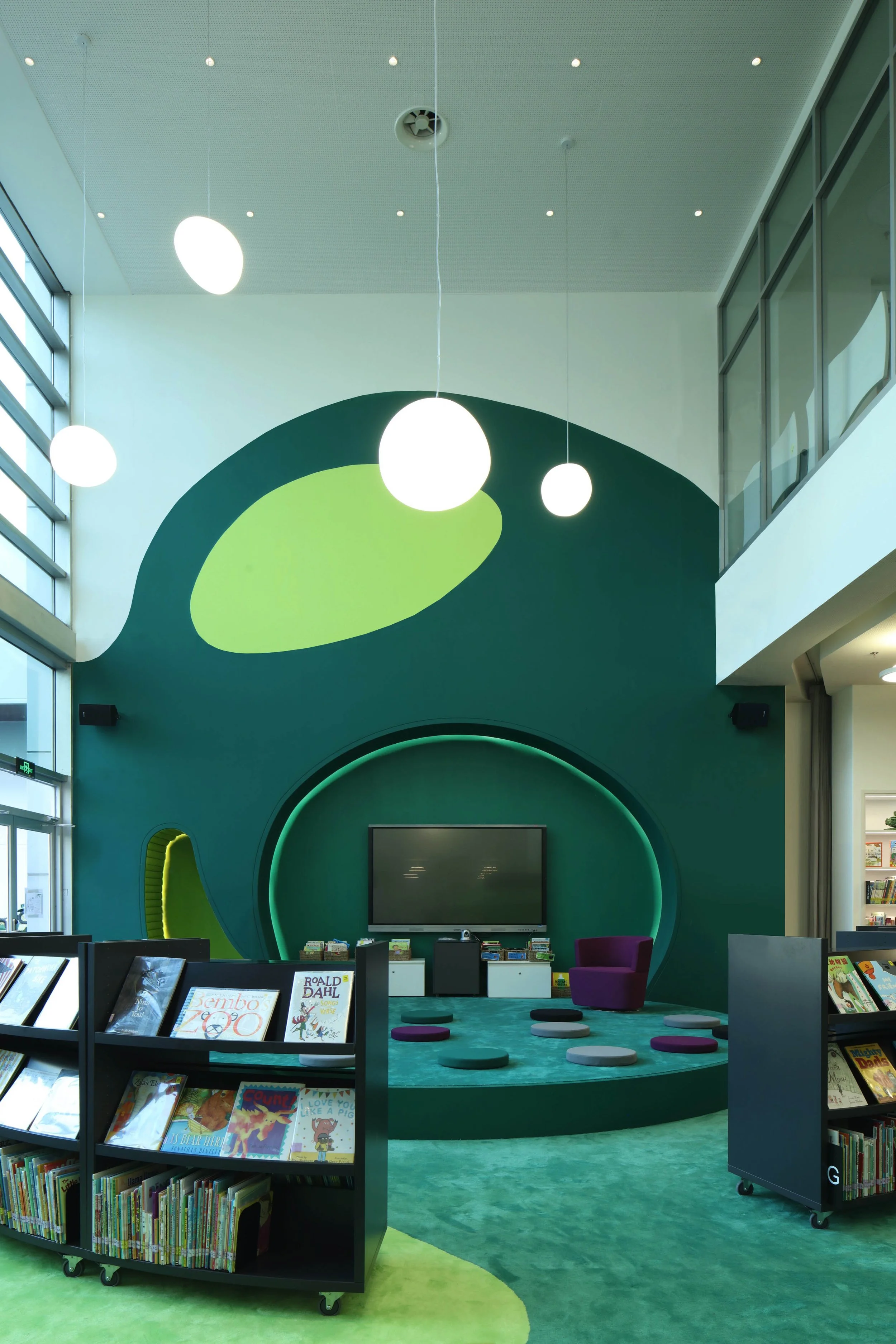
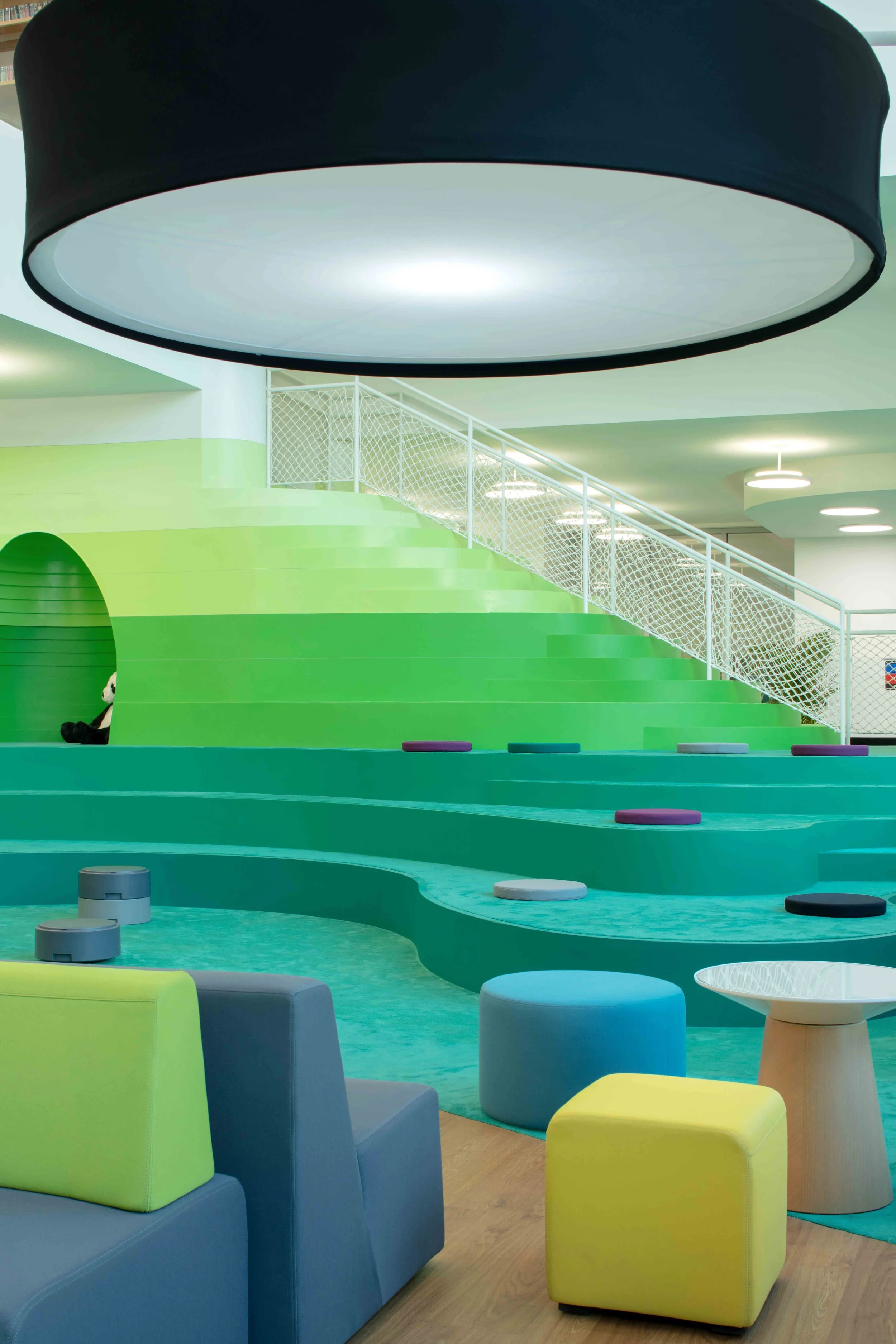
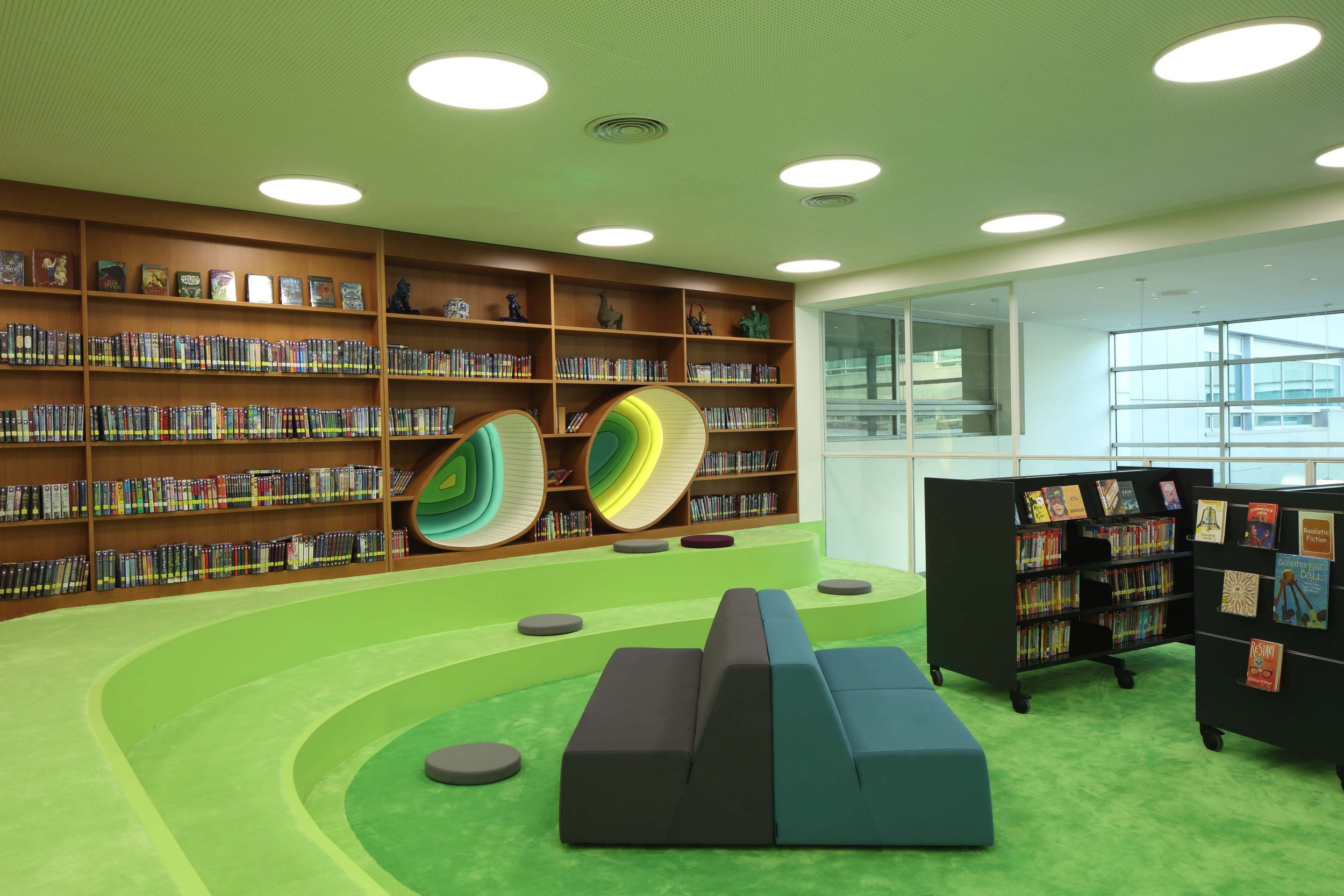
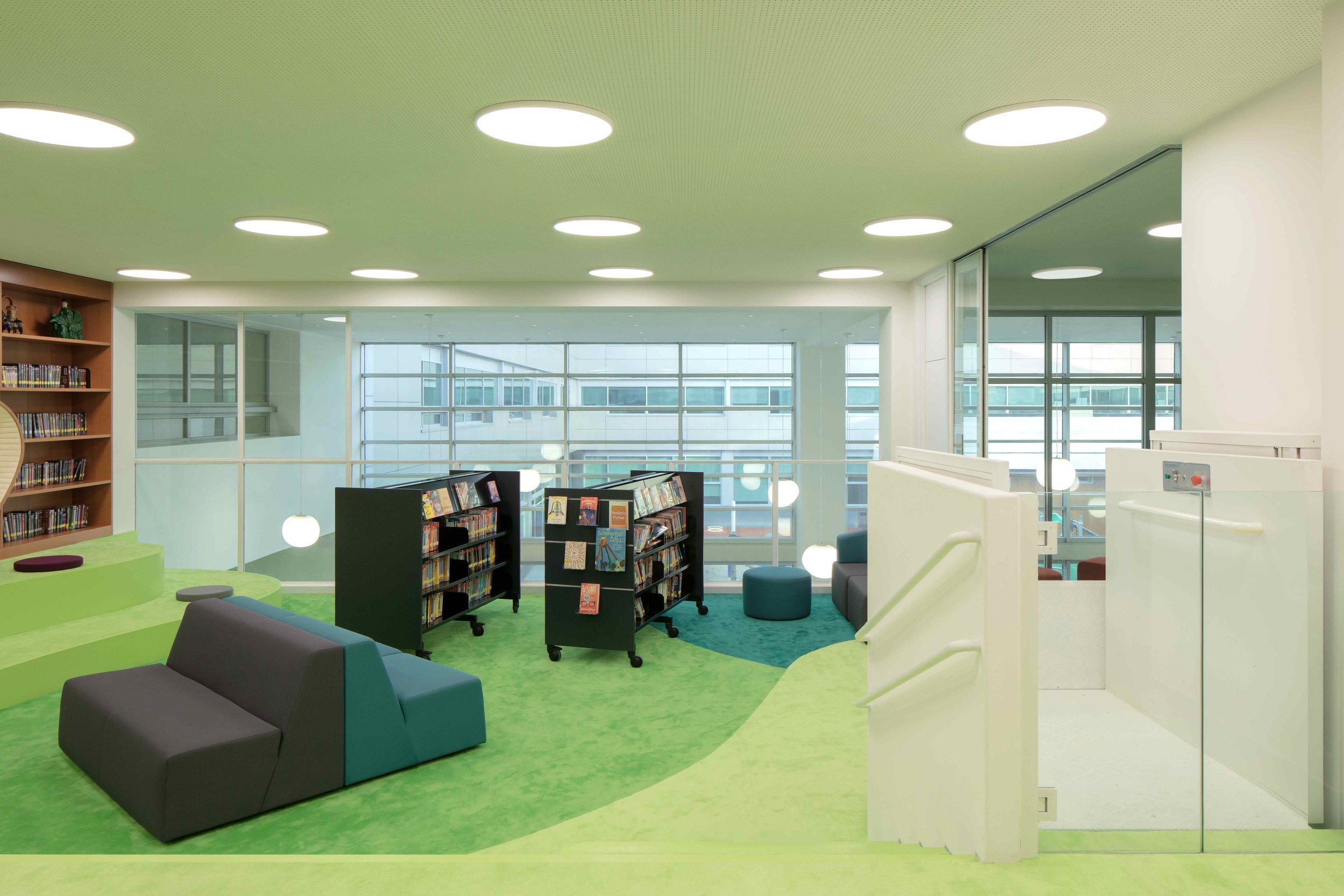
A proactive architectural regeneration approach targeting at de-centralization, “Montage of Learning Communities” treats each small learning community within International School of Beijing as an “image” independent and distinctive from one another and creates a refreshing montage of spaces within the existing architectural framework, superseding the over-unified, rigid “institution building” with a versatile, dynamic “education architecture”. The pilot project consists of five highly open and flexible learning communities, each presented in different colors and placemaking adaptable to student ages and learning programs, aiming at motivating this leading school to evolve to the cutting edge of learning environment.
LOCATION Beijing, China
AREA 16636 m²
STATUS Completed
CLIENT International School of Beiijing
YEAR 2020
PROGRAMS Educational, Theater, Architecture, Interior Design
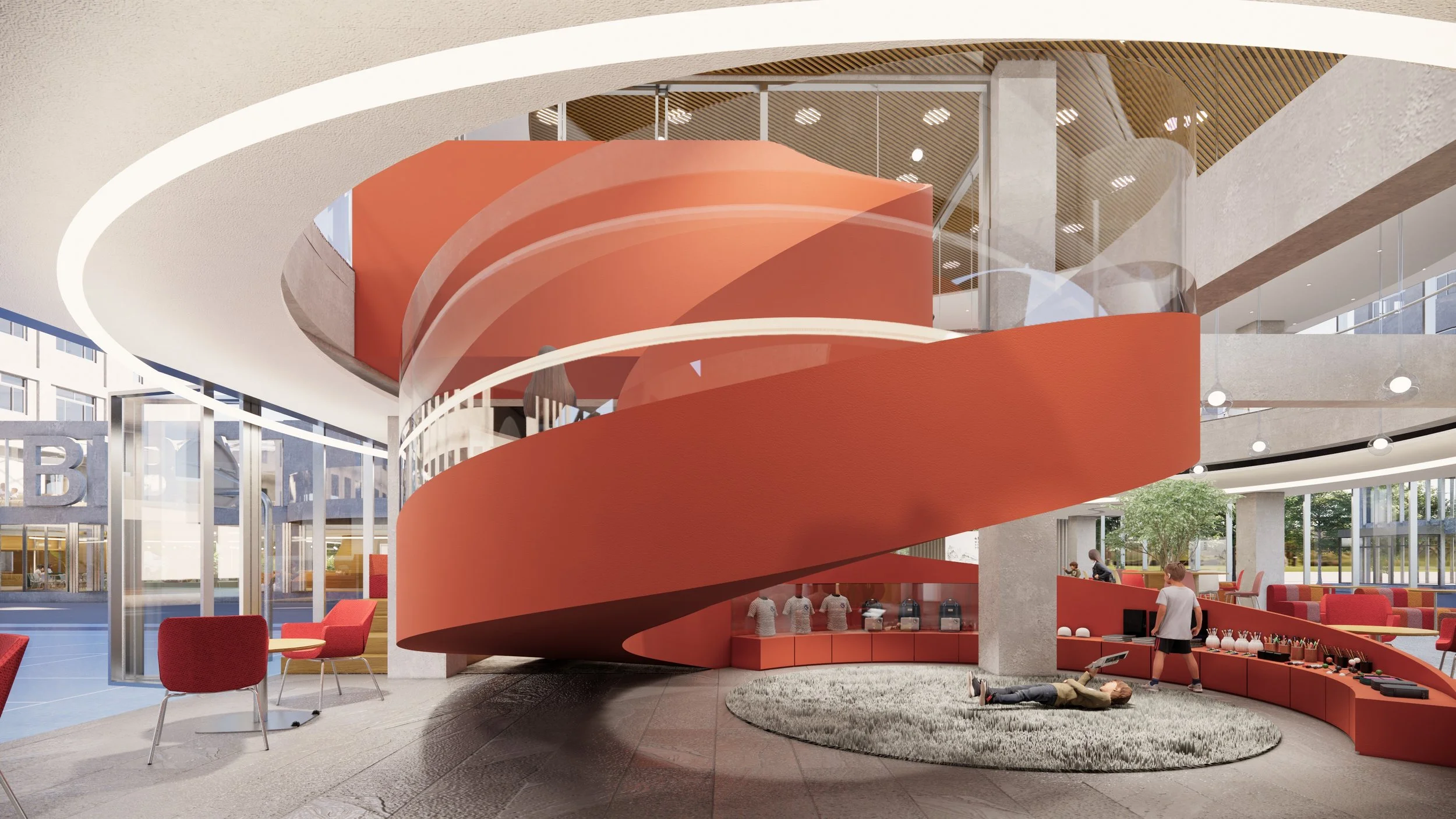
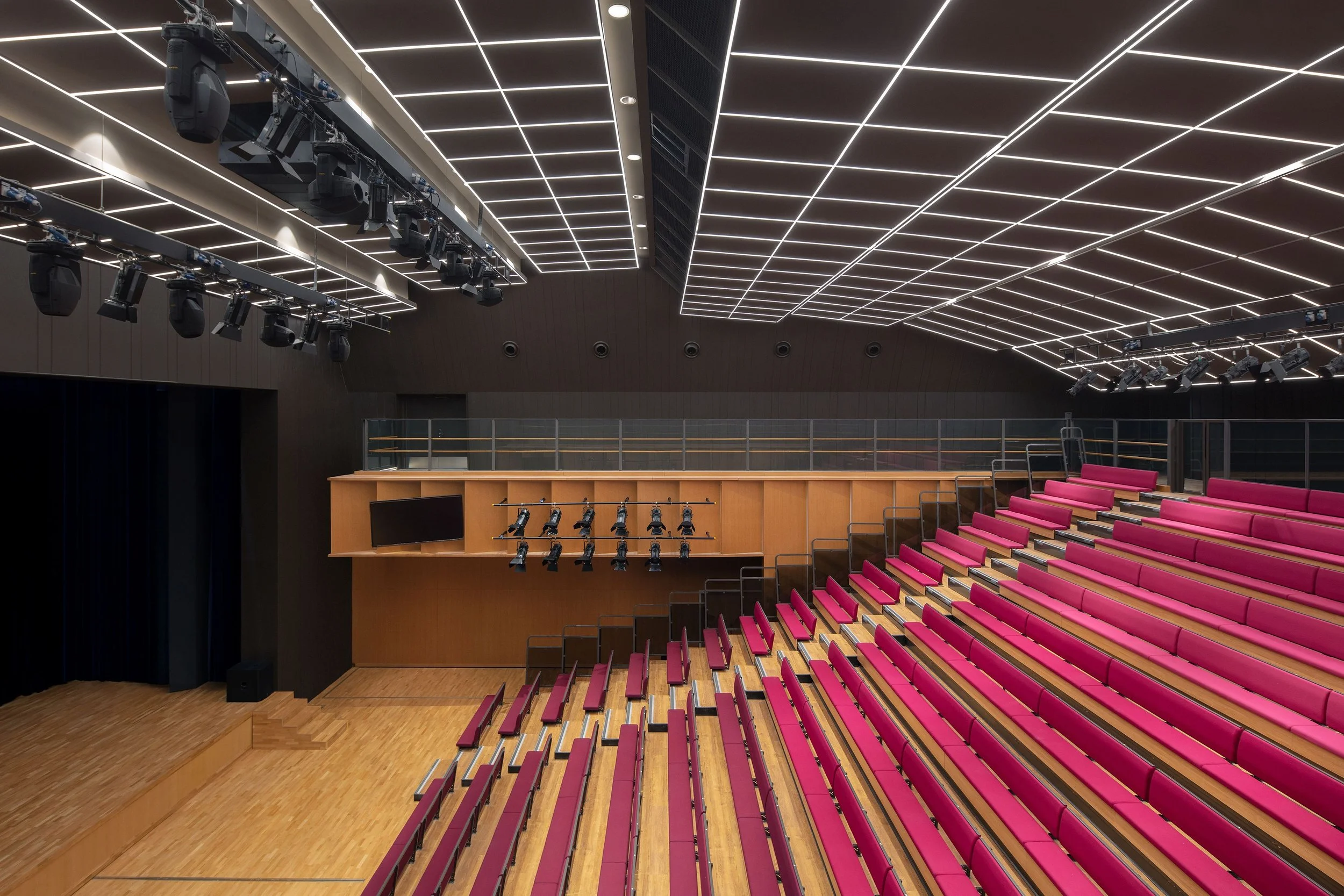
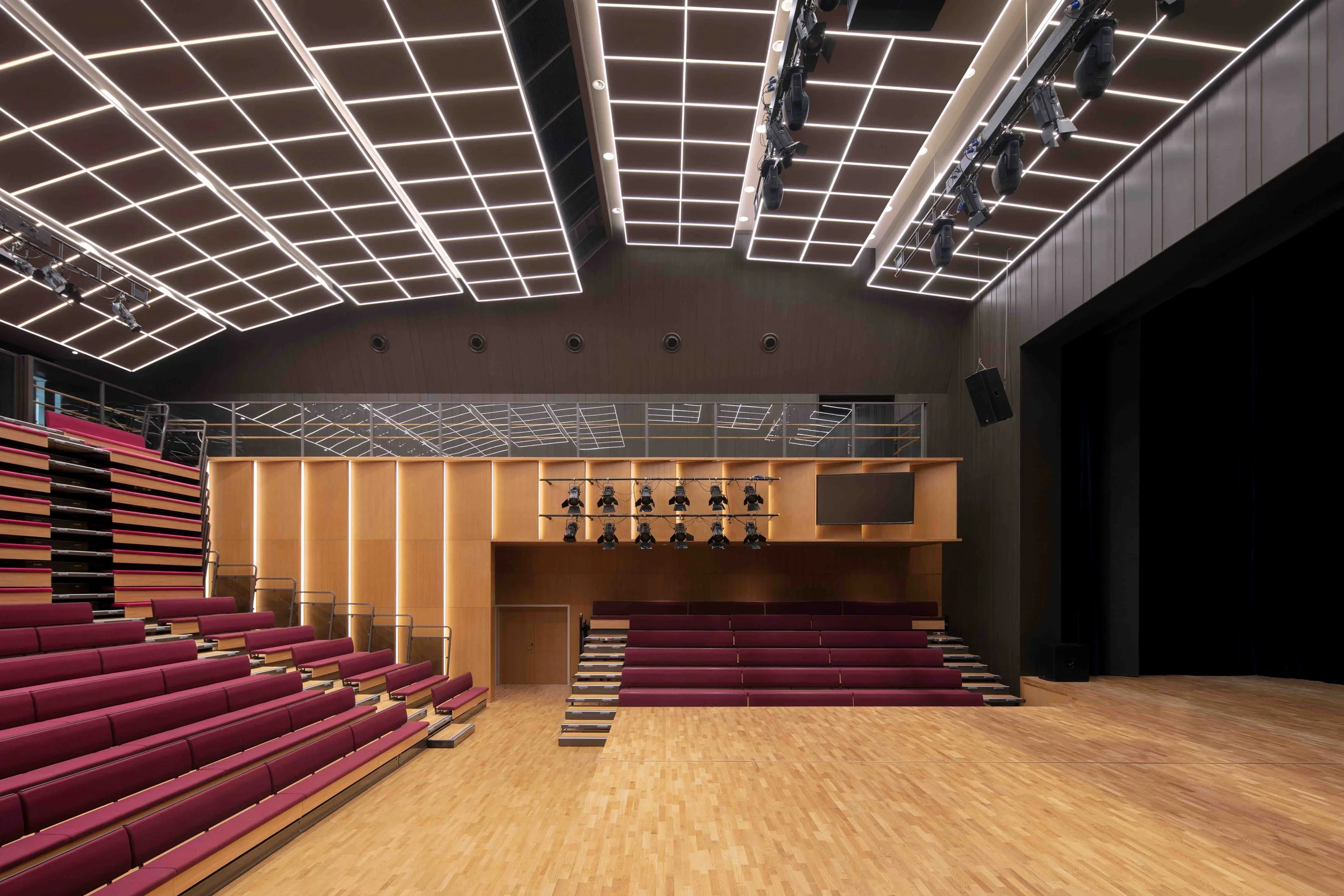
ES Arts Center is expressly designed for young artists and performers, the center of which is a 400-seat multifunctional theater, custom-designed to small human scale and elementary school requirements of performance, assemblies and rehearsals. With theater mechanics, it can be switched into three modes including a proscenium theater, a vineyard theater and an open hall.
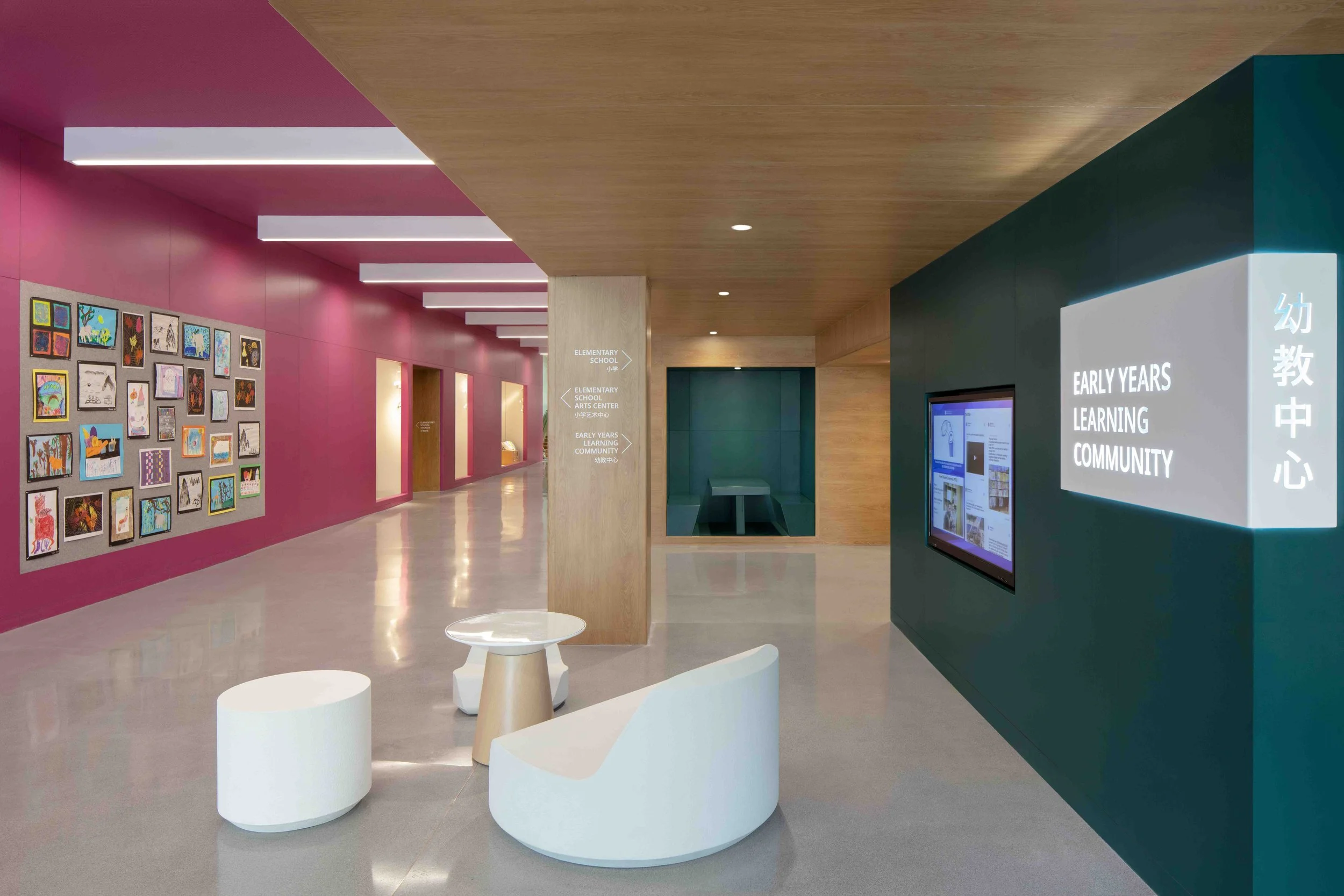
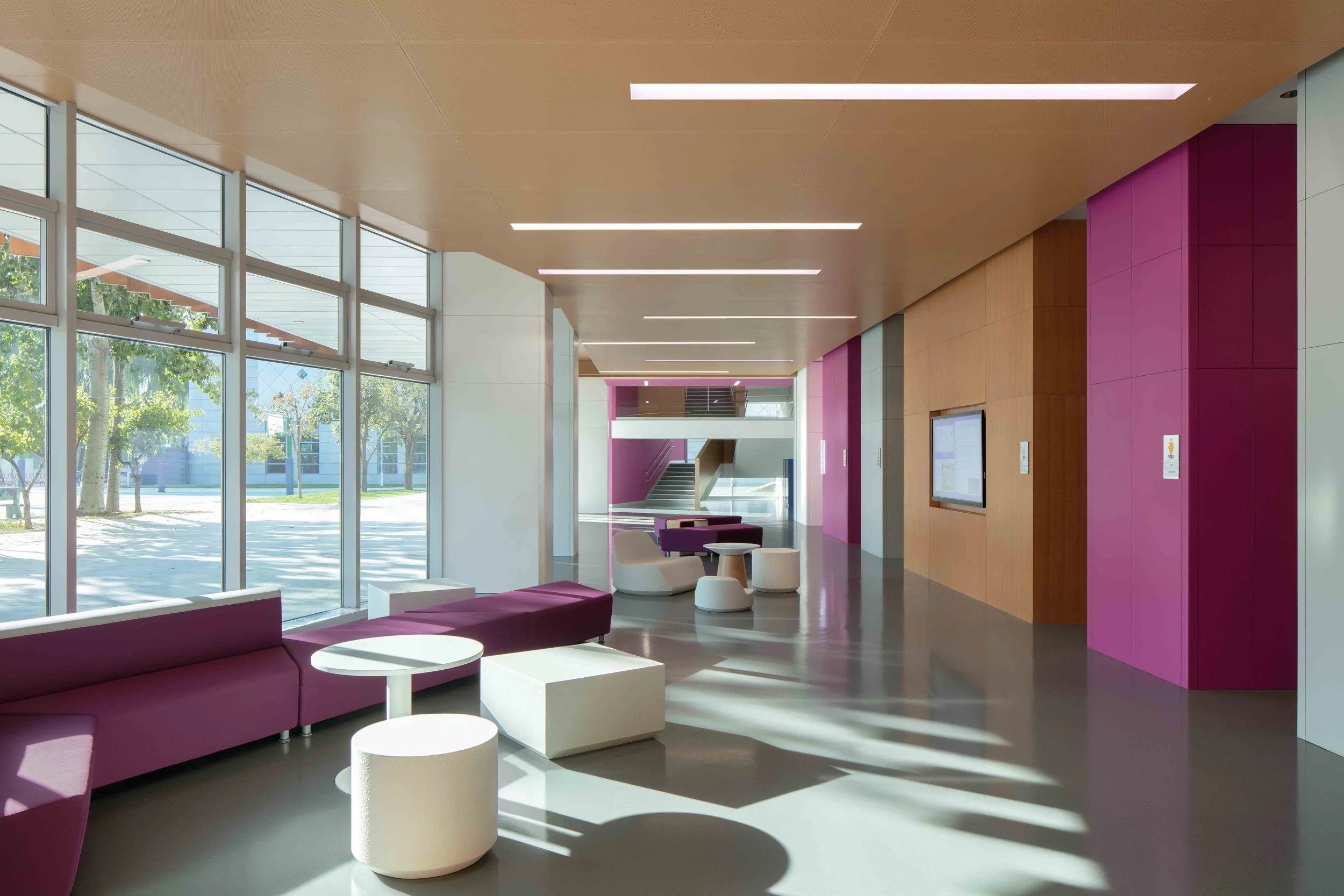
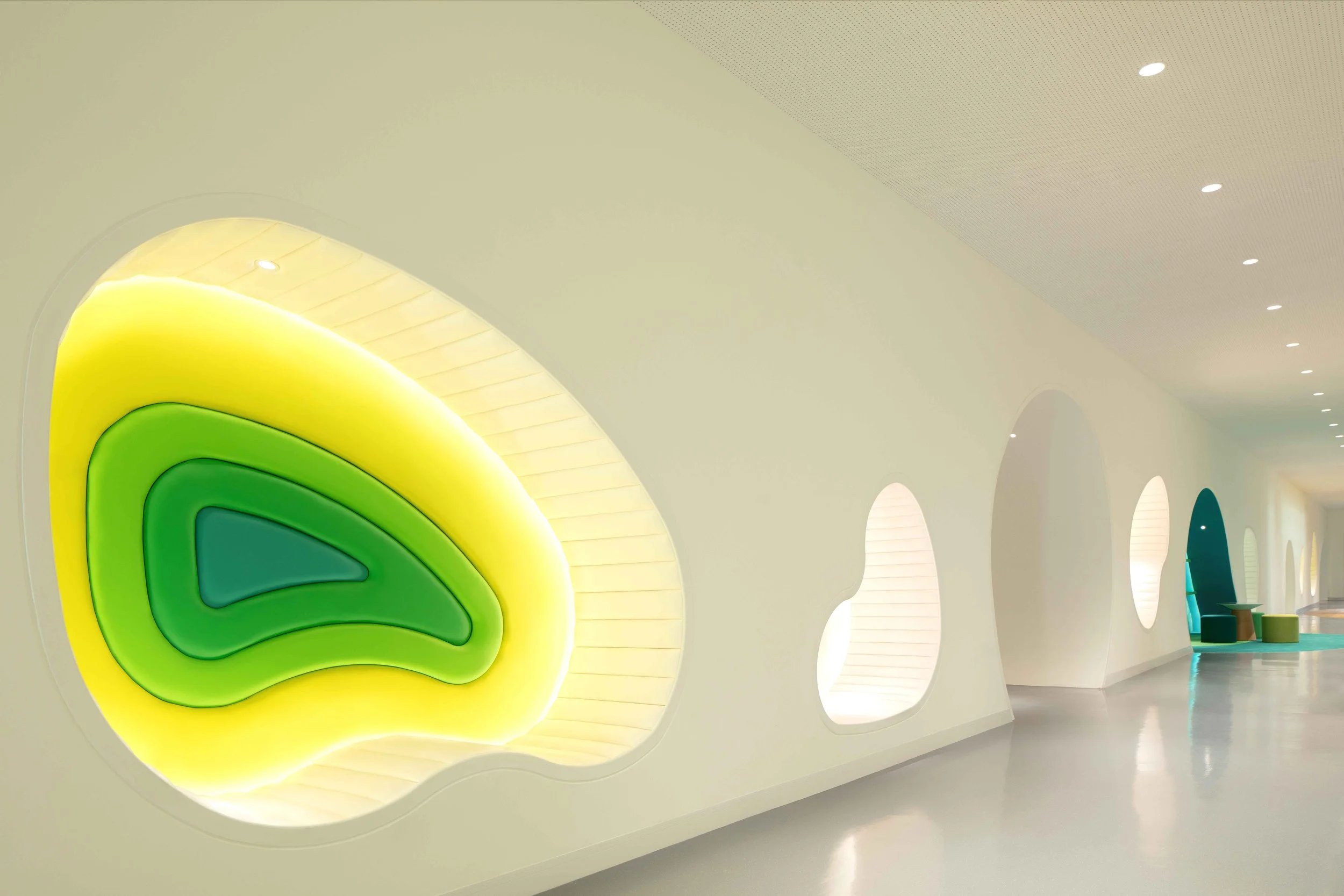
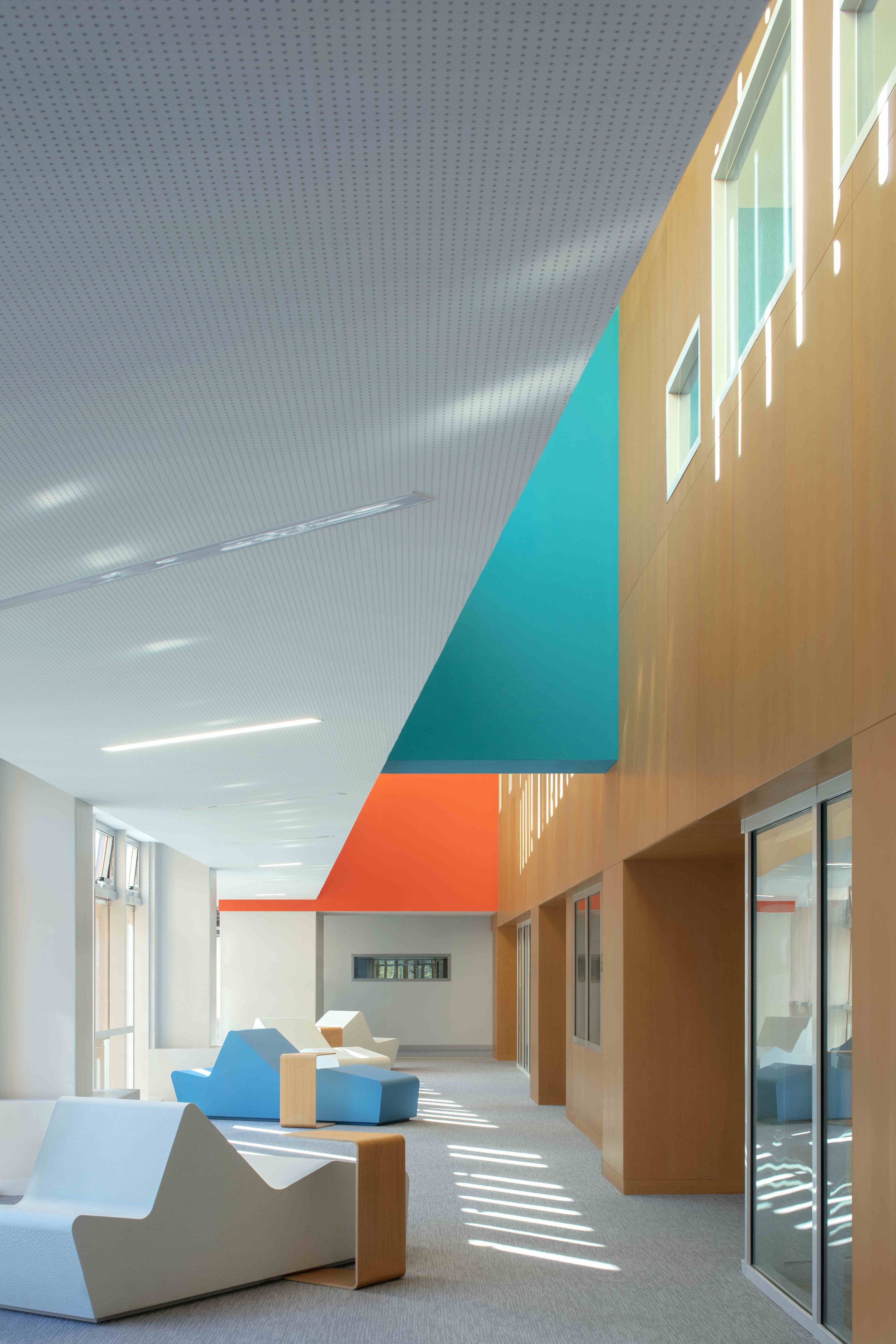
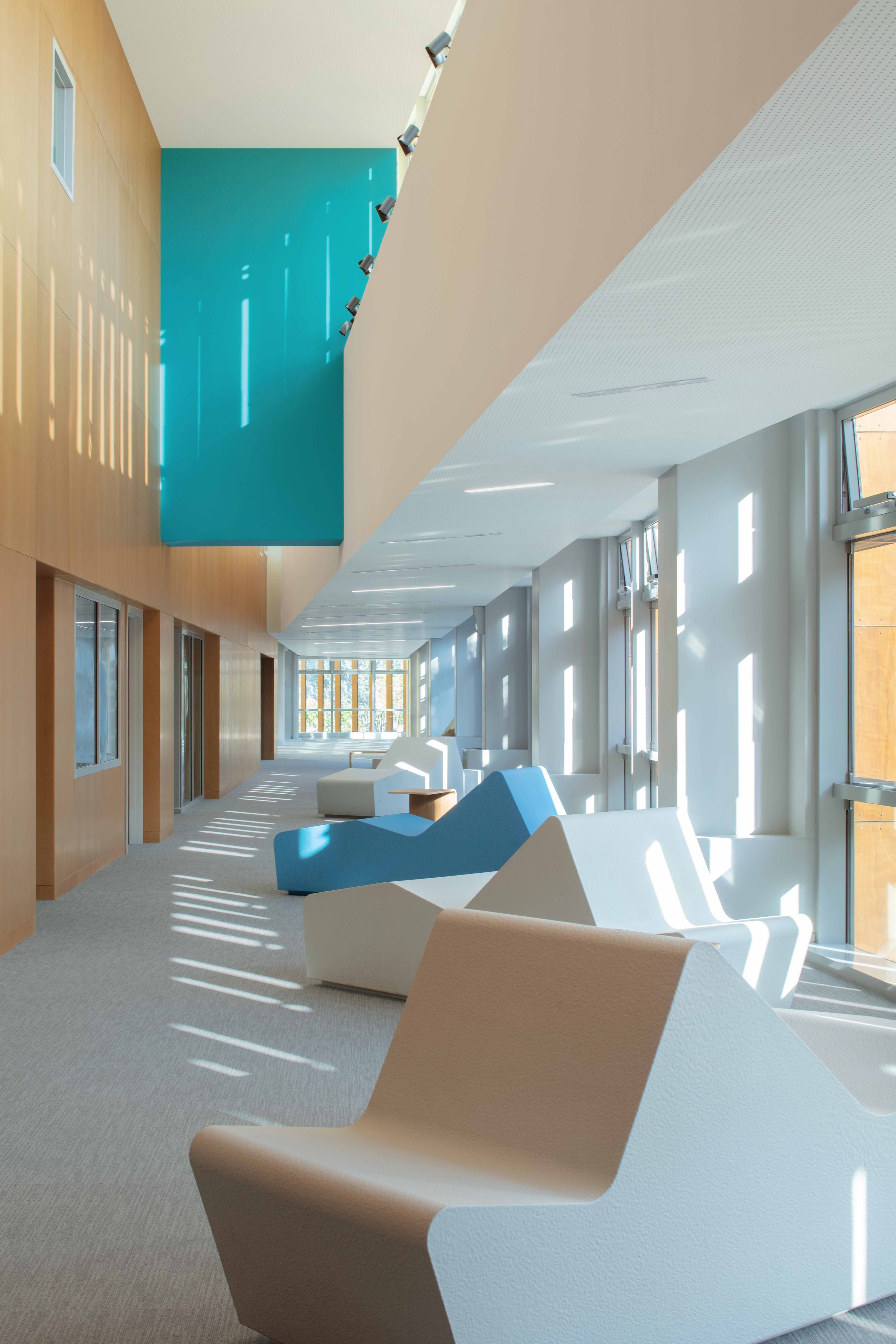
ES Theater, designed to the highest building acoustical standards, has become an academic performing arts venue. The colorful theater pre-function hall can also be used for exhibition and gatherings, and providing waiting space for parents to pick up their children, making it a natural “soul” space for ES community.
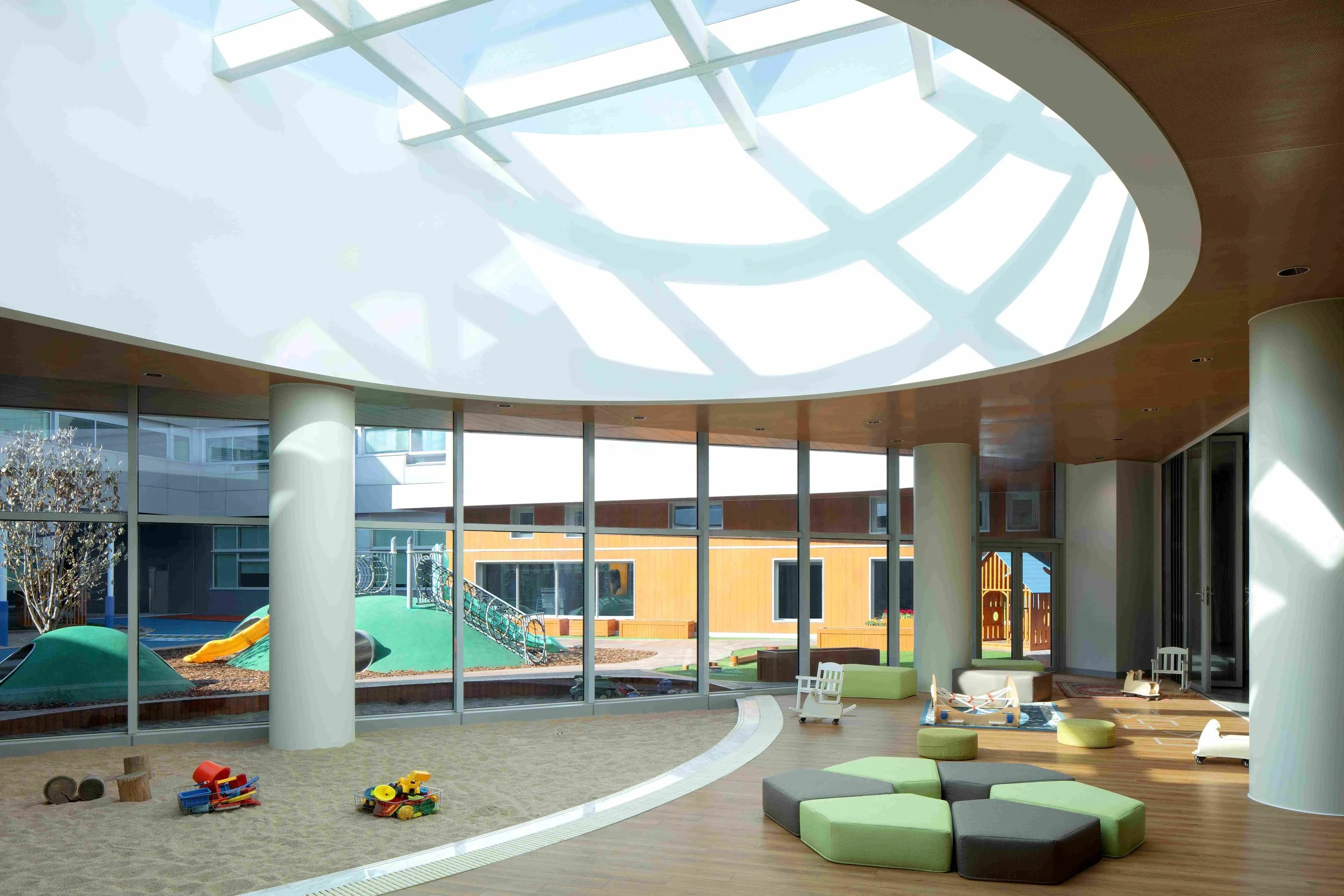
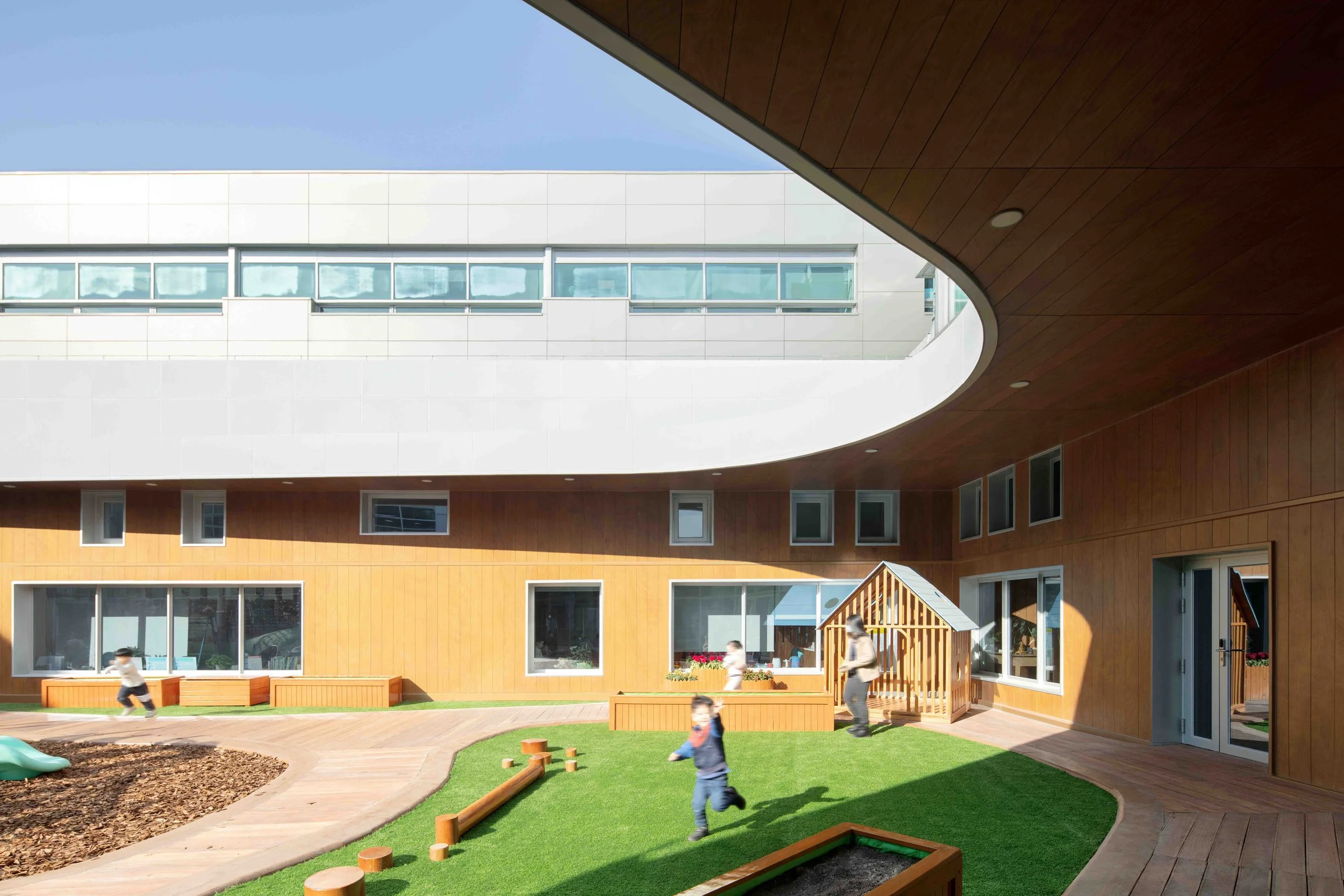
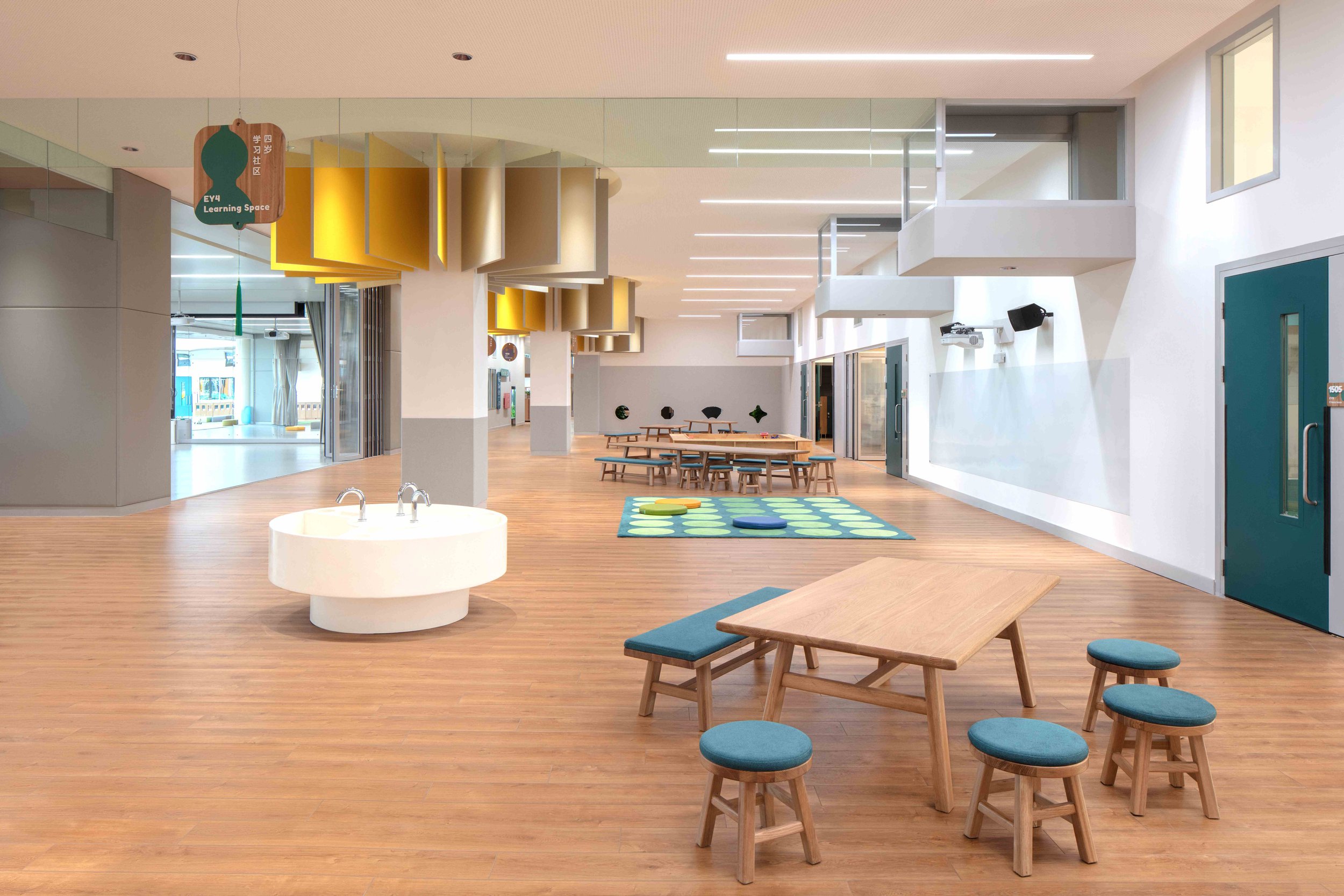
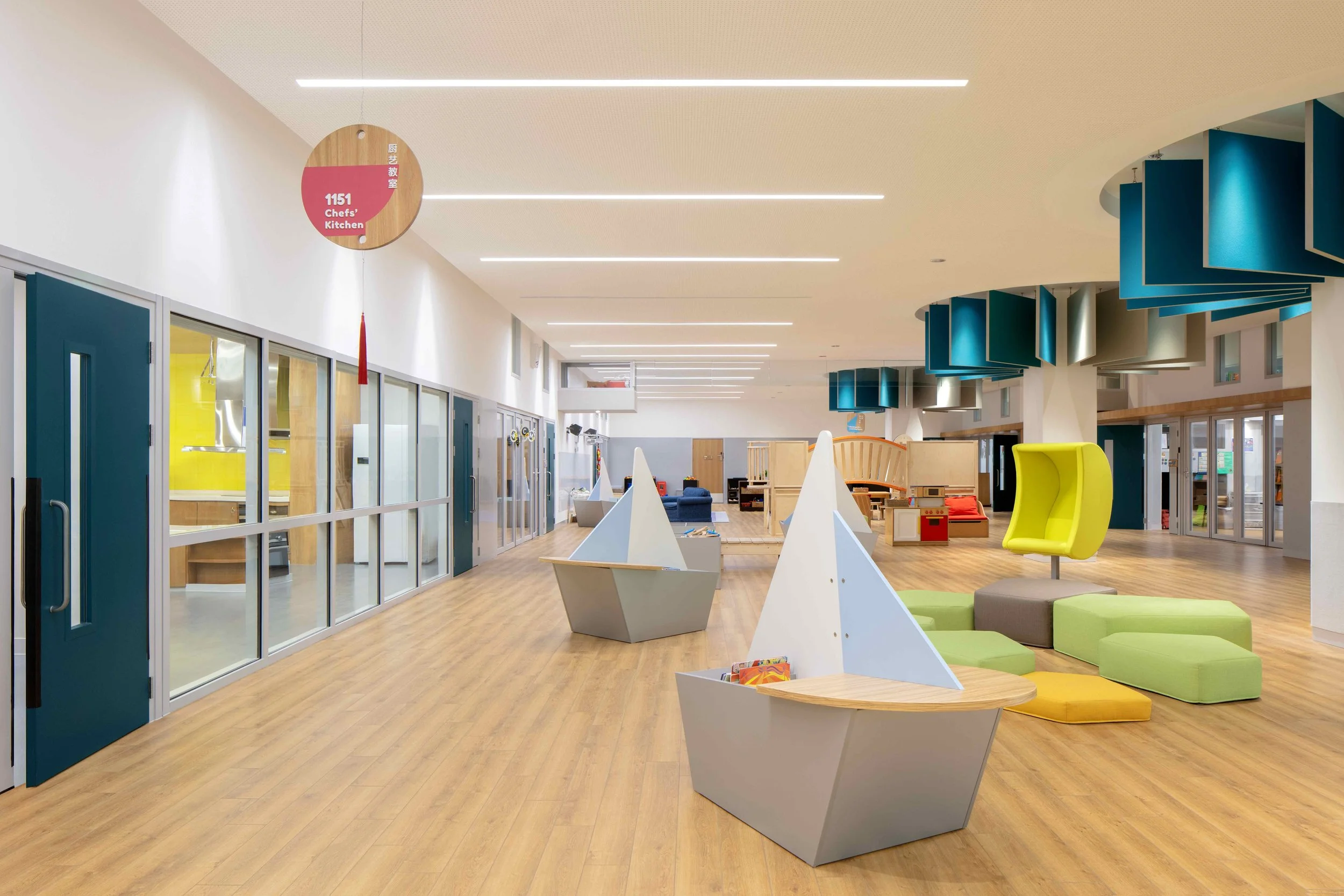
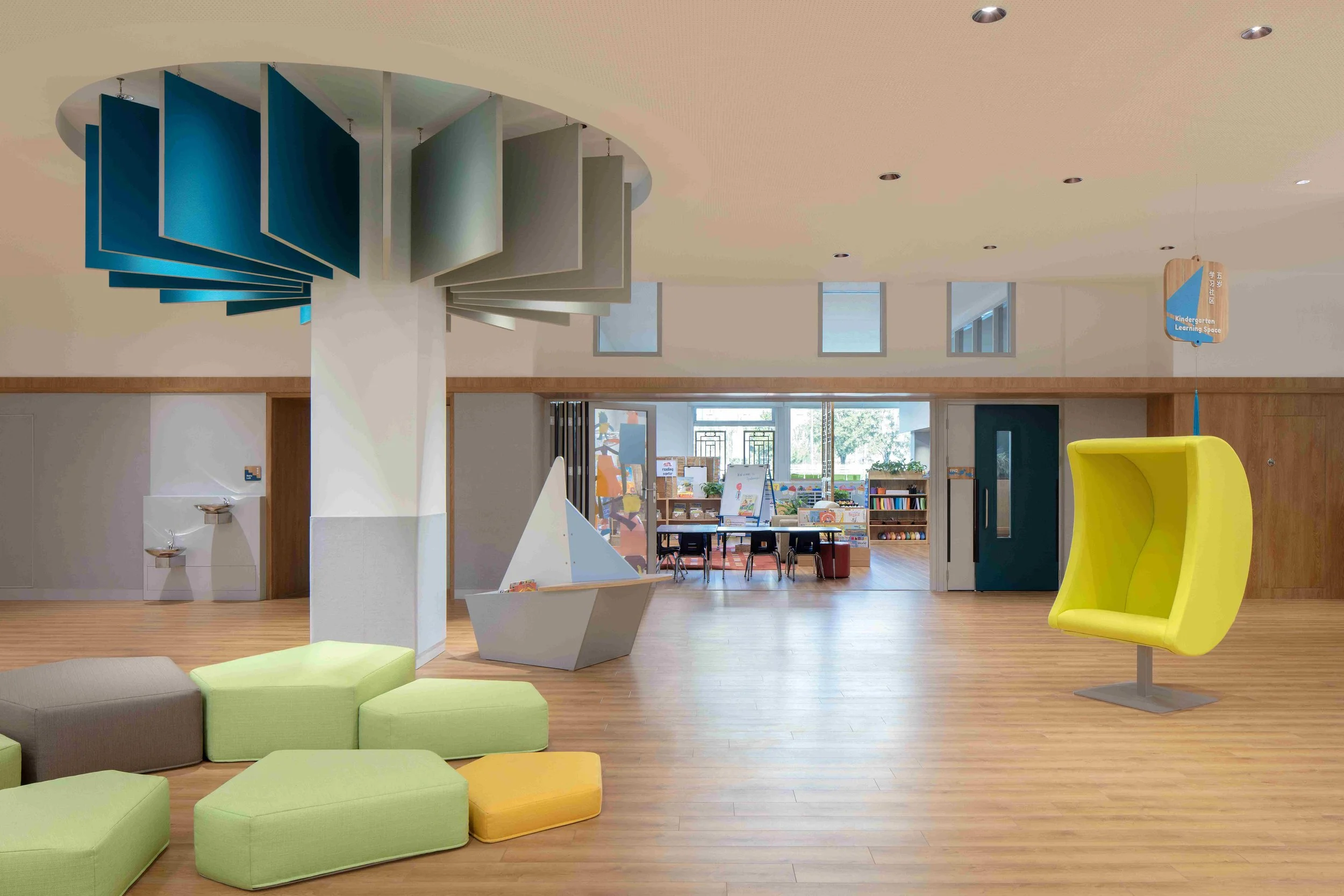
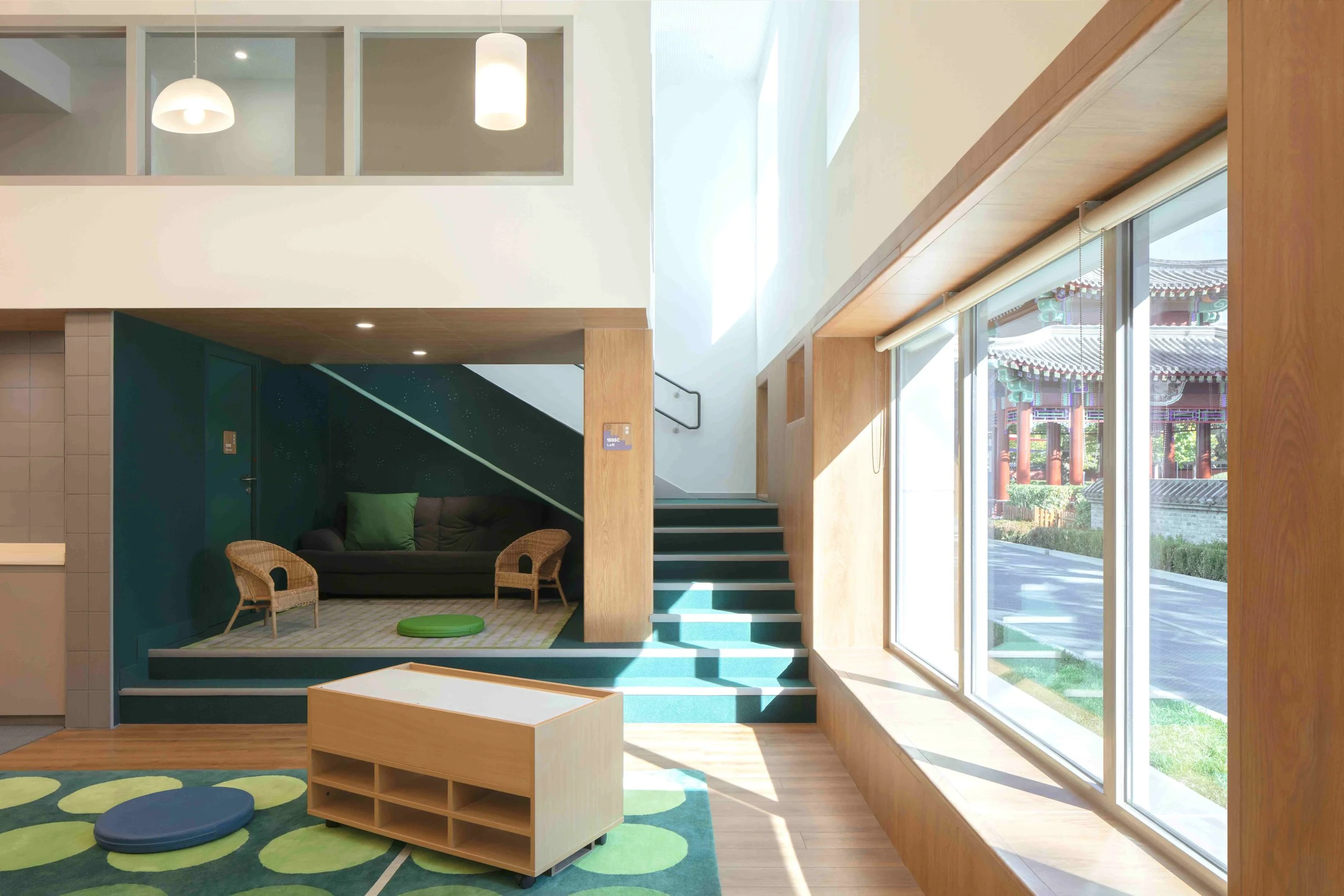
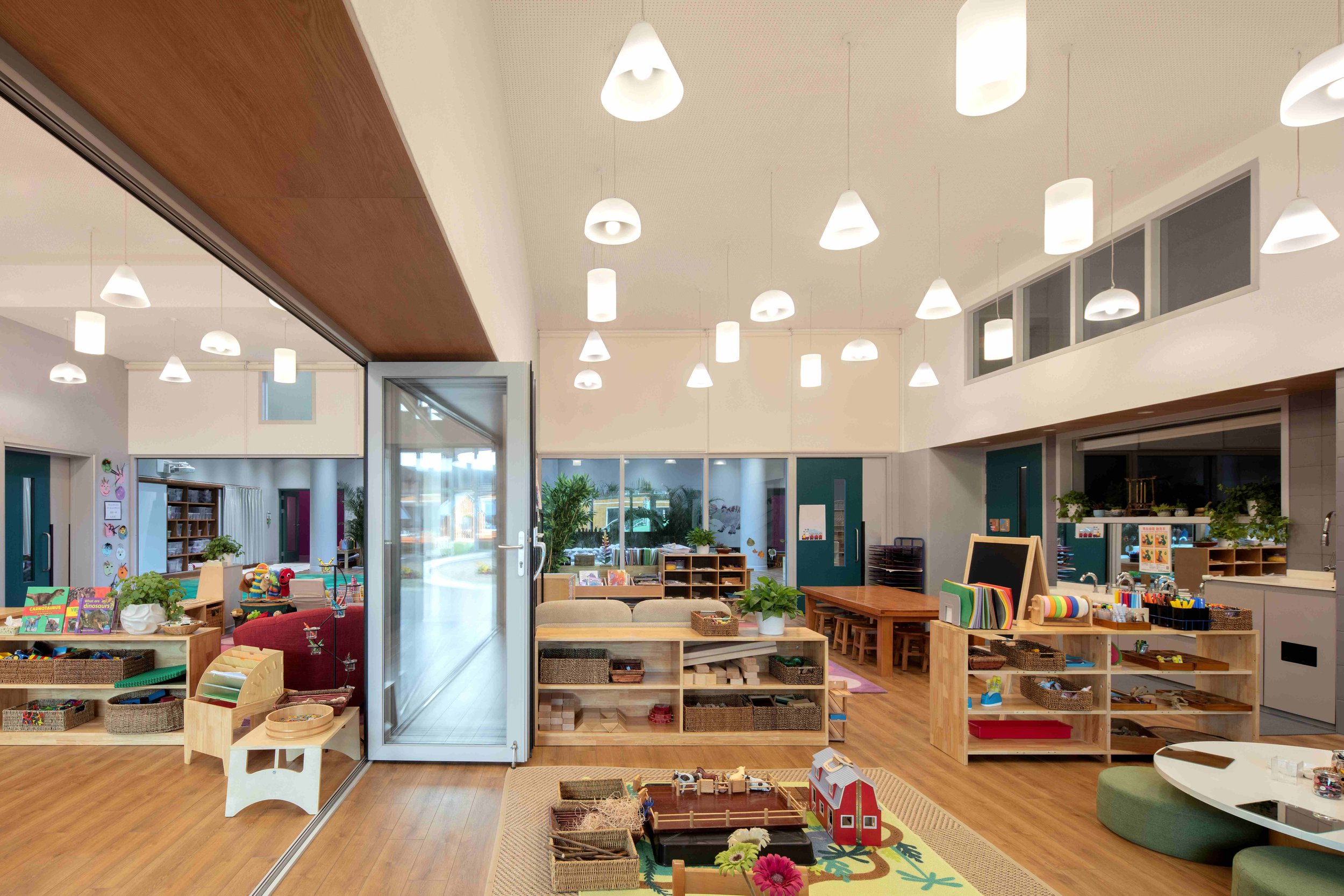
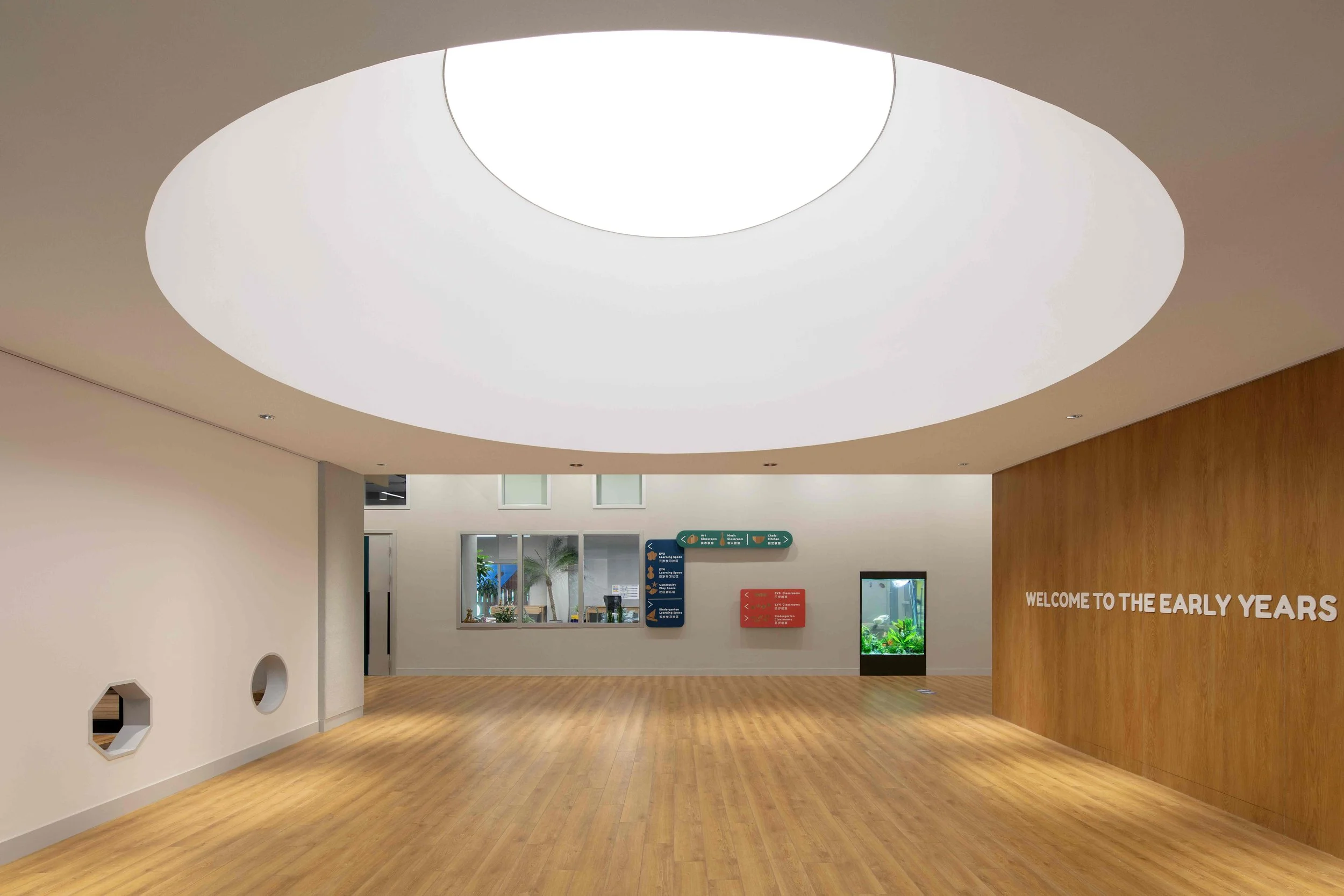
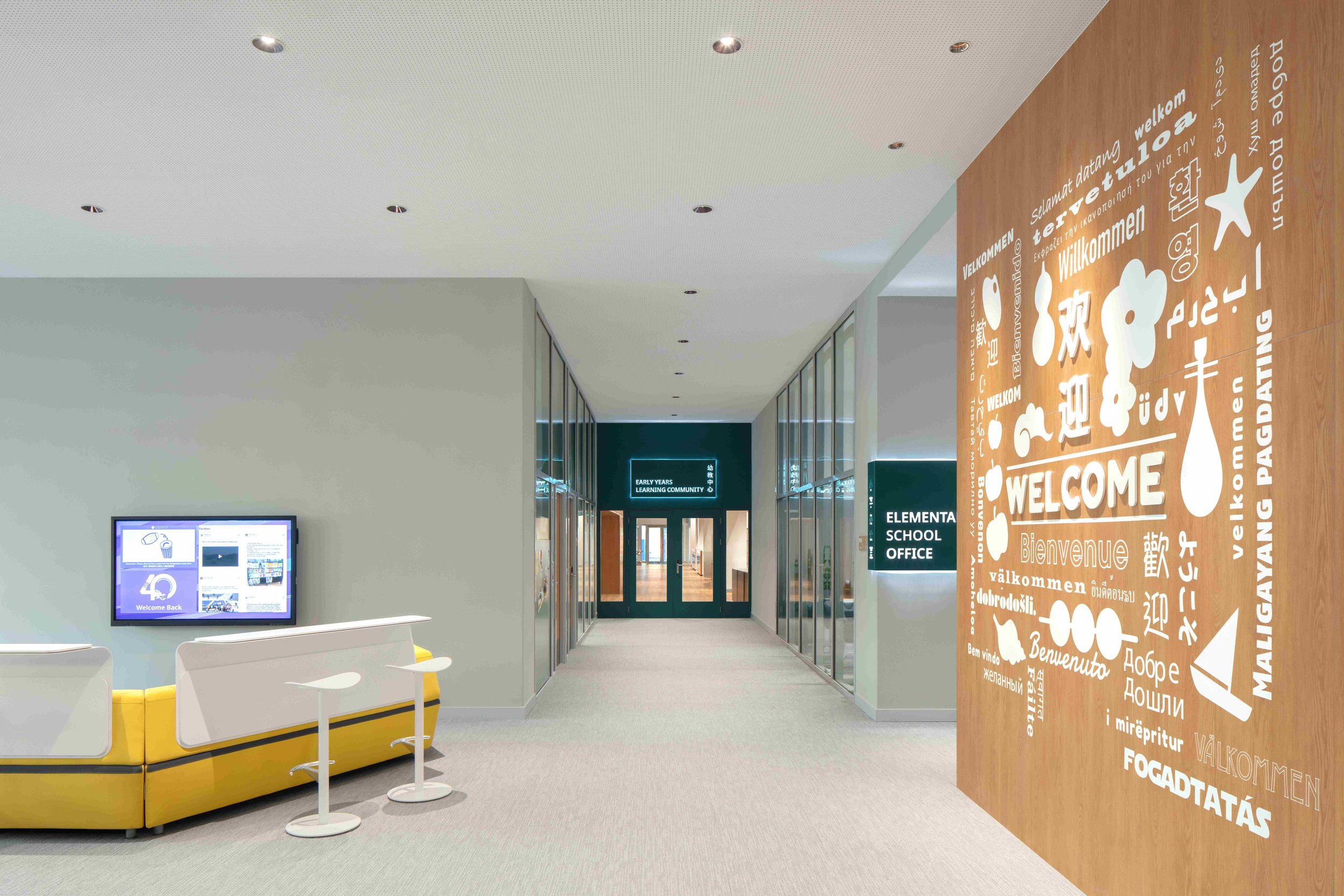
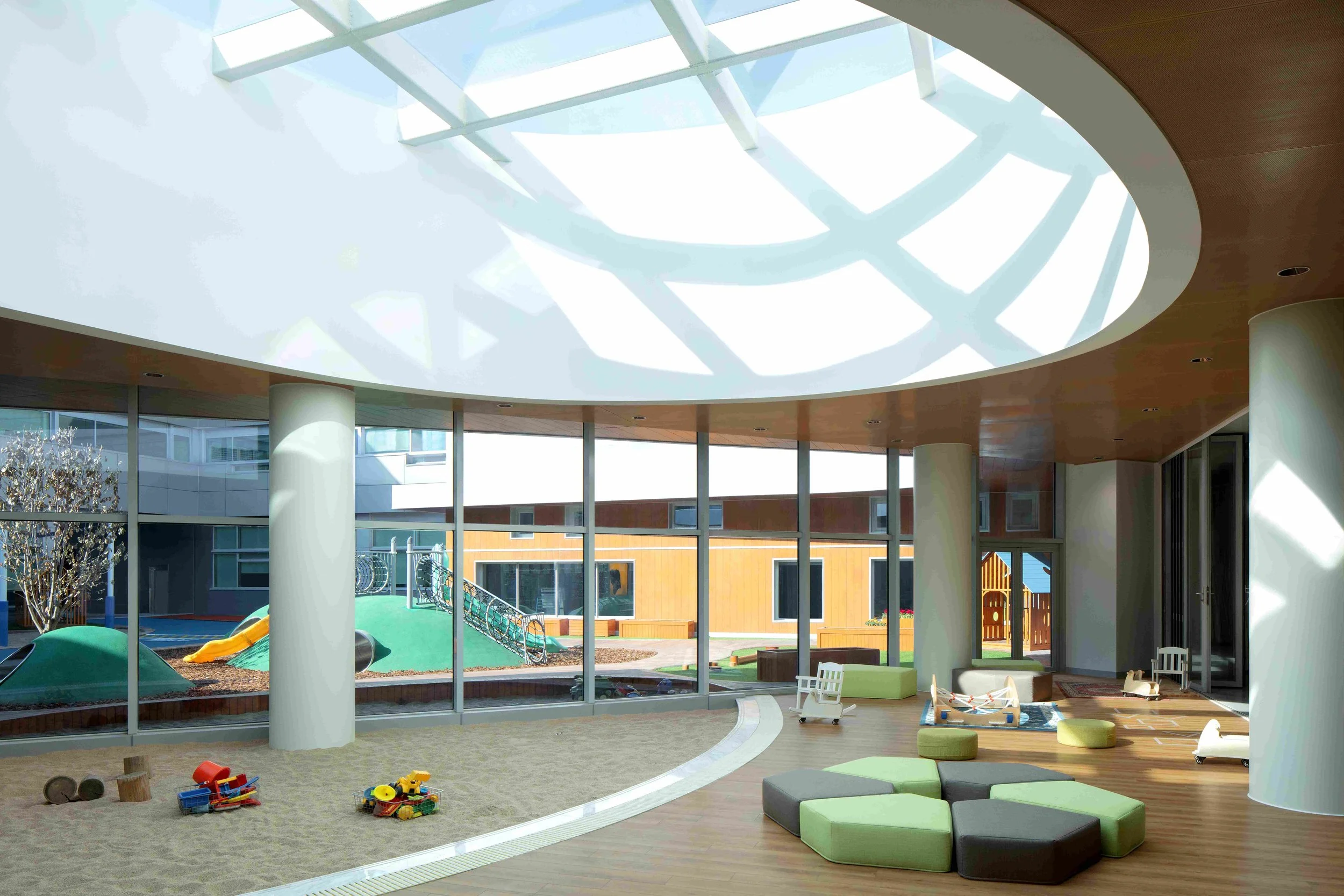
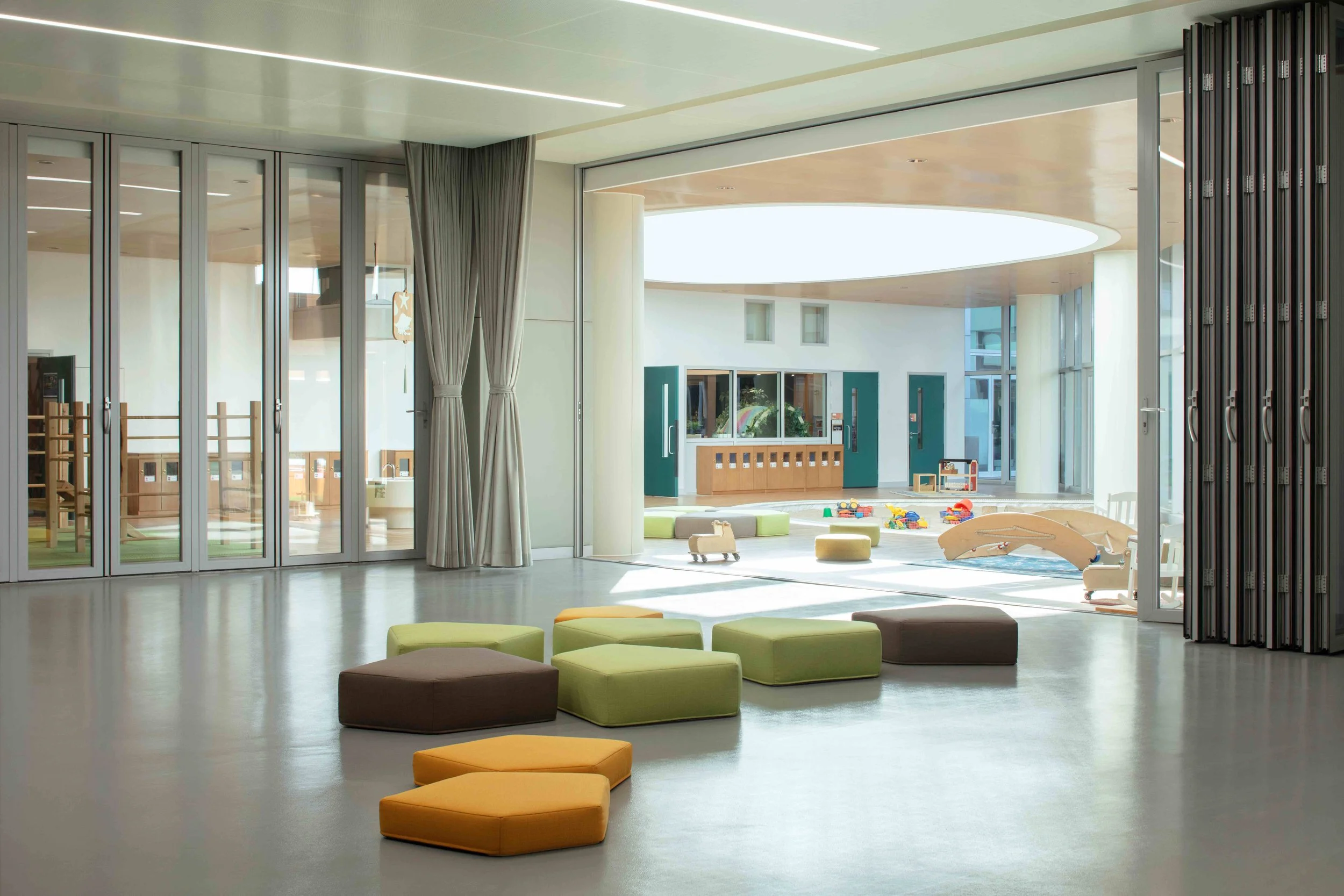
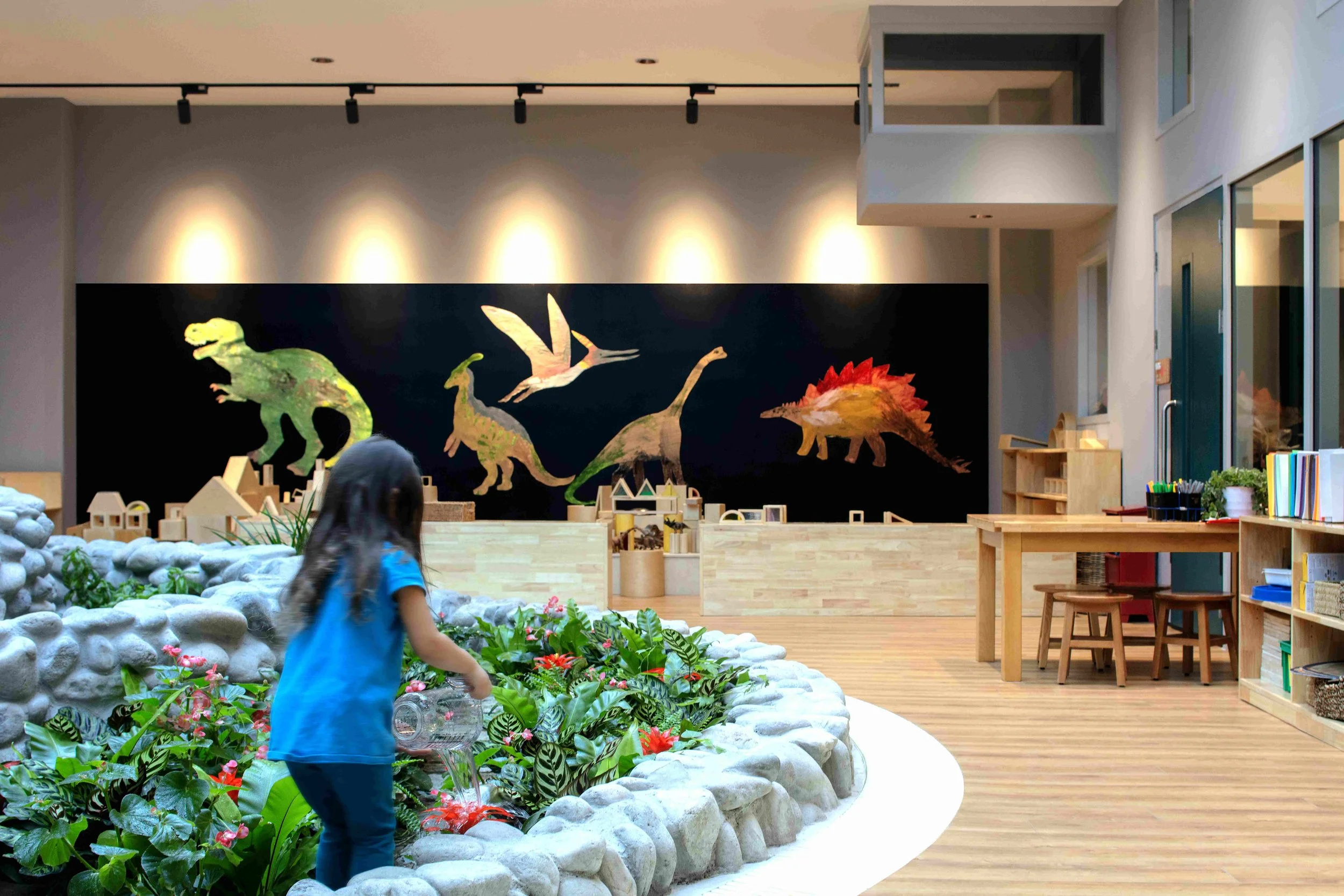
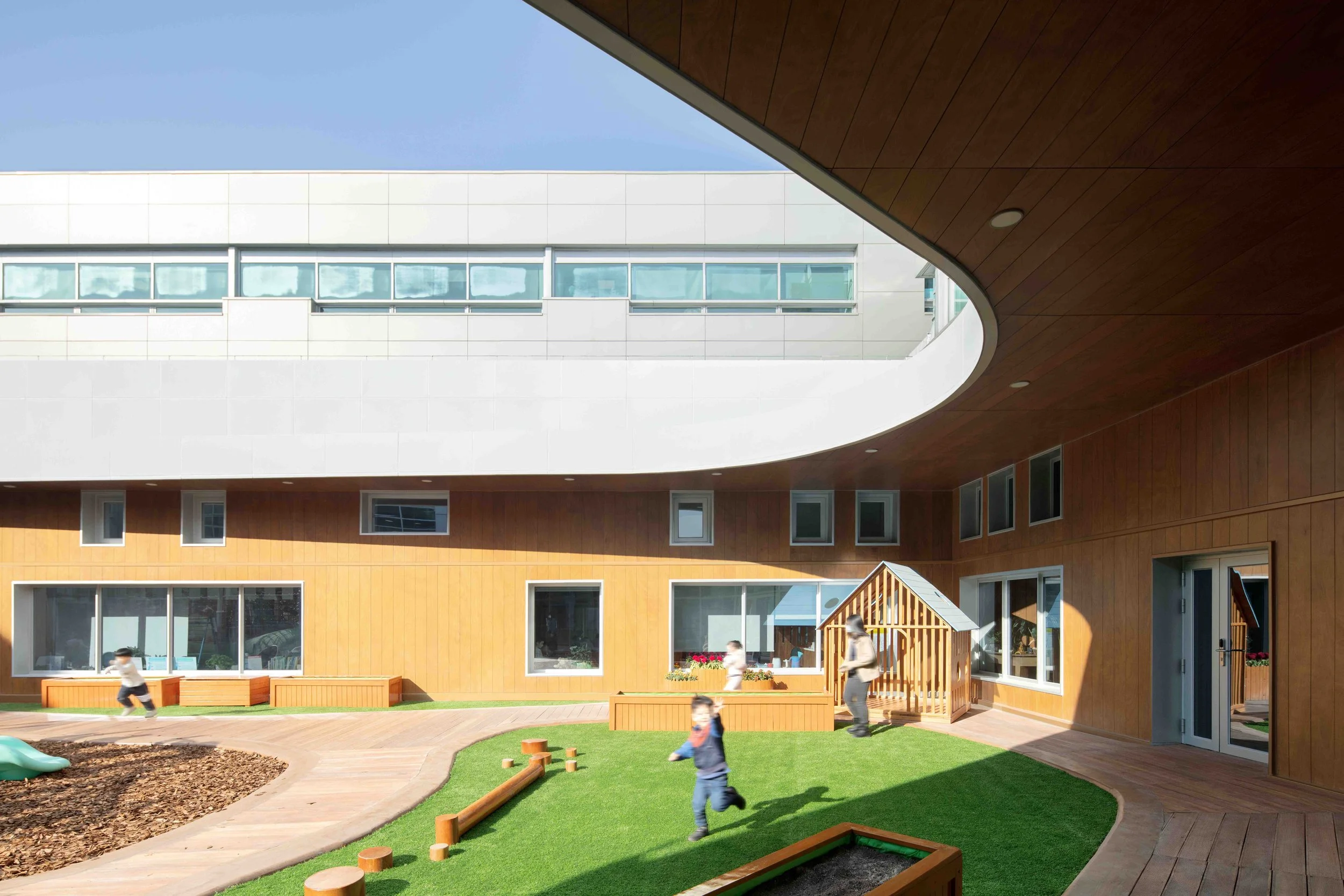
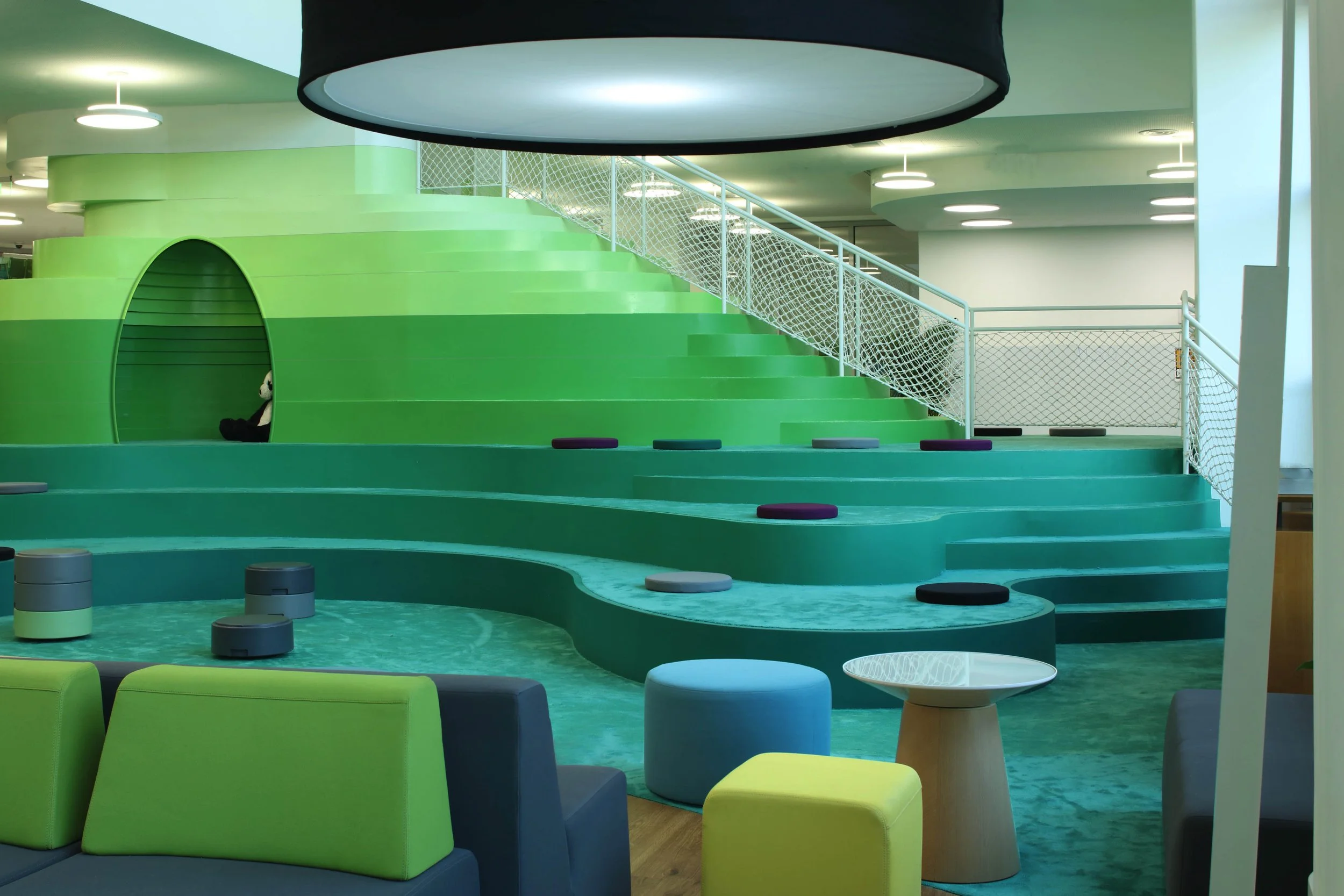
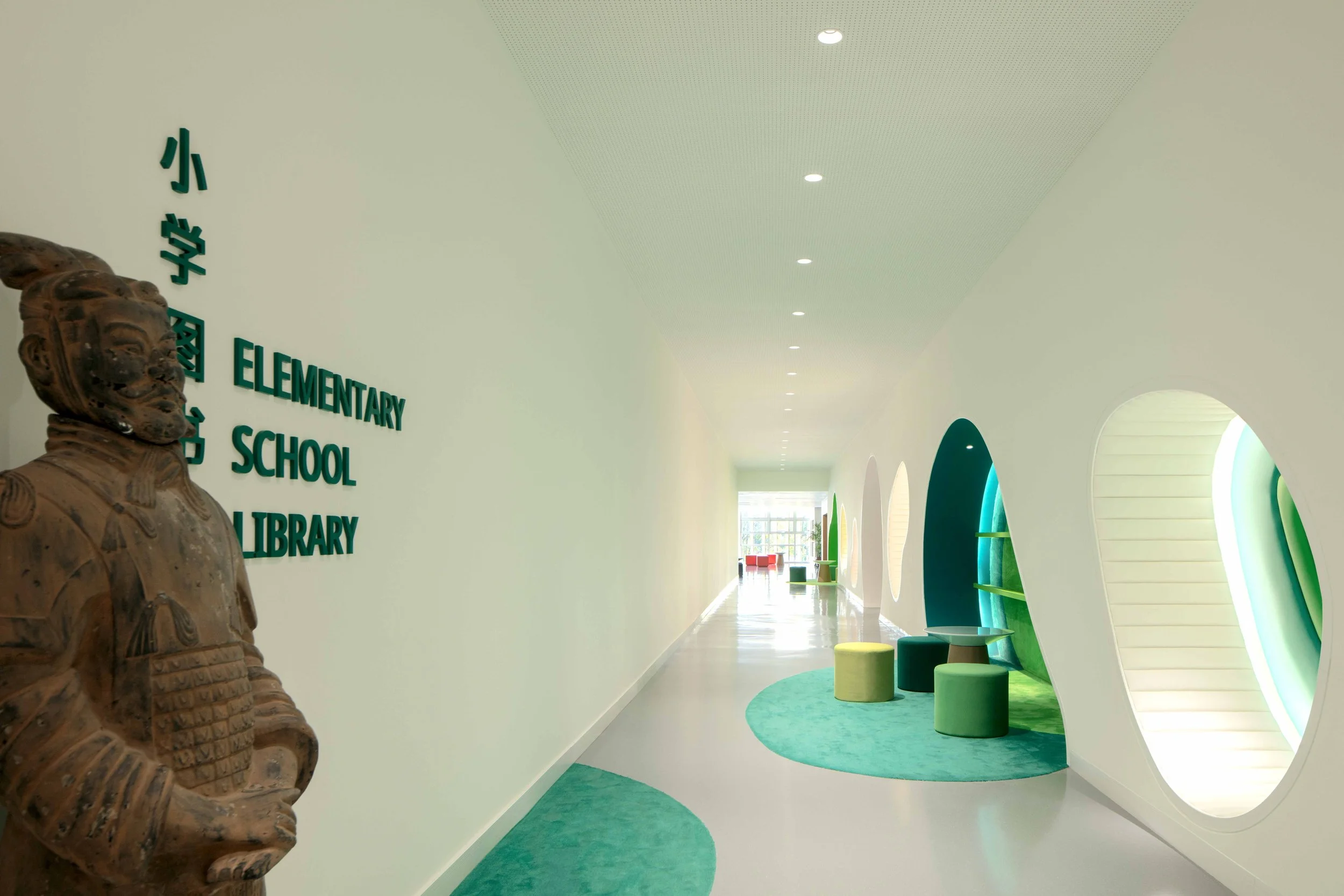
Early Learning Community, based on Reggio Emilia approach, is designed to create small, real worlds for children to explore. The extended inner courtyard is outlined with a soft roof form, pushing the tall and serious existing building beyond children’s eye level and adding fun and friendliness to the quiet yard.
The little “town” is organized with a gradient of open to private spaces, from the central garden, beach, concert hall and gallery, surrounded with riverfront esplanade, picnic lawns, secret garden, to the townhouses at peripheral.
Although the articulated sound-absorptive ceiling panels and some of the furniture subtly suggest imagery of trees or rivers in the storyline, the concept of a little town is conveyed in highly abstract design forms. Between most classrooms and common spaces or adjacent classrooms, folding doors can be fully opened, forming strong interactivity and adaptability.
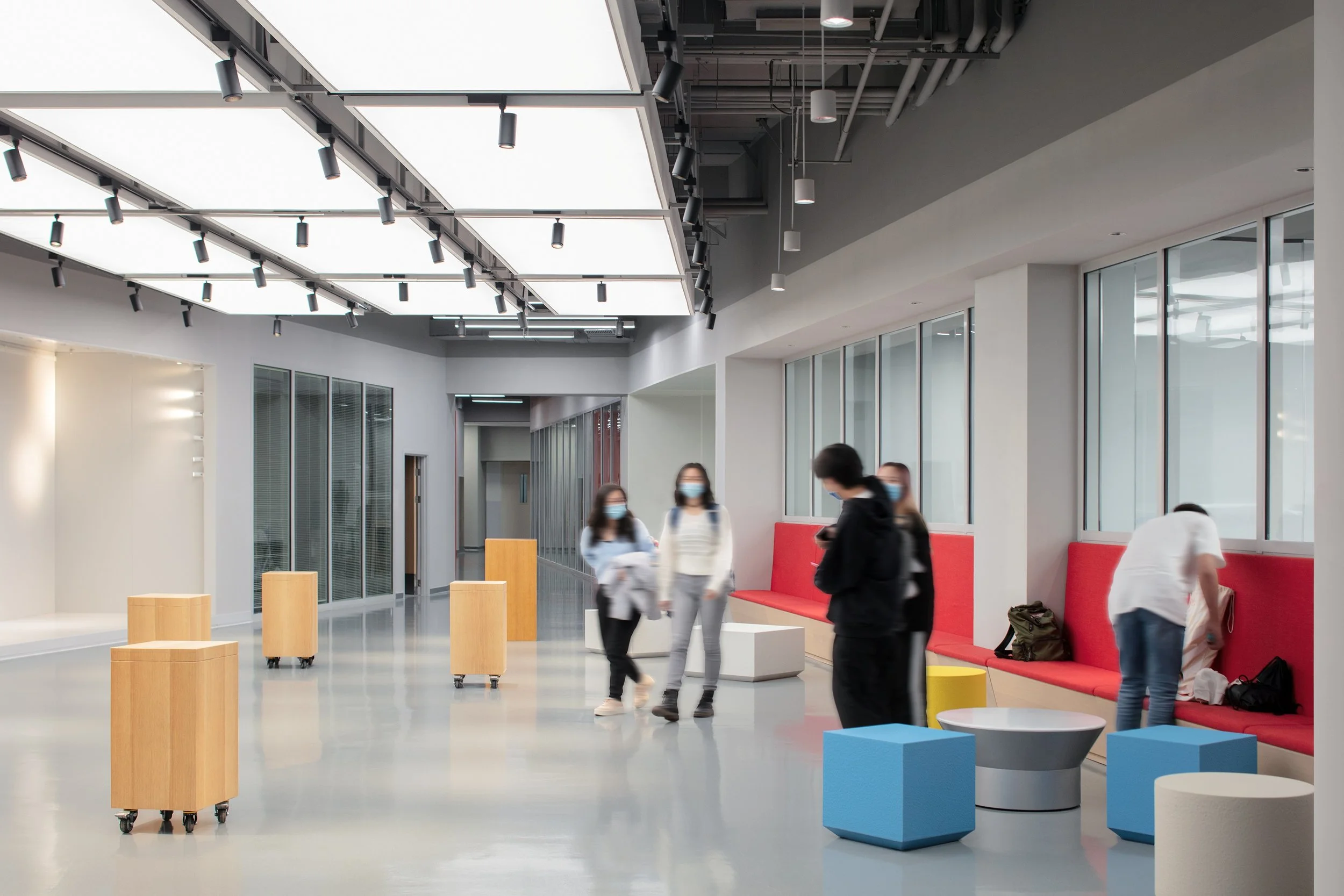
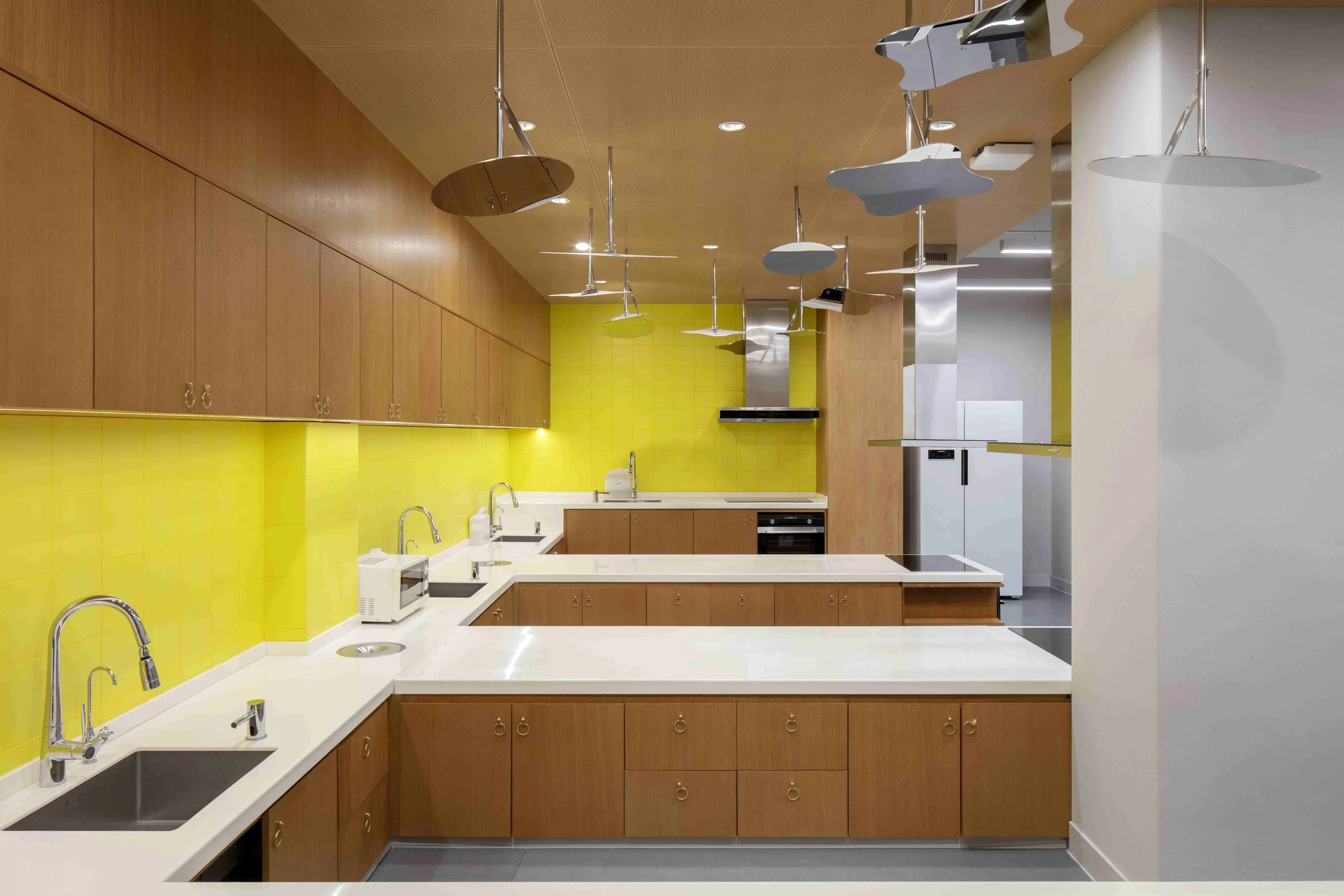
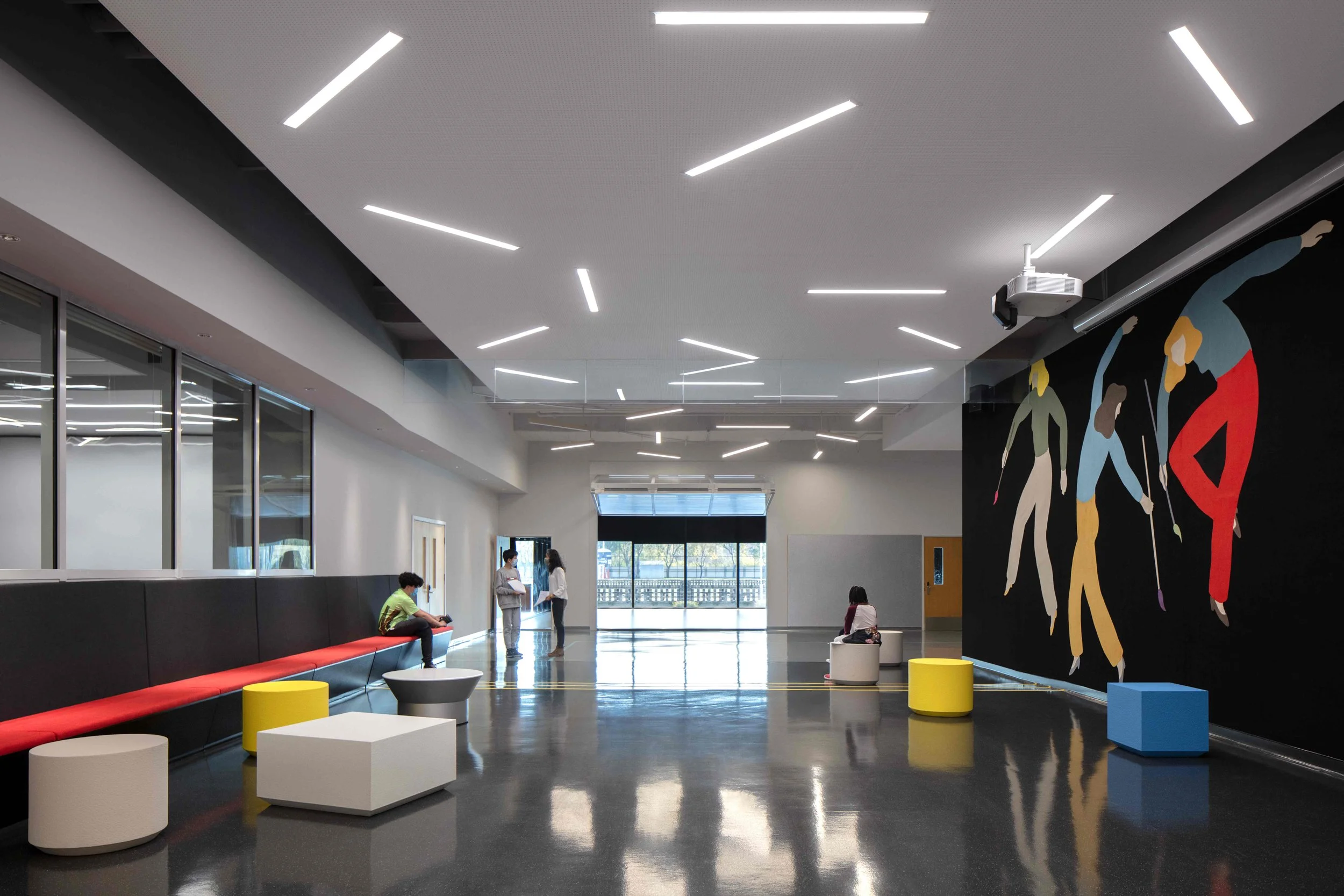
A centralized design and art facility, MS/HS Design Center is designed for integrated learning in science, technology, engineering, art and math, and showcasing design and entrepreneurship that challenge students to create prototypes and iterate ideas. Highly open and inspiring, the Center is designed around the Collaborative Space which is practically a super workshop with flexibility to divide to 5 enclosed or semi-closed studios in various sizes, surrounded by variety of “resource” rooms, to facilitate trans-disciplinary and project-based learning programs.
Located at the main entrance of Design Center, the Gallery not only serves as a fluid transition from the school main corridor to the Design Center, but also integrates the common spaces of Design Center and Performing Arts Center. Chic and elegant, this “Gallery of Tomorrow” turns out to be the most preferred space for social gatherings.
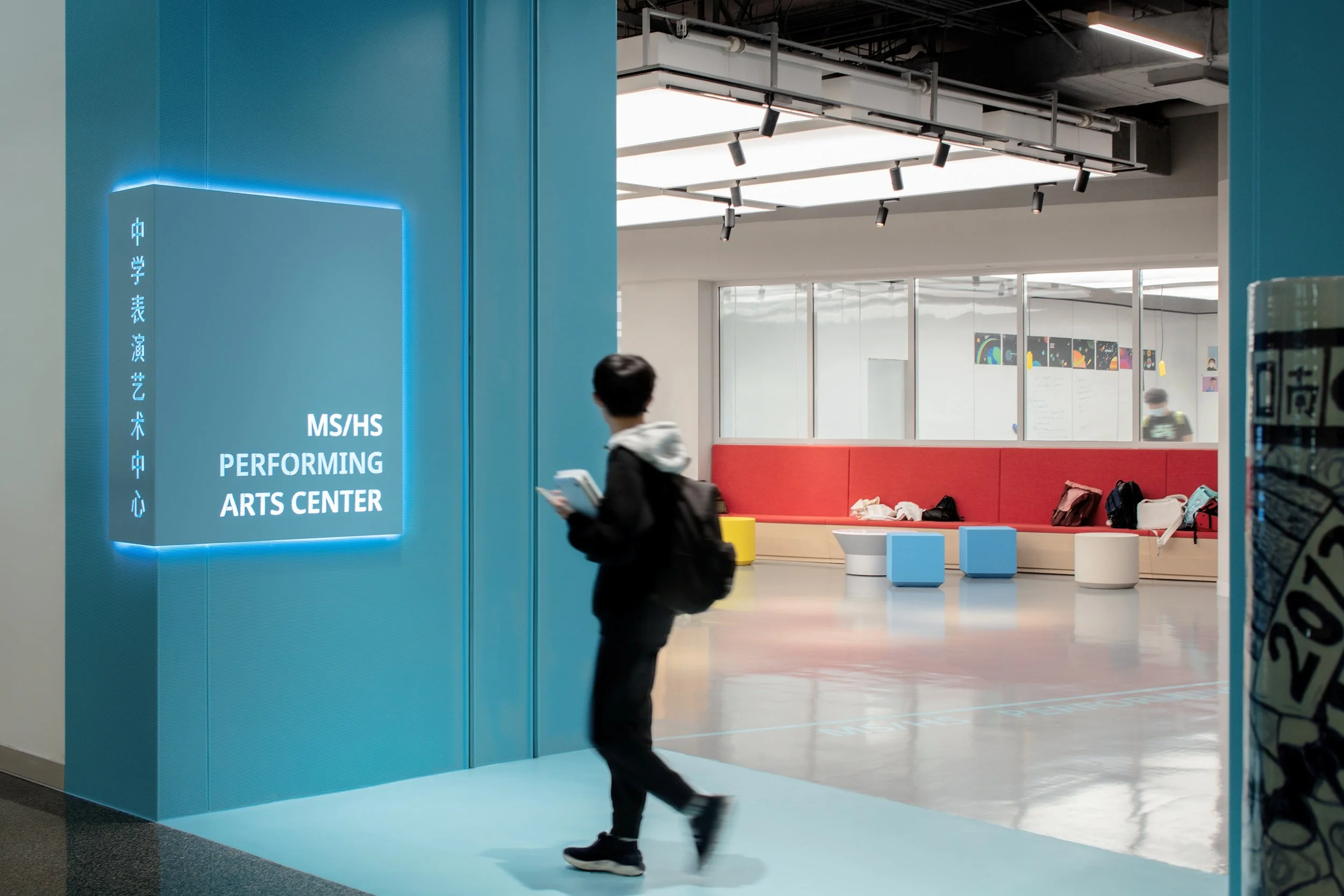
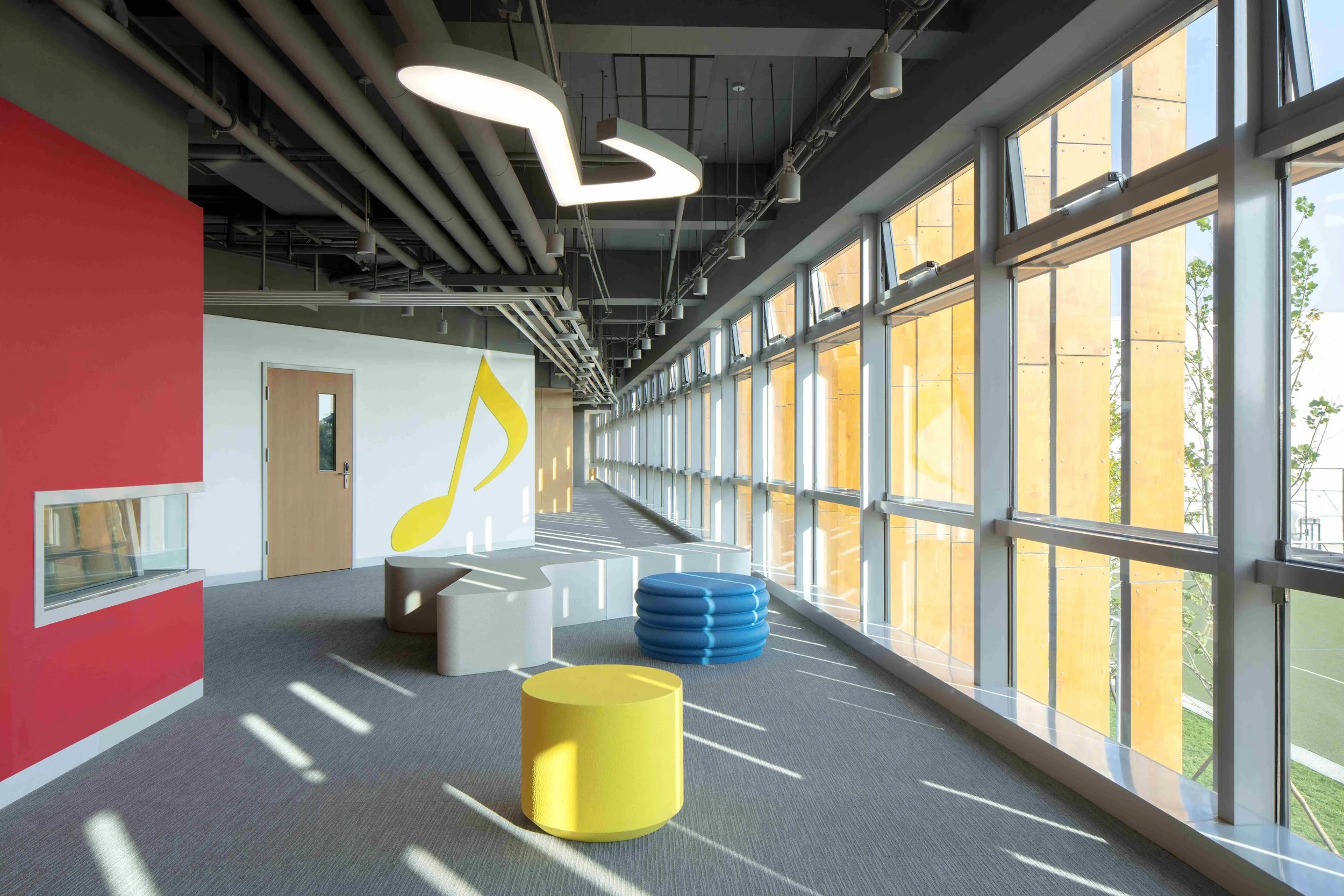
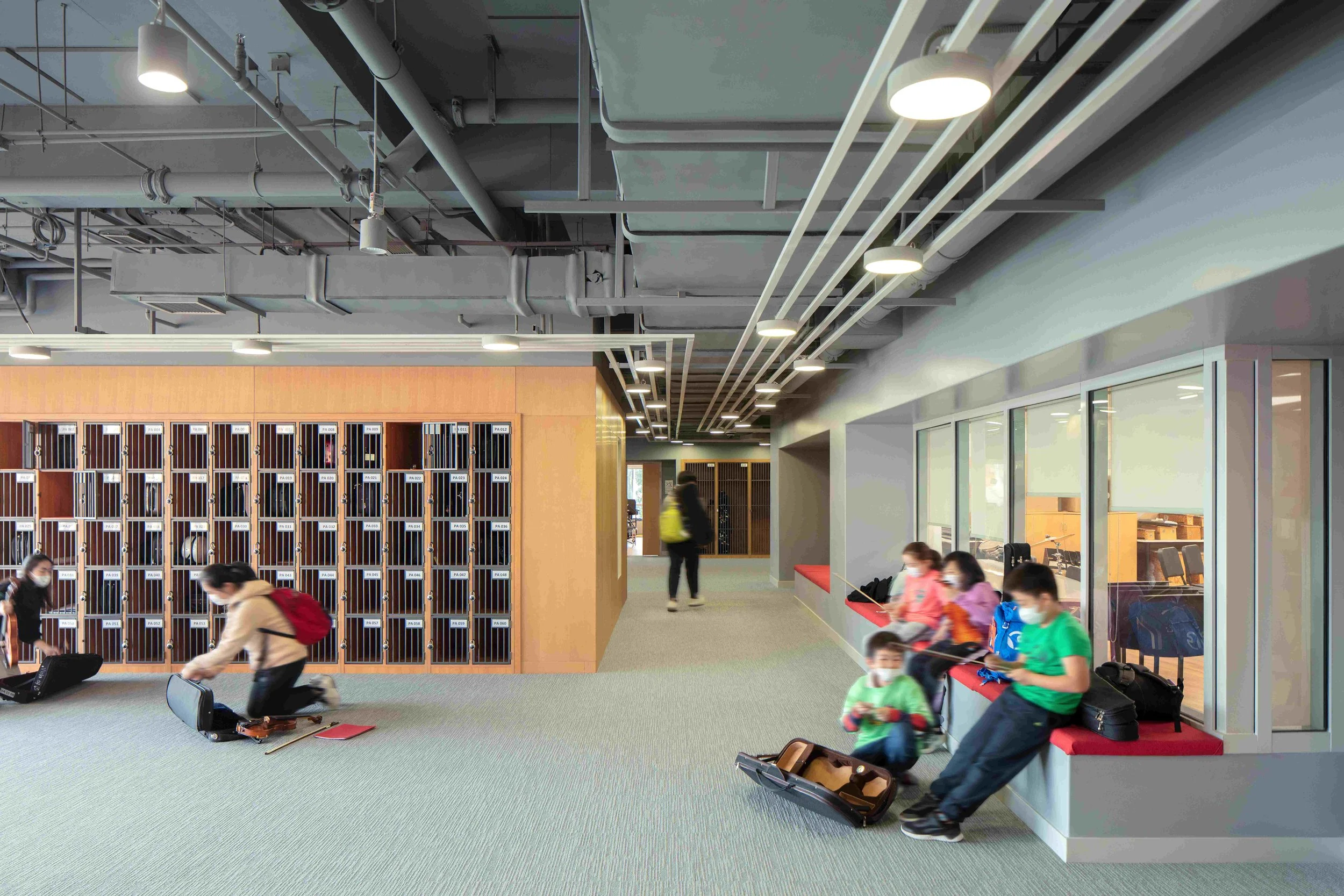
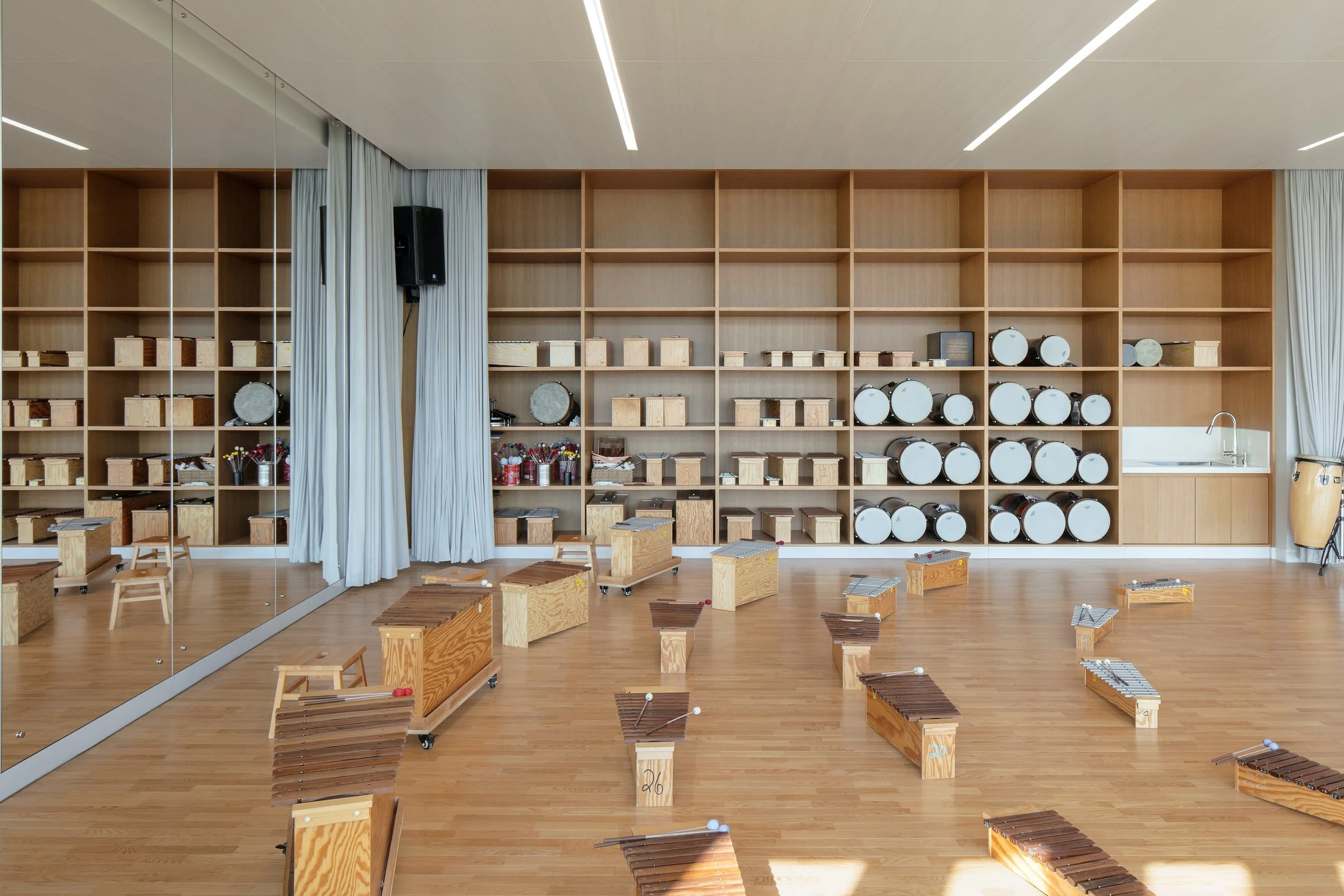
The largest secondary school performing arts community in Beijing, MS/HS Performing Arts Center consists of performing arts classrooms and band, orchestra, choir, drama and dance practice rooms with professional design in acoustics and lighting. It is planned in a unique layout, with common spaces adjacent to exterior envelop and receiving direct daylight, while most practice rooms are located at the back end with indirect daylight.
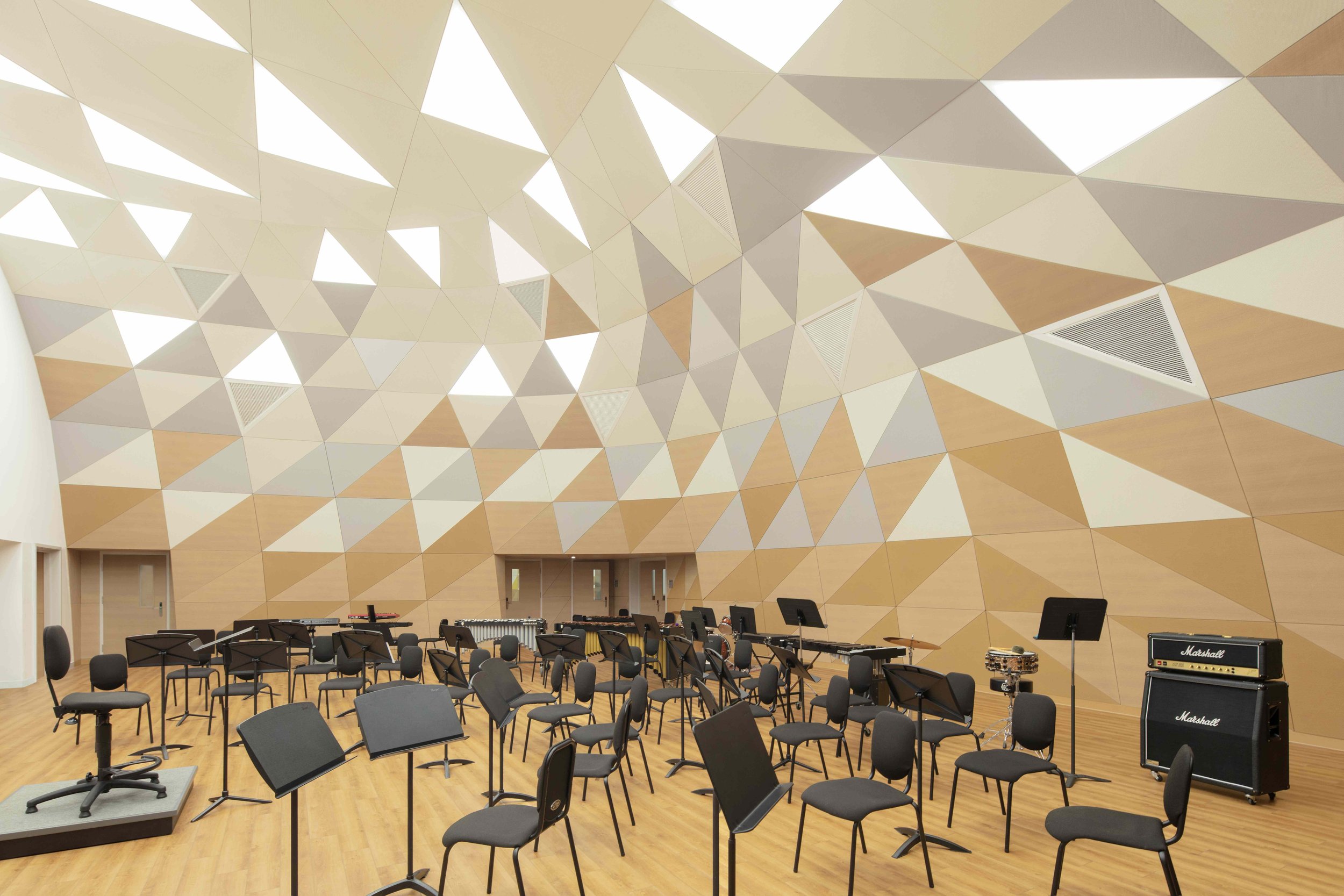
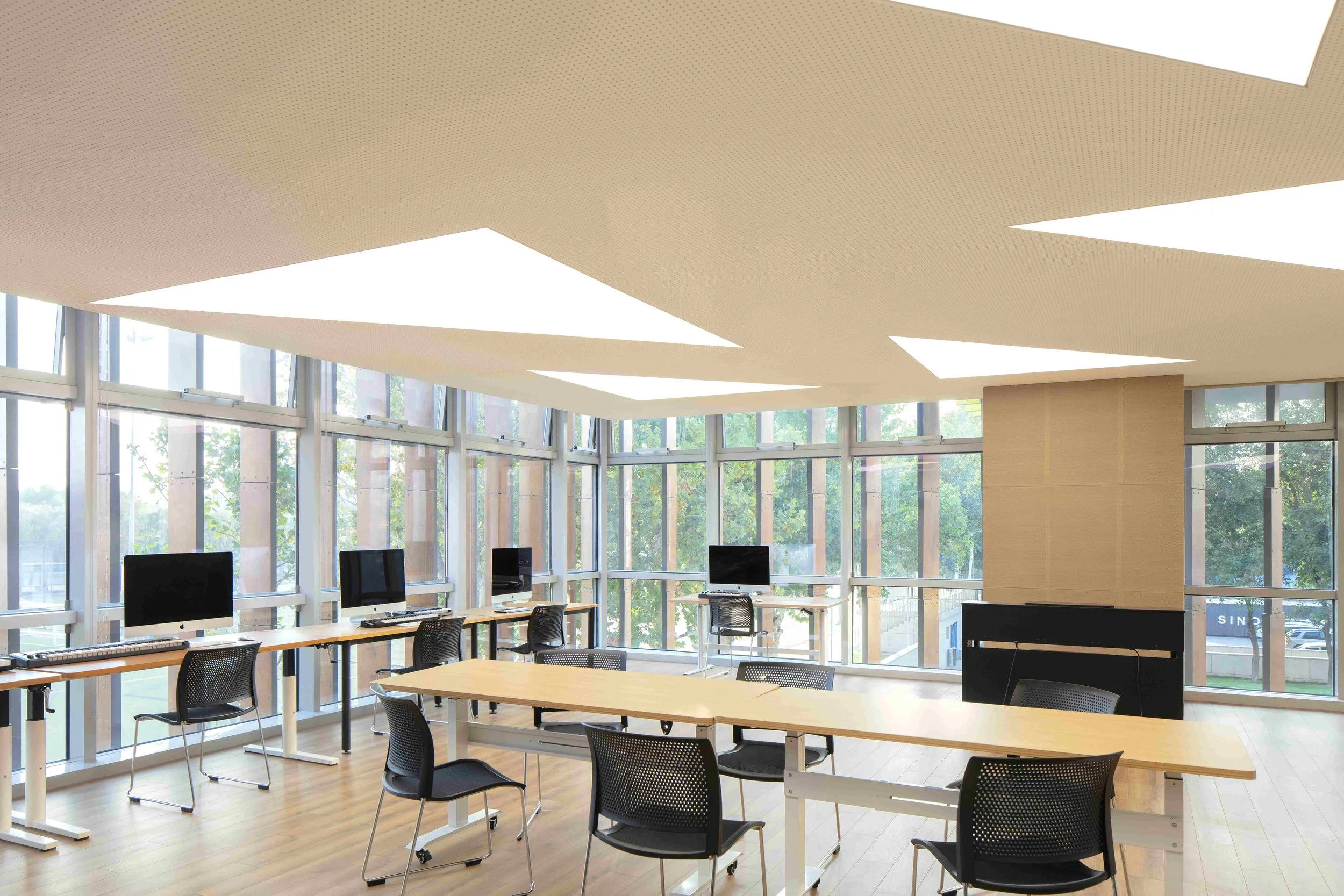
The Orchestra Room is designed to the highest acoustical standards, with the goal that each musician can clearly hear his/her peers and that the conductor can distinguish each player’s sound. The shell shape of Orchestra Room is derived from the ideal acoustic model that optimizes the reverberation coefficient to maximize the original and primary reflective sound. With sound absorptive or reflective materials behind, the shell is comprised on triangular perforated panels, filled with sensation of music, extending to the entire performing arts center.
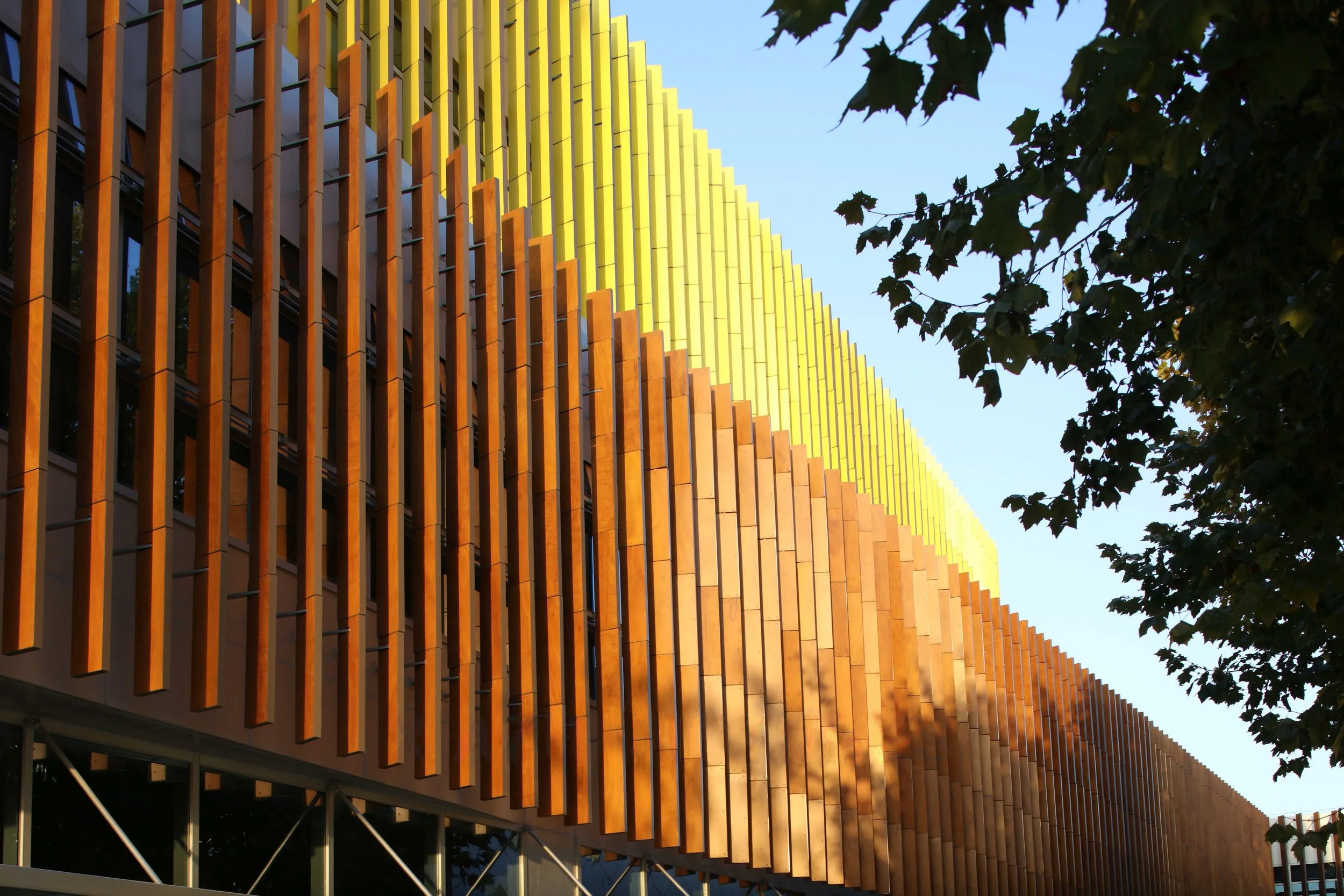
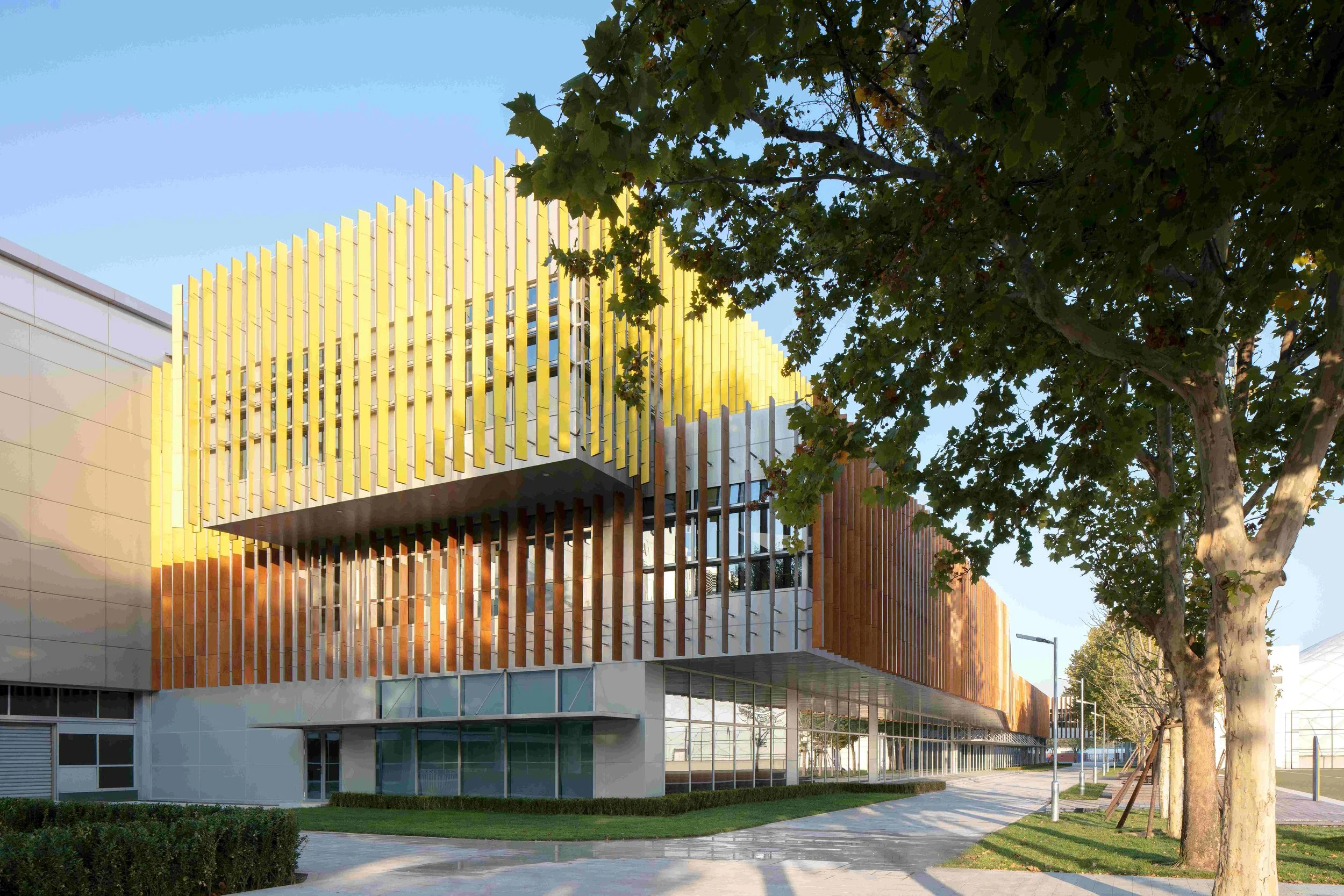
The creation of the secondary school design and art community empowers ISB with a new façade like frozen music.


CHIEF DESIGNER
Xiaoyi Ma
DESIGN TEAM
Jiajia Wang, Pengfei Chen, Yan Xia, Chaoyi Meng, Xuejiao Zhou, Yang Ming, Weihui Yan, Renzheng Zhu, Yajuan Li, Yue Zhao, Jing Wang, Xuan Zhang, Xiaoang Li, Jing Zhu, Haining Gu, Jingru Zhang, Min Shao
CREDITS
Zhi Xia (Photographer)