
BIBA ELEMENTARY SCHOOL RENOVATION
D+ ARTS AND COMMUNITY CENTER
Our design response was to invert the conventional theater paradigm by turning the stage inside out and drawing the audience outside in. Rather than isolating performance from its context, we sought to embed it within the living ecology of the campus. The outcome is a hybrid cultural landscape that dissolves boundaries: between performer and audience, interior and exterior, art and daily life.
LOCATION Beijing, China
AREA 2319 m²
STATUS Completed
CLIENT Beijing Daystar Academy
YEAR 2024
PROGRAMS Educational, Theater, Architecture Renovation, Interior, Landscape Design
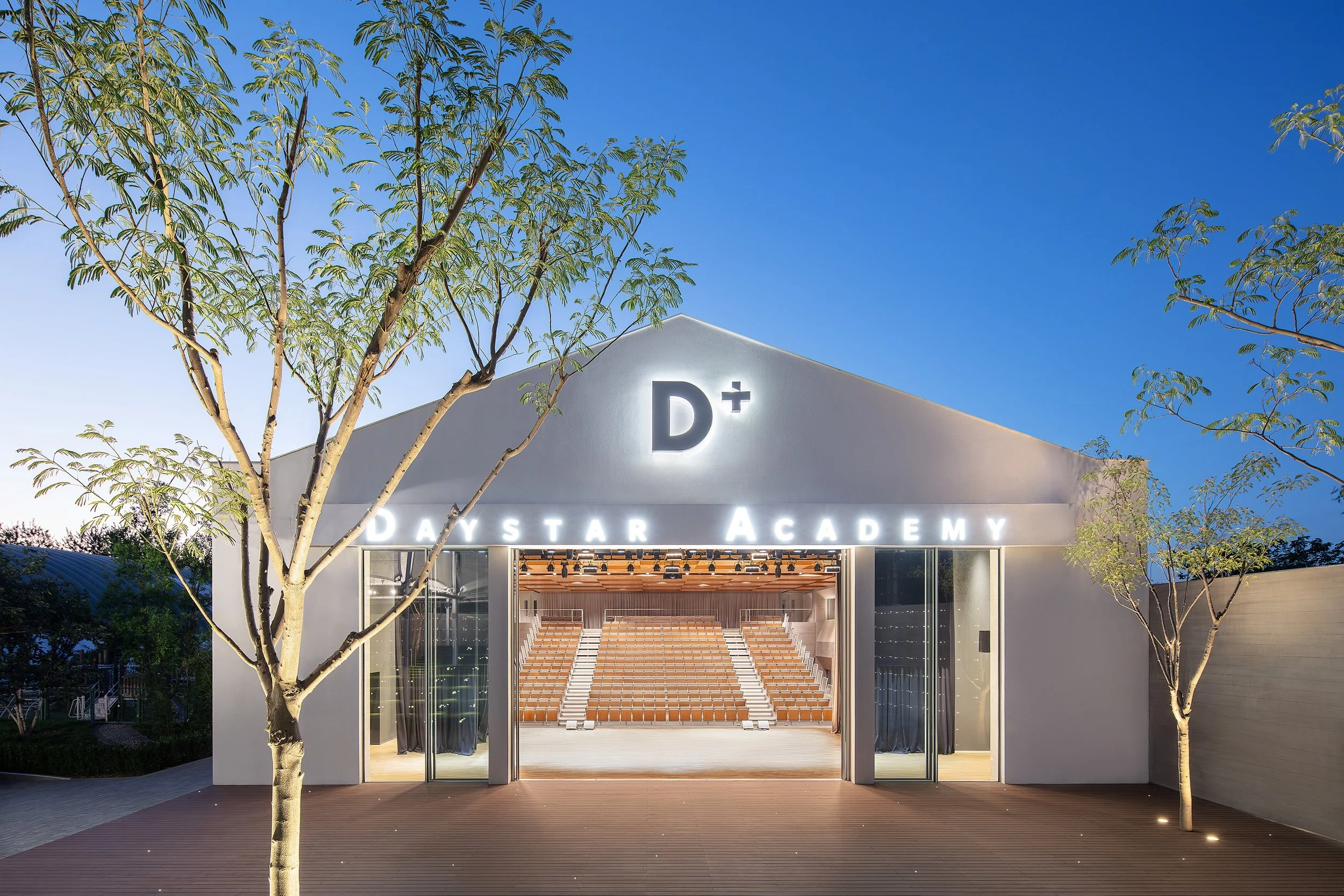
Embracing its mission to cultivate future social innovators with an open, inclusive civil spirit, Daystar quickly adopted the concept and named the project "D+". "D" stands not only for "Daystar," but also for Dining, Drama, Dance, Design, Display, and a constellation of programs that coexist within this adaptive platform. The project became a conceptual reawakening and a spatial inquiry into how architecture, performance, and community intersect in more profound, sustainable ways.
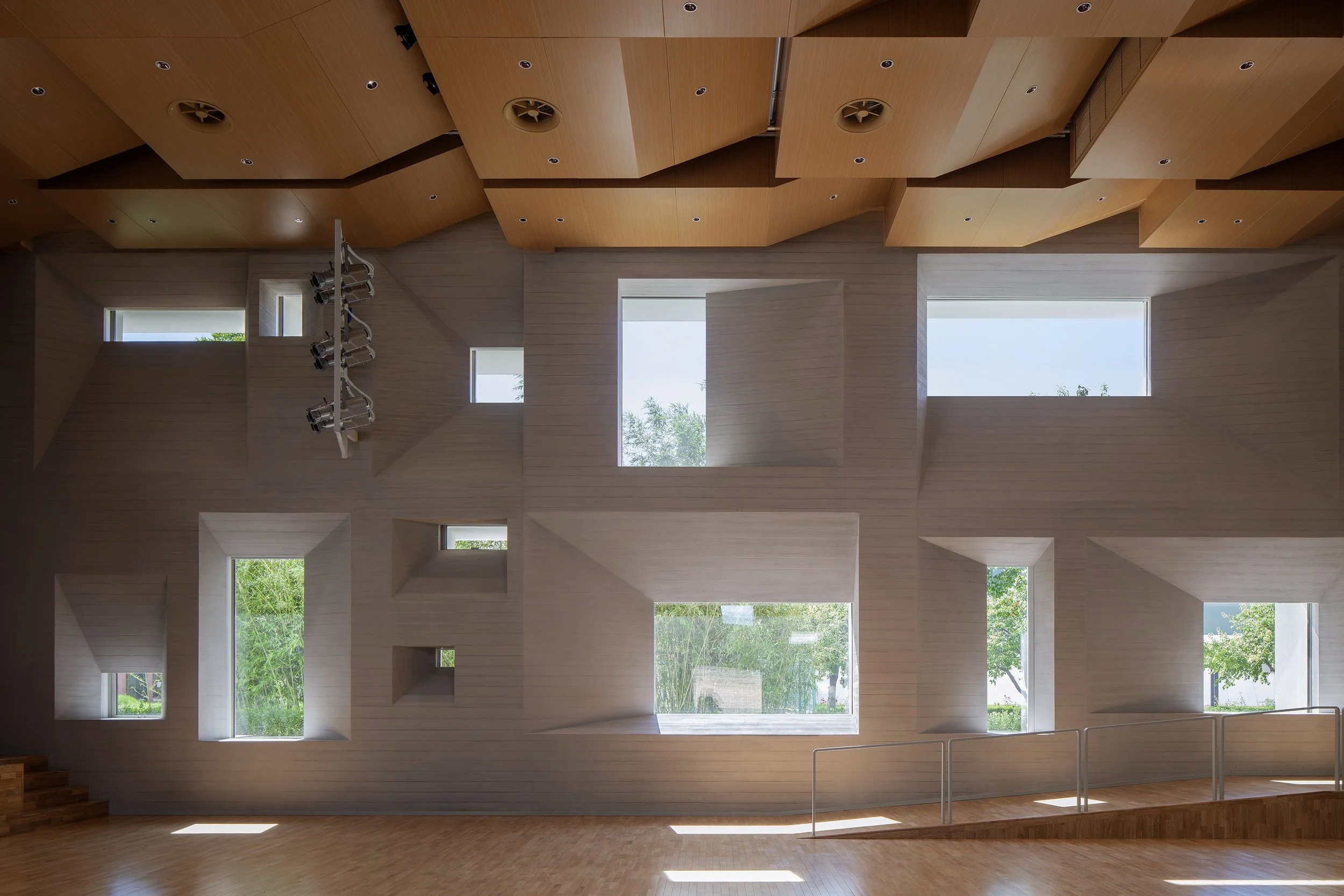
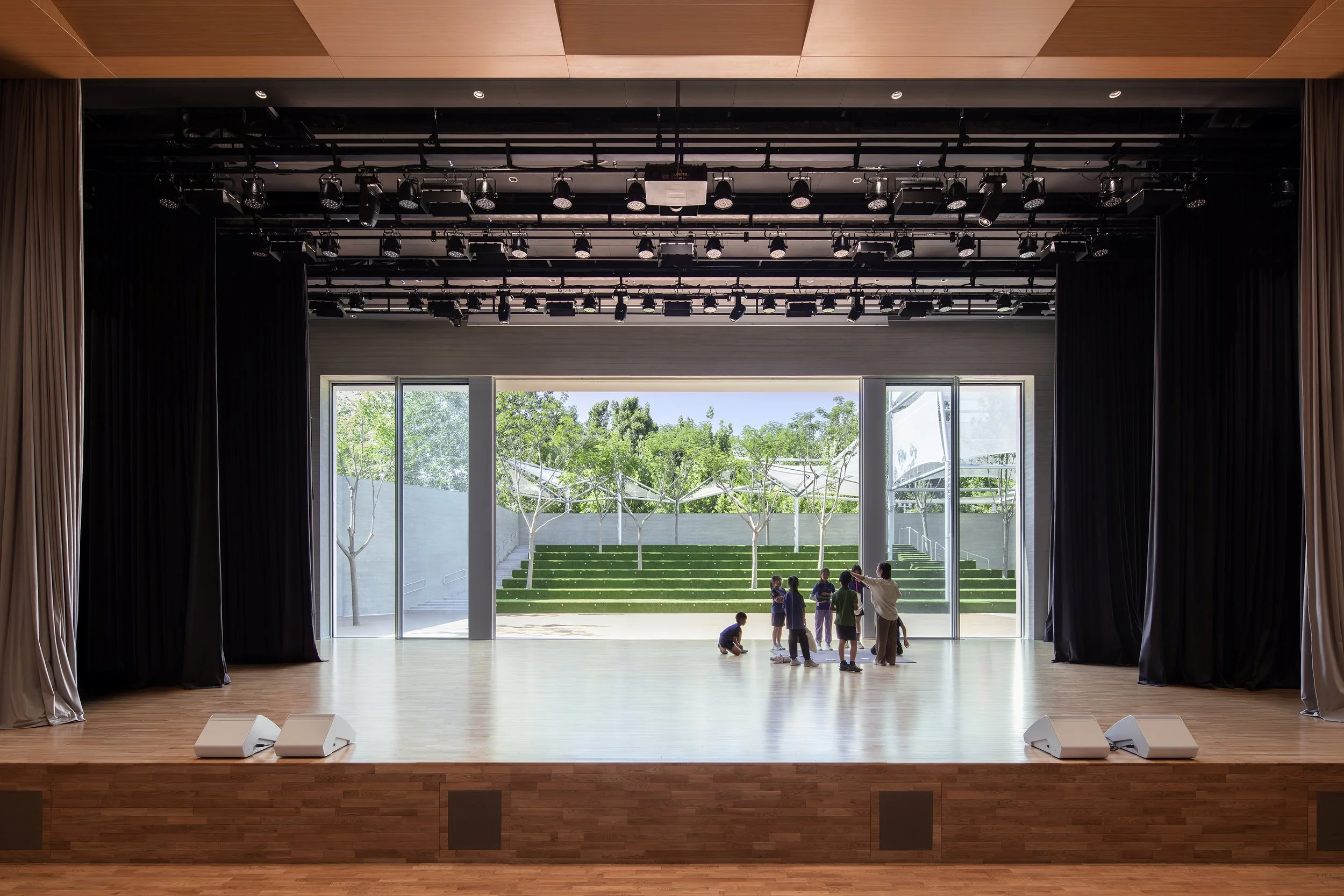
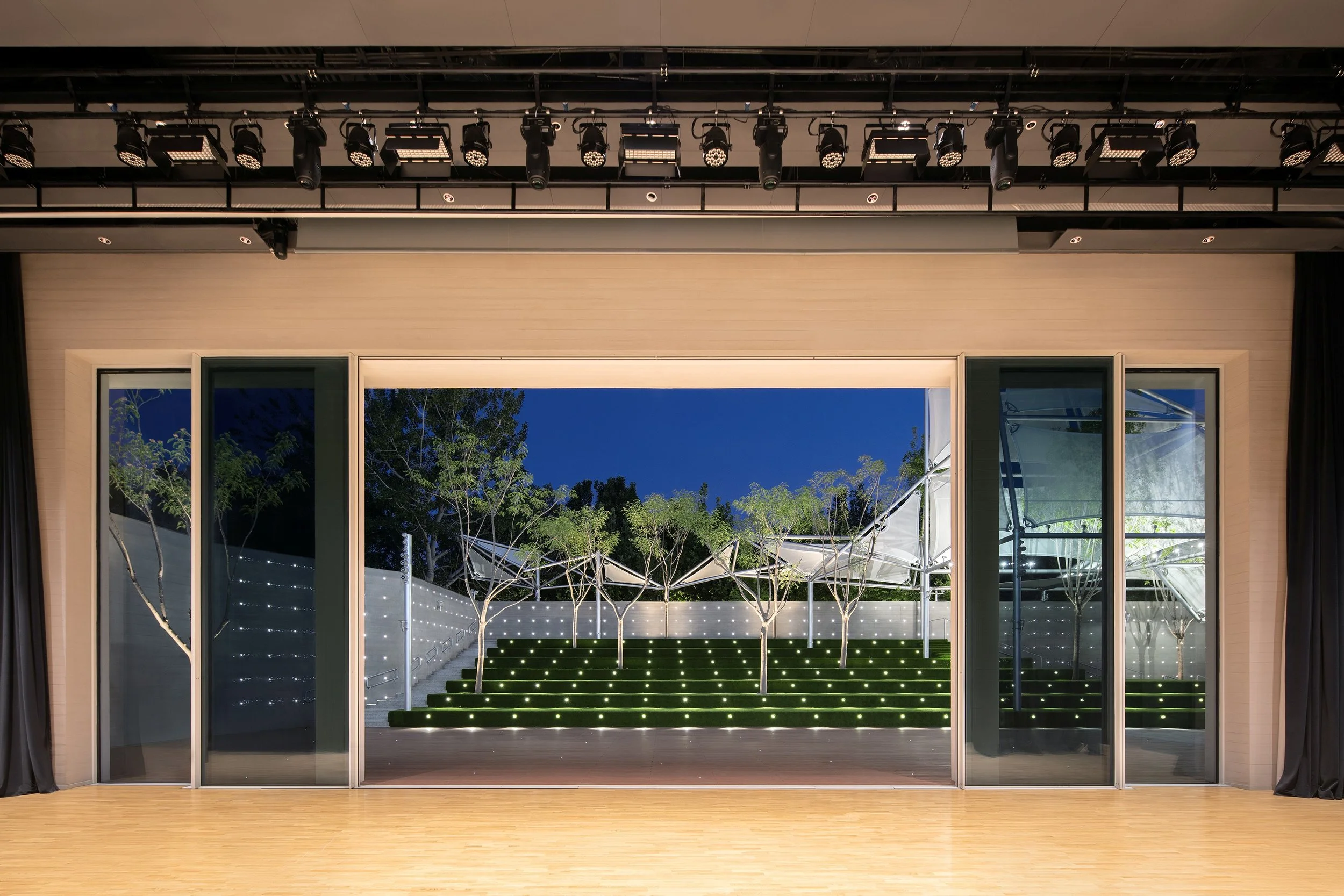
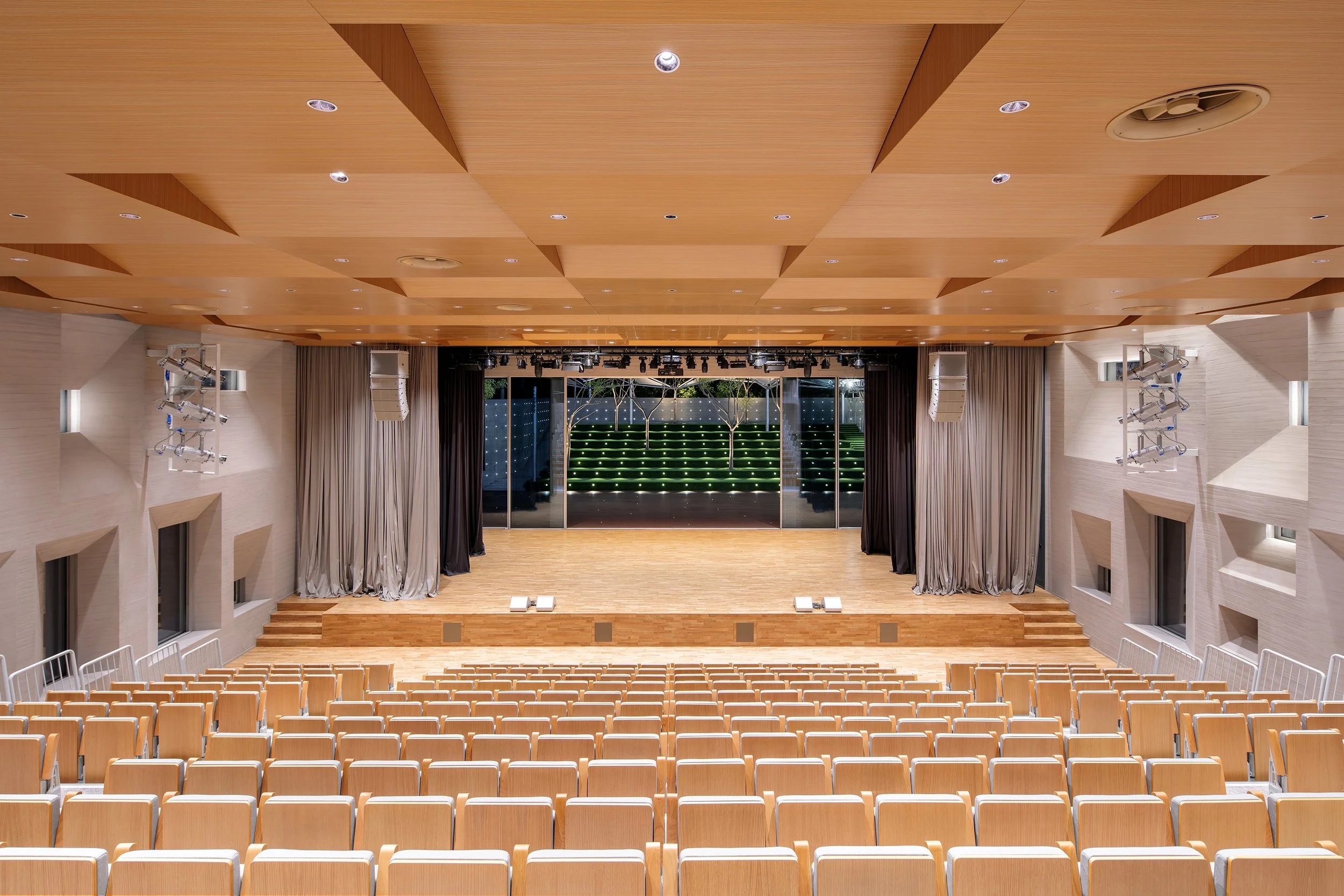
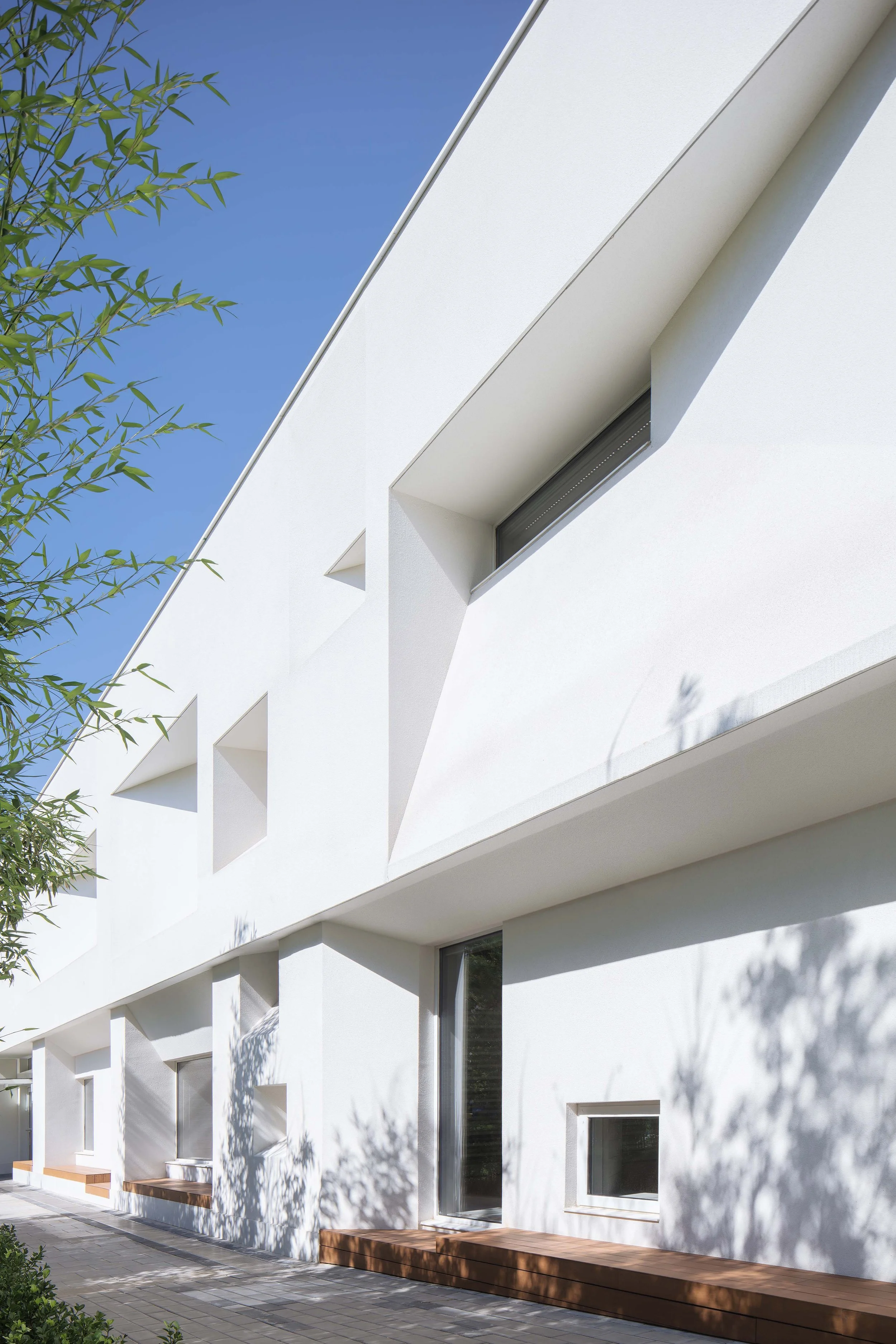
At the heart of the project is an open, sunlit theater. Along its side walls, a sequence of staggered openings in varied sizes invites daylight to diffuse into the space, animating the interior with shifting rhythms of light and shadow. The centerpiece is a 16-meter-wide, 6-meter-high operable glass wall behind the stage, enabling the stage to be shared by the outdoor amphitheater. In this seamless indoor-outdoor dual performance system, nature becomes the set, the sky forms the proscenium, and the boundary between audience and performer dissolves, both inside and outside.
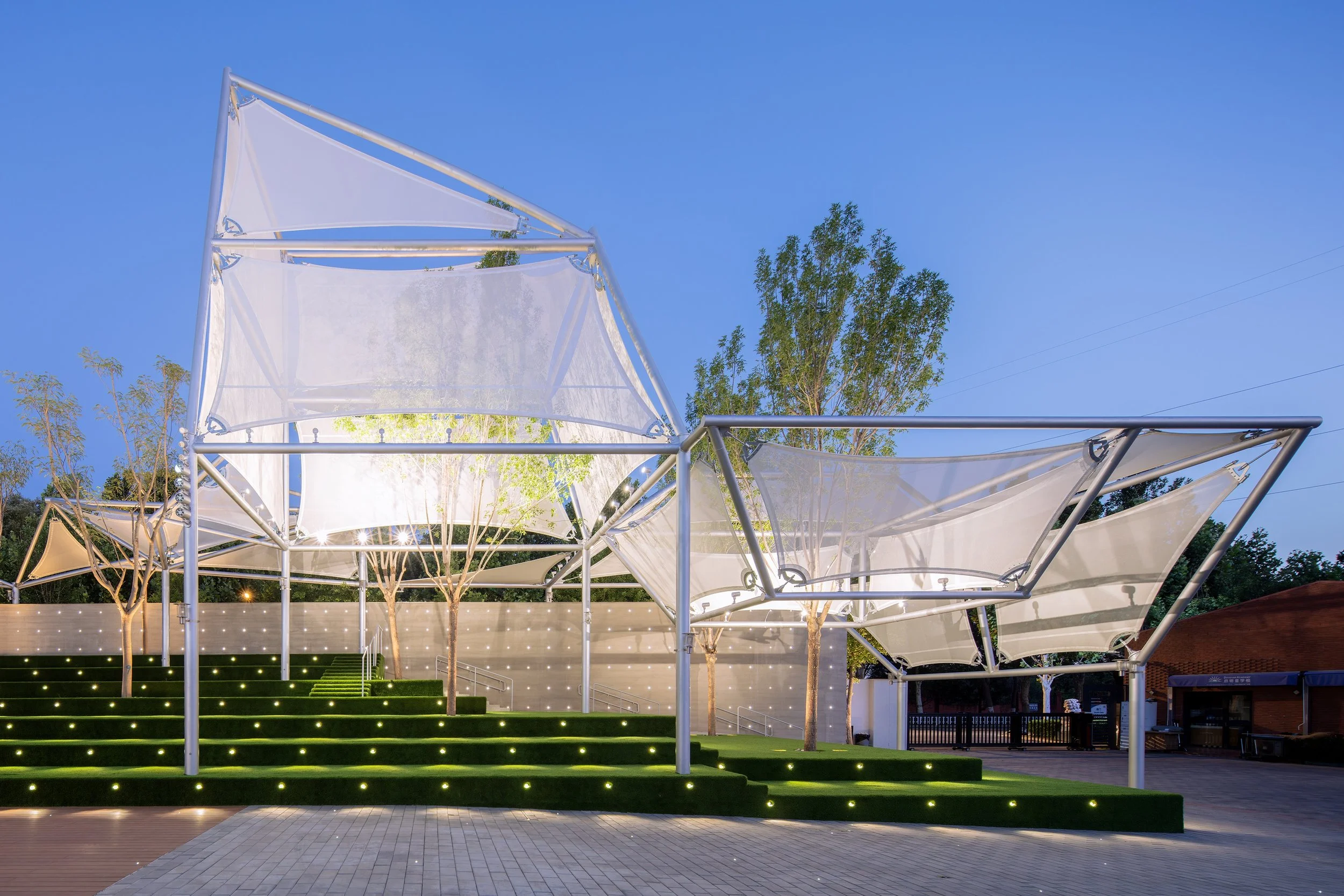
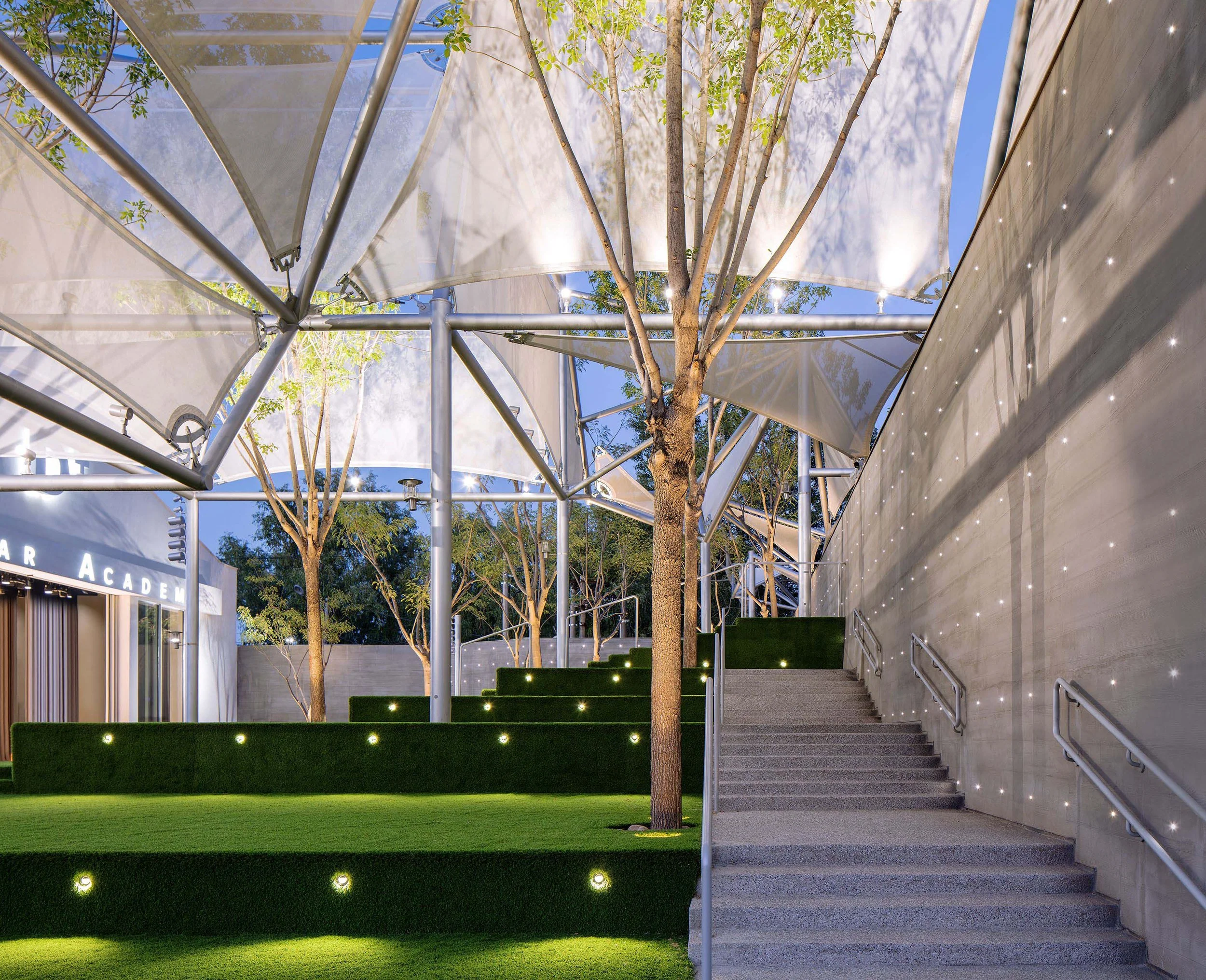
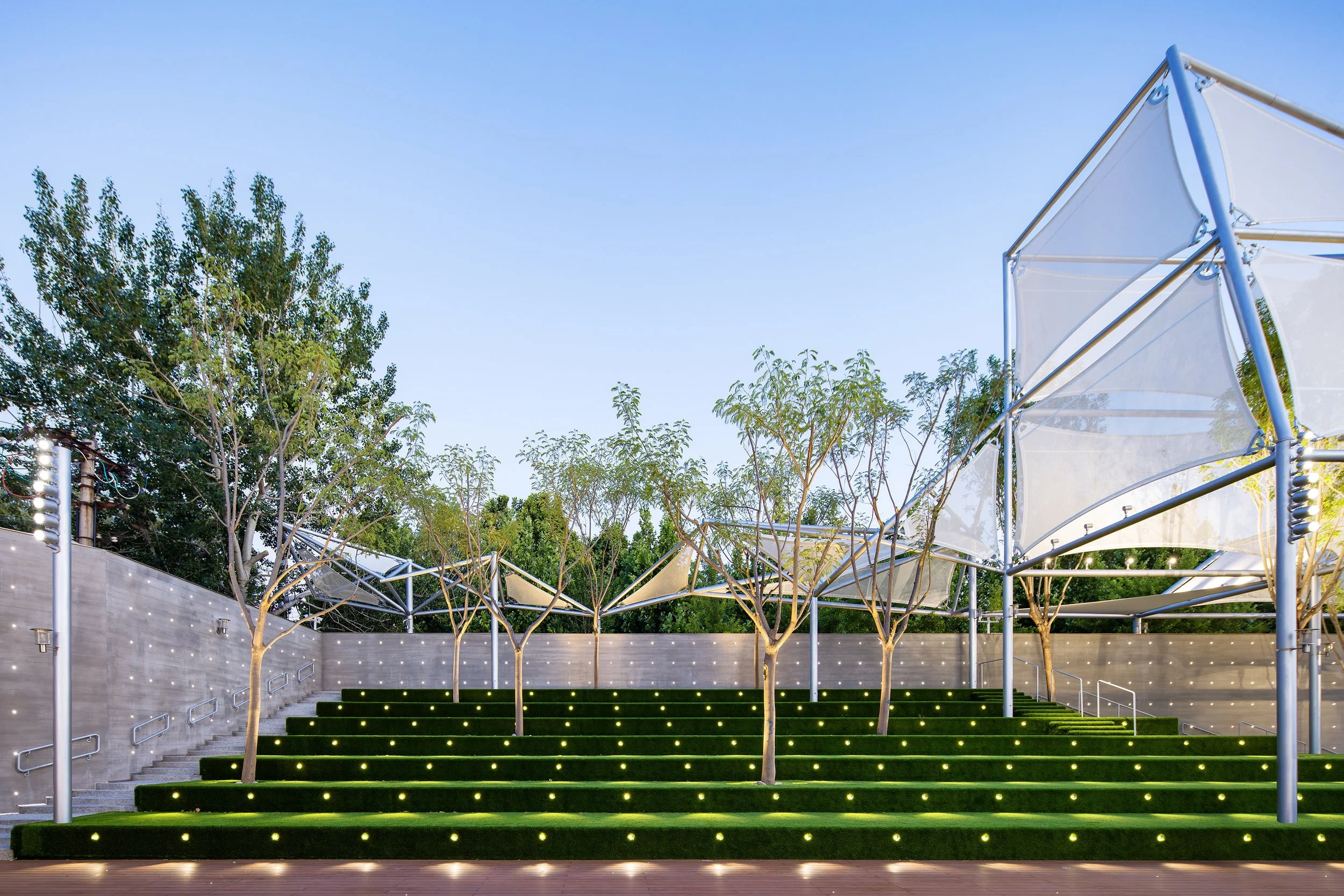
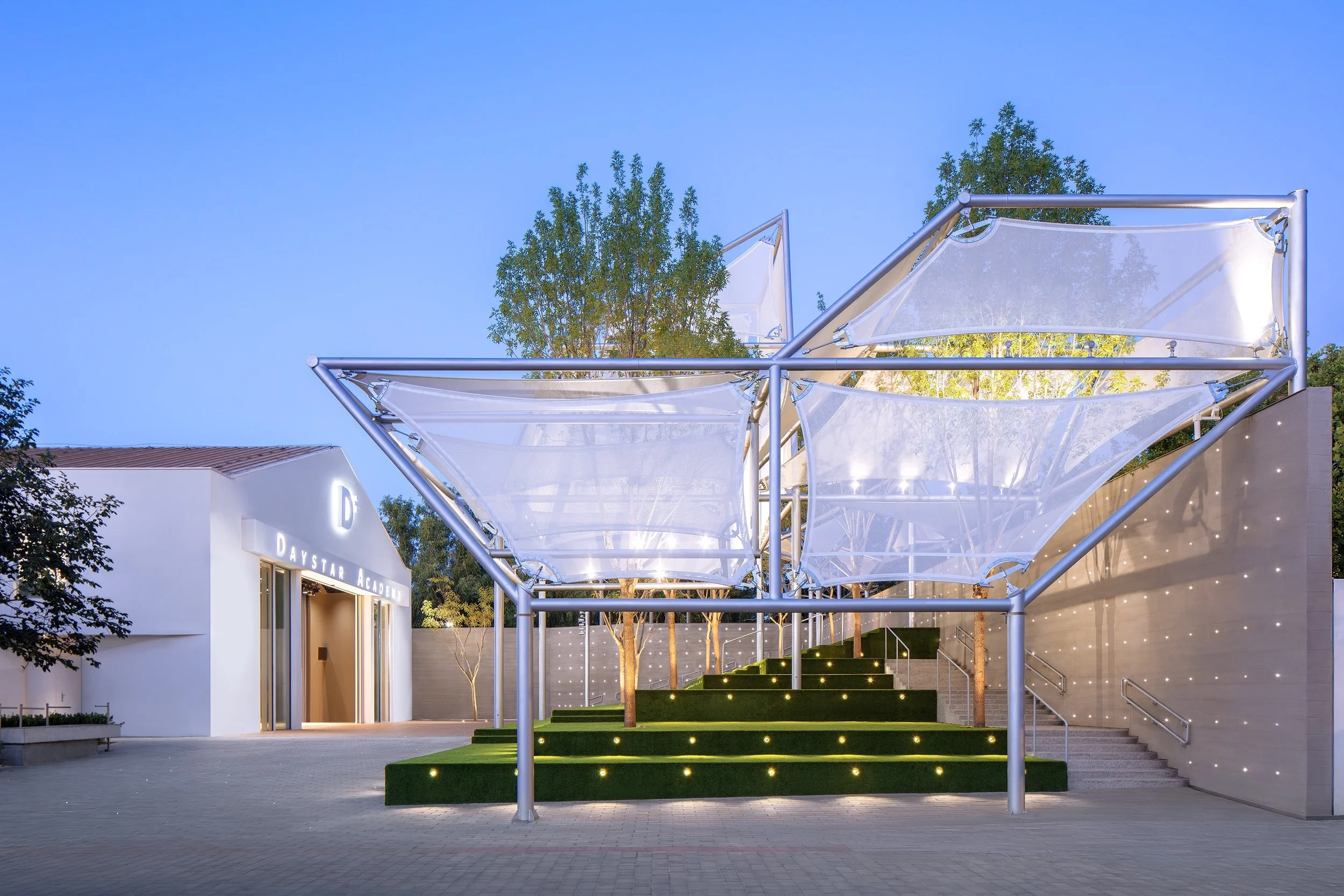
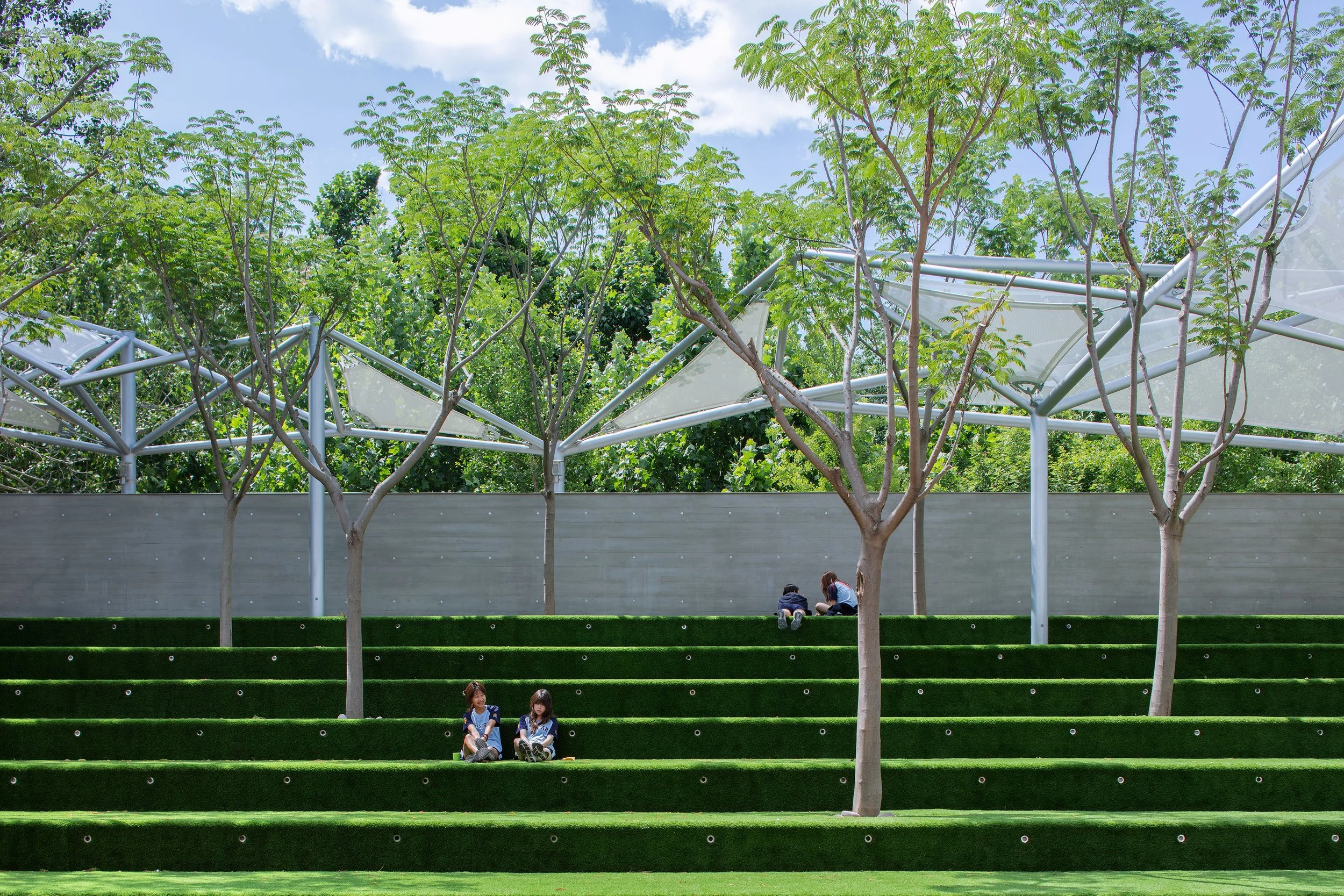
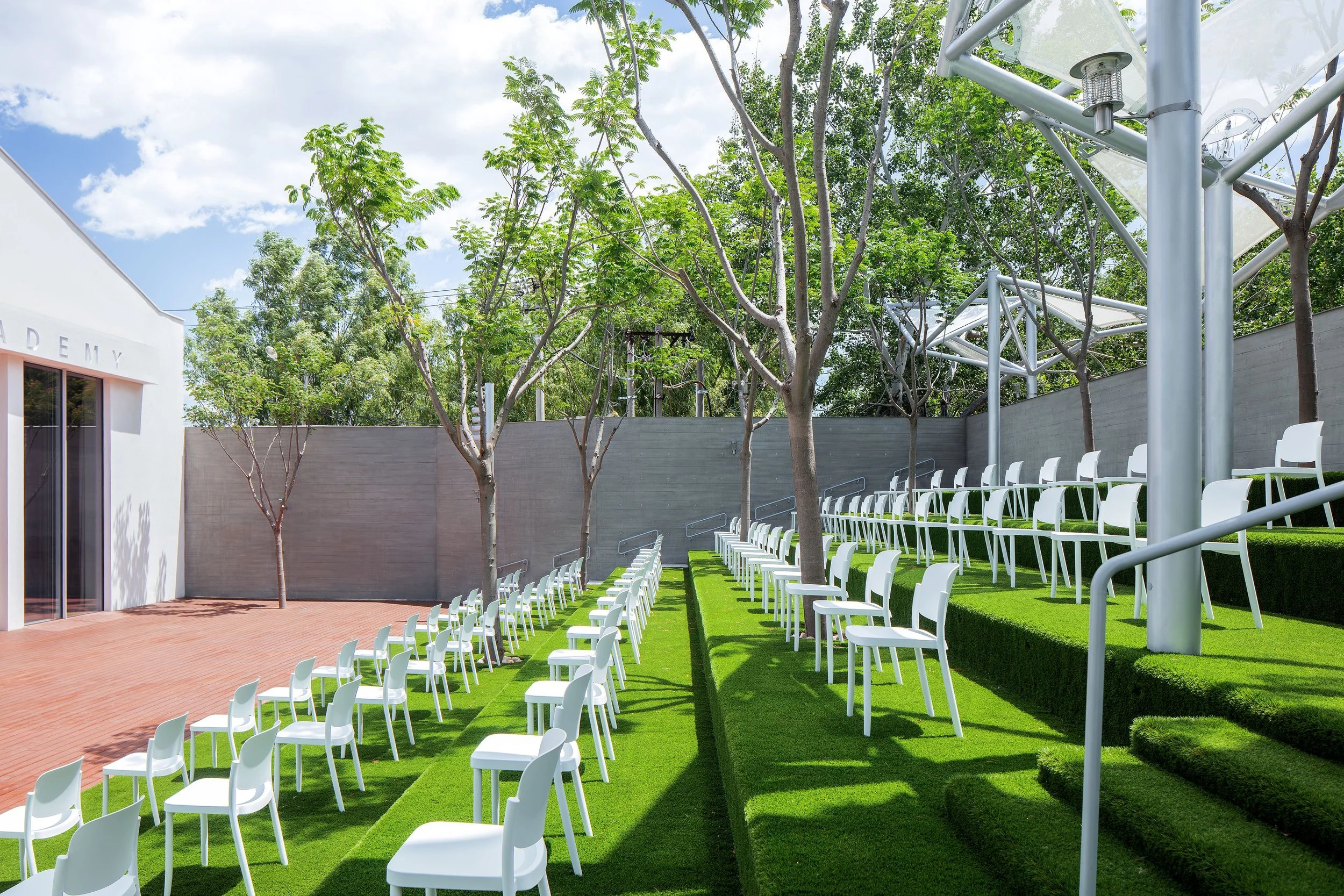
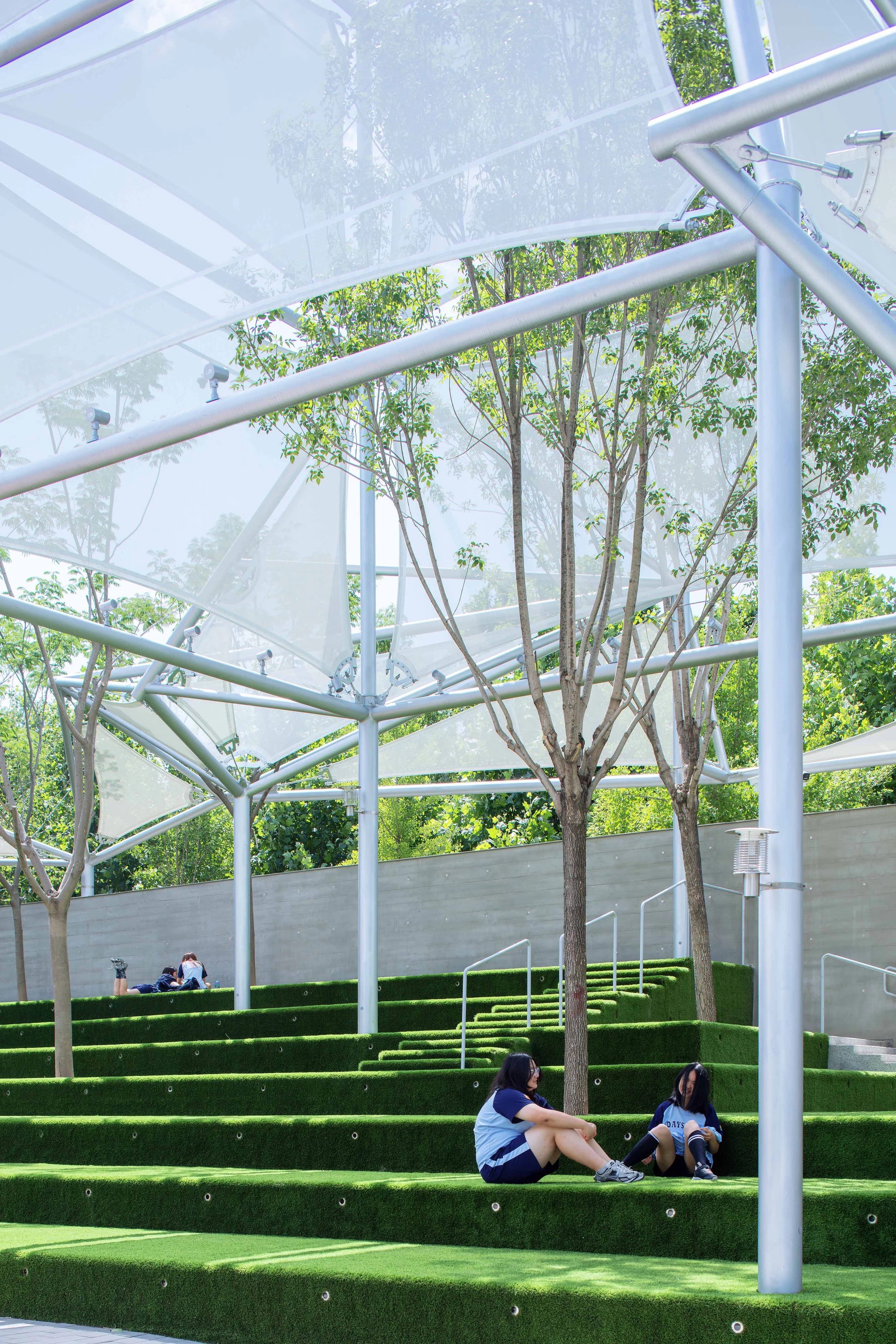
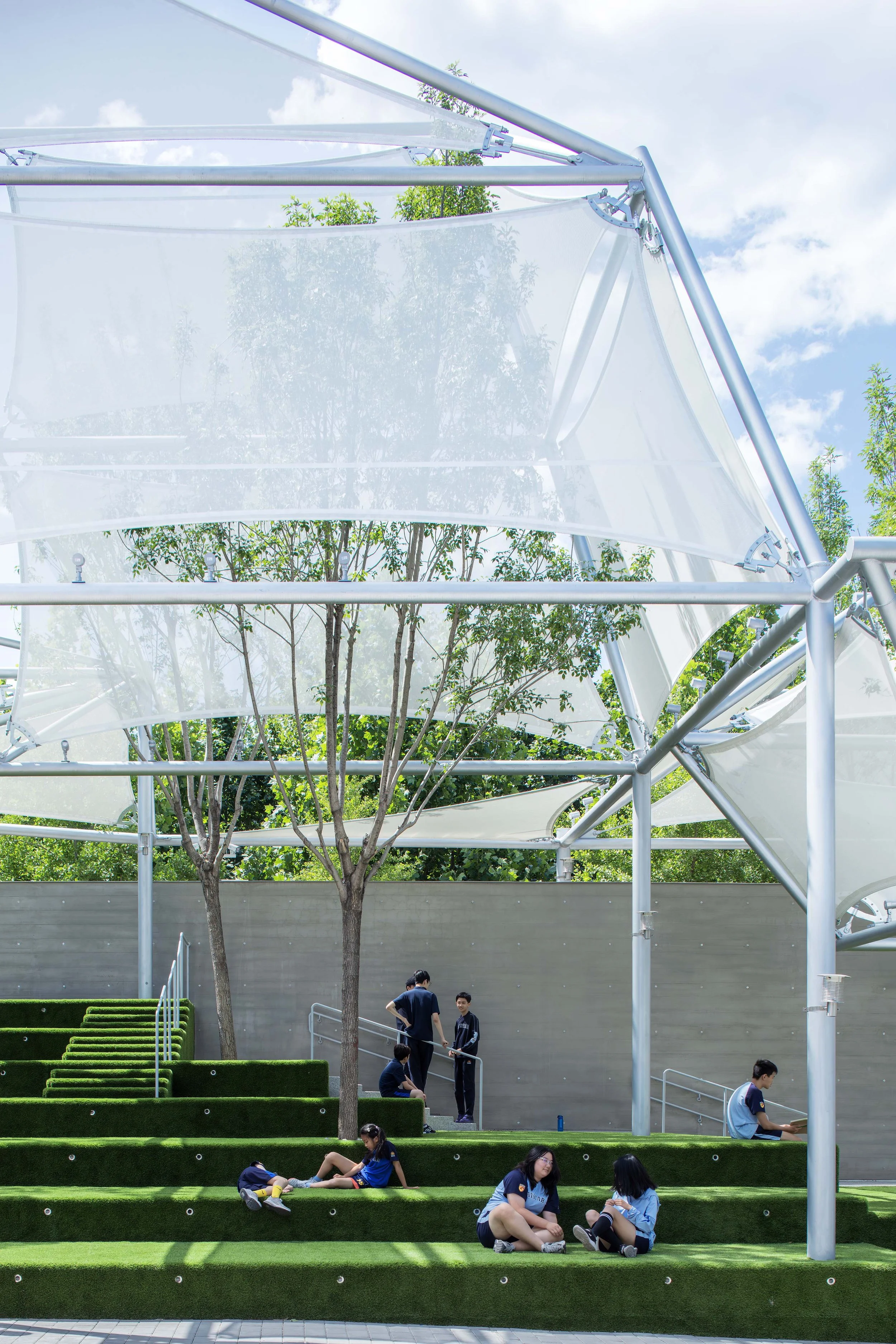
Departing from traditional semicircular forms, the outdoor amphitheater unfolds as a "performative terrain", a series of rectangular turf terraces carved into the landscape. Each terrace, with a depth of 1.6 meters, invites spontaneous use, such as running, sitting, reclining, or gathering, as well as formal seating during events. This relaxed terrain serves not only as an open-air audience stand but also as a community terrace, welcoming everyday gatherings and informal engagement.
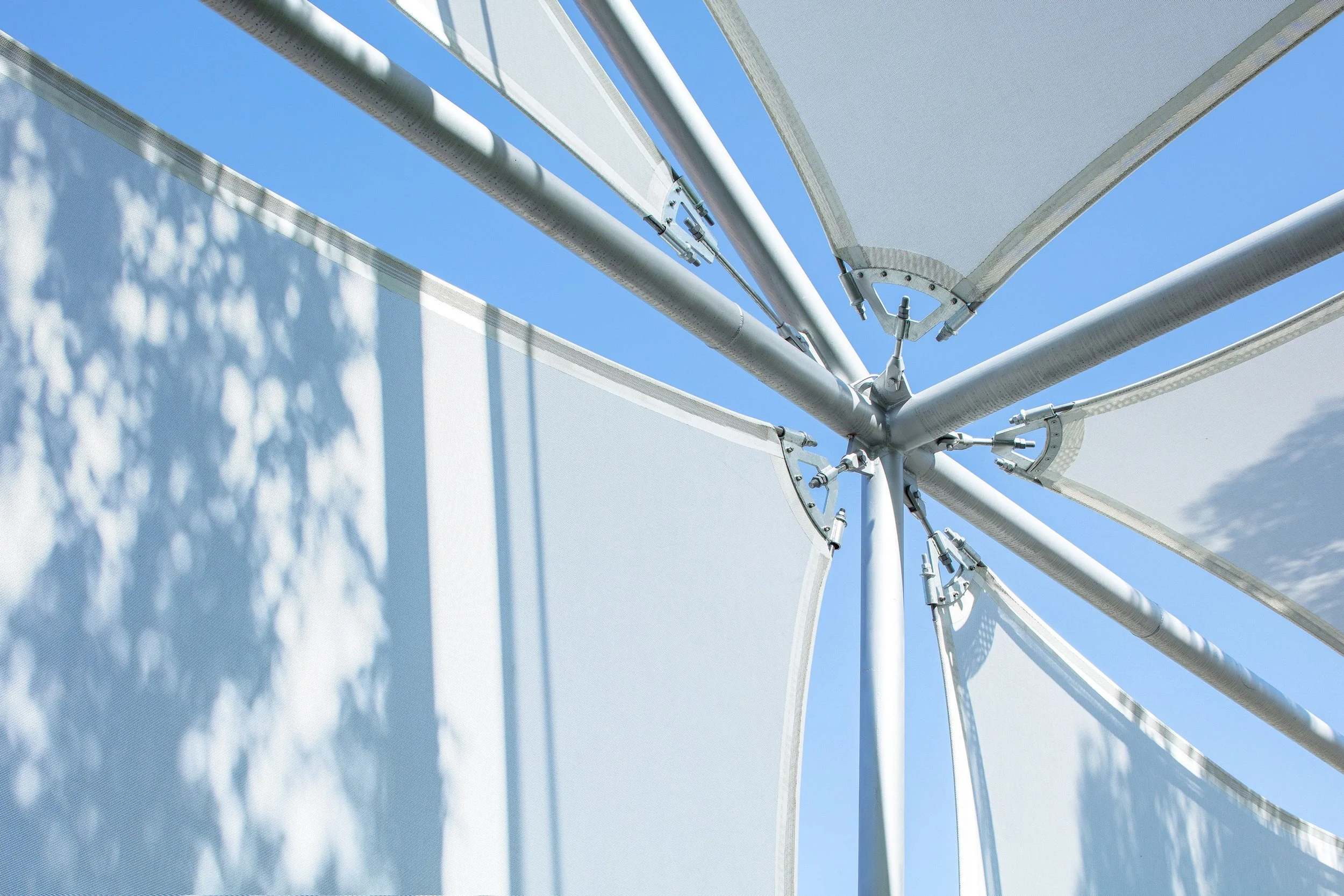
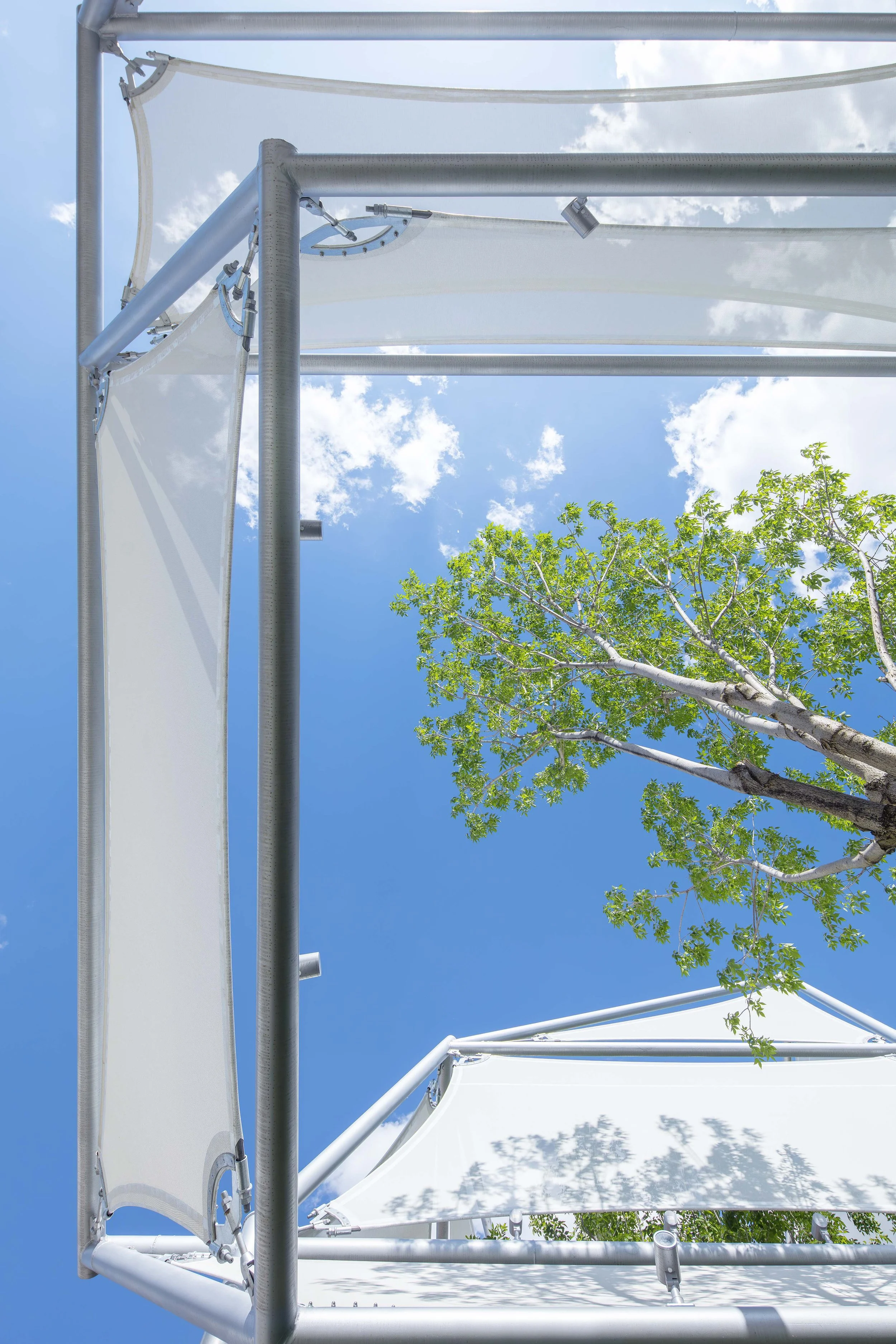
Floating above the amphitheater is a light, tensile canopy that acts as a new architectural landmark. Newly planted silk trees and ash trees complement the existing ginkgoes, enriching the sensory experience while improving microclimatic comfort. At night, numerous small lights embedded in the ground and walls shimmer like fireflies, and the glowing canopy brings a soft, poetic presence to the theater.
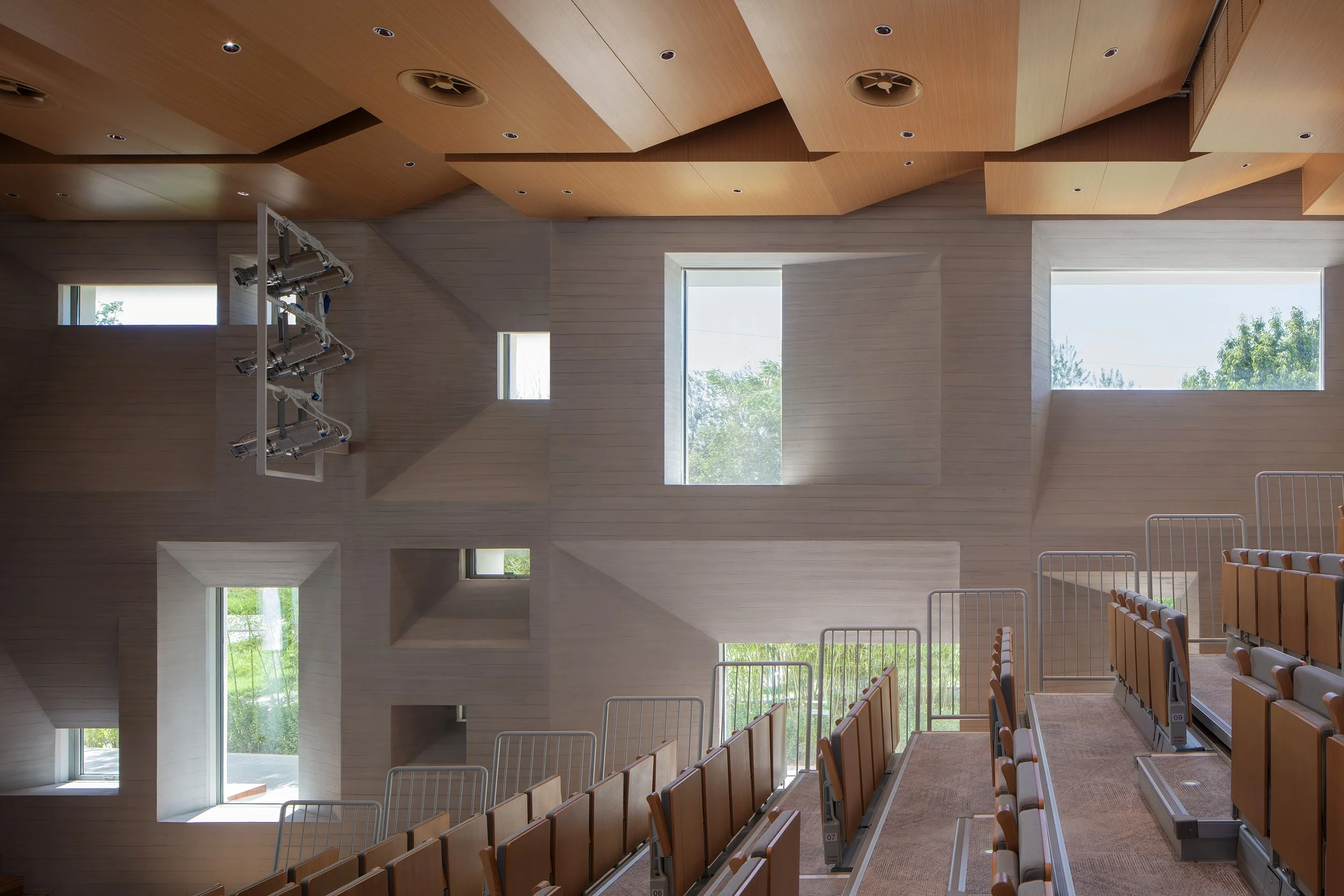
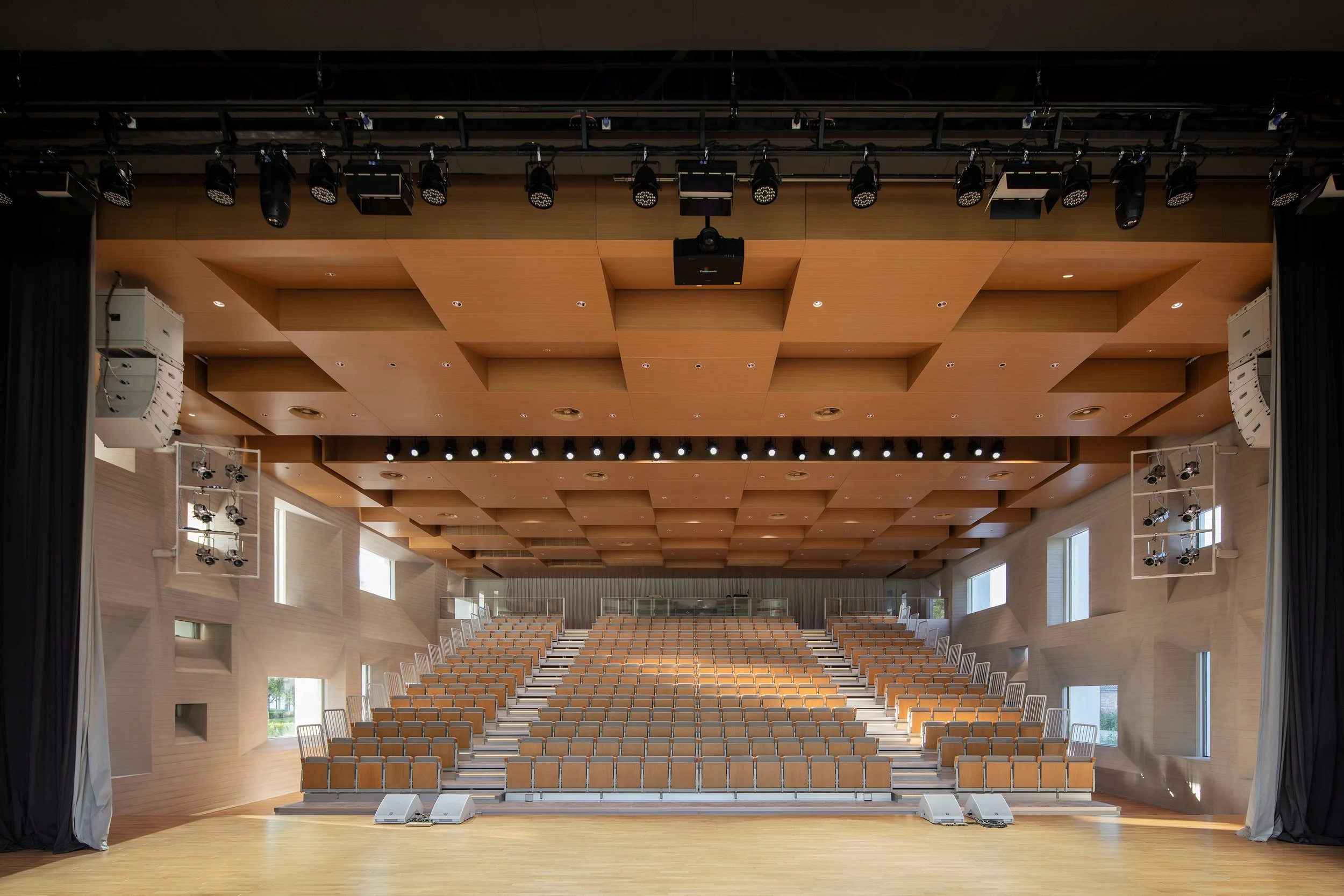
Inside the theater, a restrained palette of oak and concrete-textured paint creates a warm and grounded atmosphere. A retractable seating system allows the space to flexibly accommodate performances, exhibitions, workshops, banquets, and social events. Sculpted ceiling and wall geometries enhance acoustic diffusion while choreographing a dynamic interplay of light, texture, and rhythm.
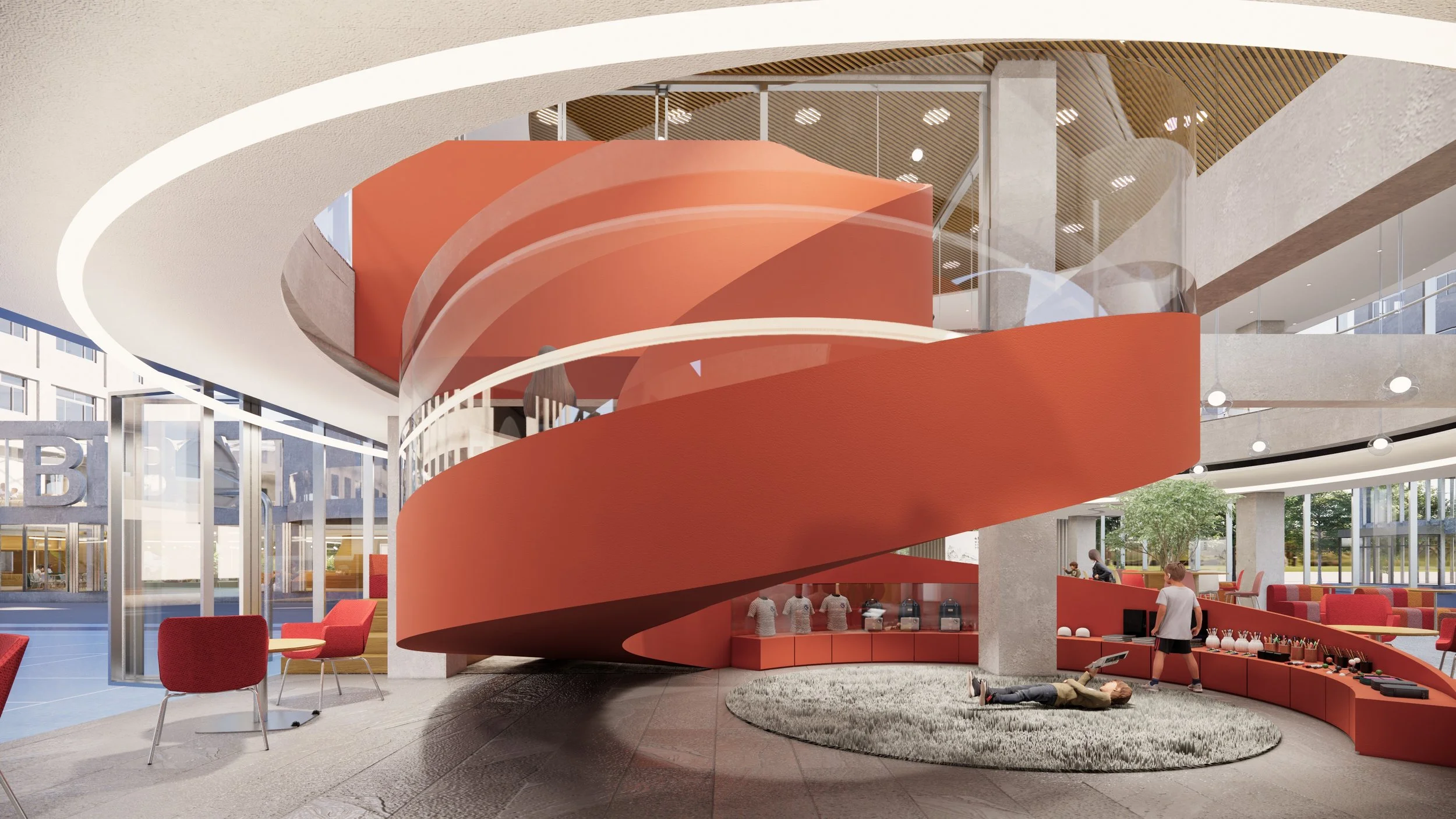
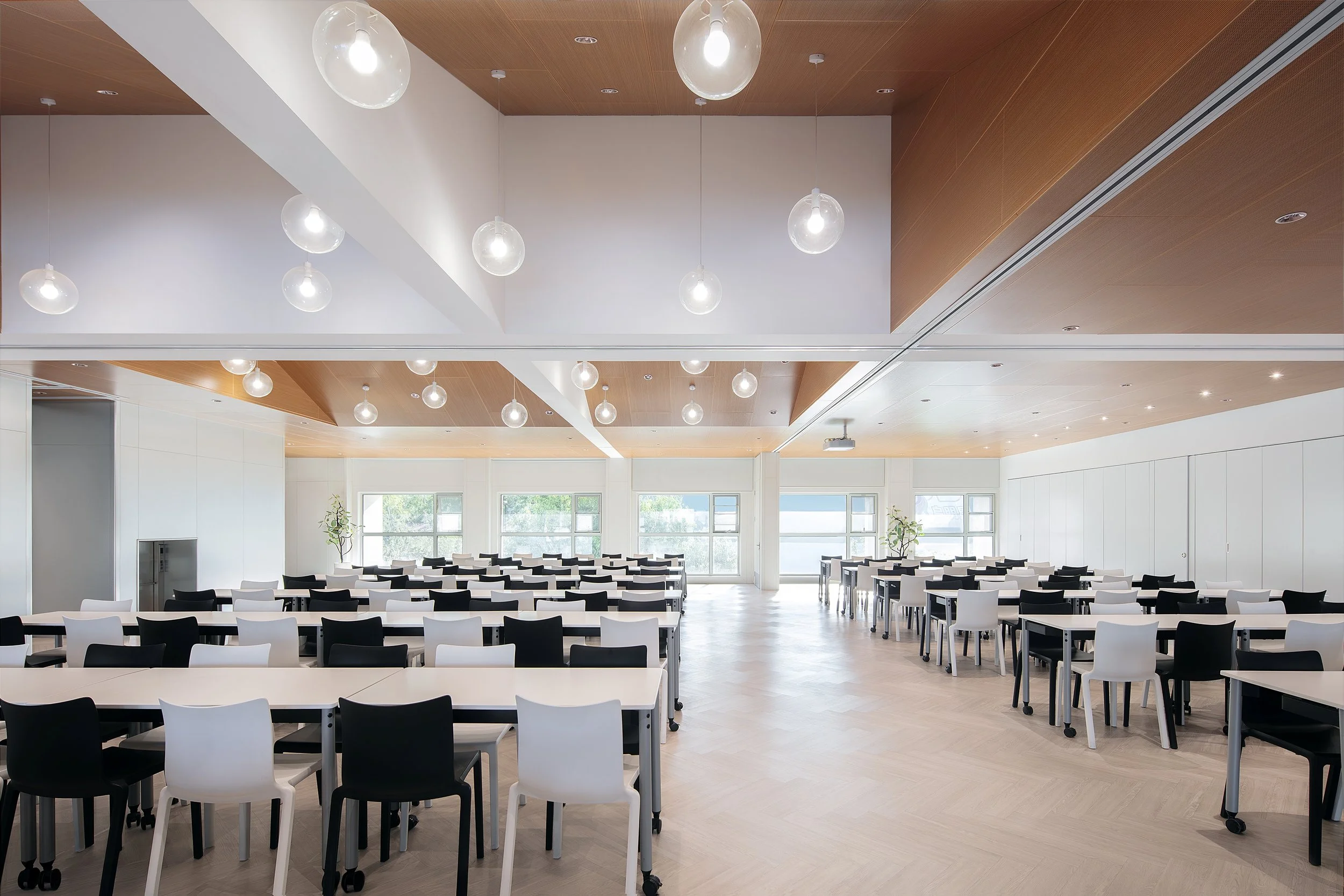
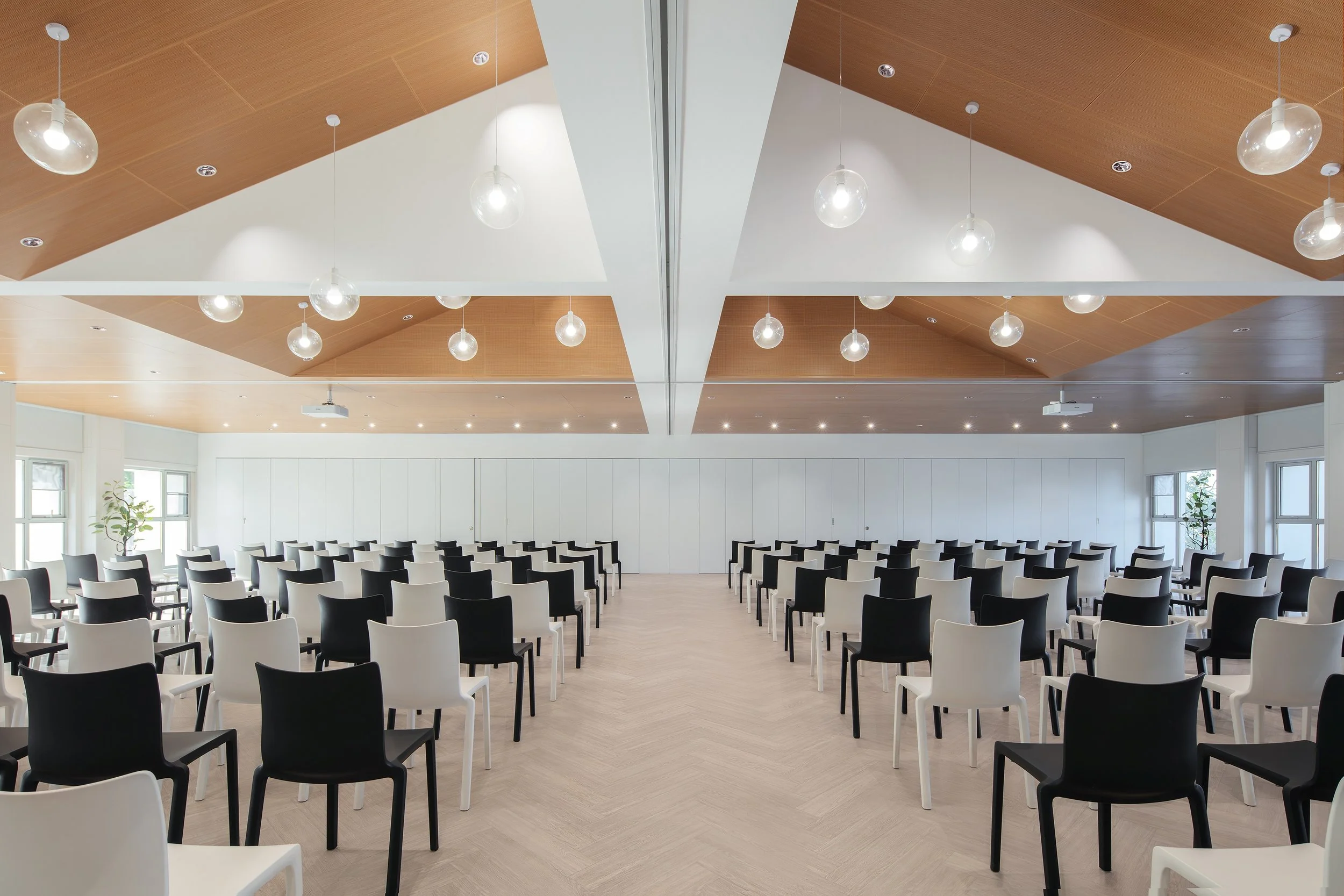
The concept of spatial symbiosis extends to the newly expanded, two-story dining hall, which connects to the audience hall via both upper and lower entrances. It serves as a foyer or backstage area during performances, and as a vibrant daily space for learning, dining, rehearsals, and gatherings.
Structural, mechanical, and electrical systems were designed with rigorous precision. The original steel structure and roof were fully preserved, minimizing demolition and waste. Strategic structural additions were introduced to support expanded capacity and stage rigging. At the same time, all systems and ductworks were carefully integrated within the trusses, maintaining the interiors' clarity and maximum height clearance. Most of the stage rigging and audio, video equipment was designed to work for both directions, to avoid unnecessary redundancy.
Rejecting the glamorous décor of traditional theaters, D+ embraces an aesthetic of quiet resilience. Its material simplicity allows natural light, air, and texture to speak. Through structural reuse, minimized new material consumption, enhanced natural daylighting and ventilation, and hybrid micro-climate strategies, the project significantly lowered construction carbon footprint. With operation energy consumption less than half of comparable venues, D+ is a truly low-carbon campus architecture.
As philosopher Maurice Merleau-Ponty once observed, the world exists for those who perceive it. D+ constitutes such a natural field of perception: inviting performers to awaken new senses through dialogue with nature, and audiences to rediscover connections to the arts within an immersive cultural landscape. Since opening, D+ has become one of the most vibrant performing and gathering venues for Daystar and the surrounding community. It continues to expand the cultural reach of Daystar, fostering new forms of artistic expression, community gathering, and civic imagination.


CHIEF DESIGNER
Xiaoyi Ma
DESIGN TEAM
Jing Zhu, Jiajia Wang, Pengfei Chen, Yan Xia, Weihui Yan
CREDITS
Zhi Xia (Photographer)